A hair transplant is usually not the first step when you have frontal fibrosing alopecia (FFA). FFA is an inflammatory form of scarring hair loss. It can continue to damage follicles at the hairline, including transplanted follicles. The first priority is an accurate diagnosis and treatment to control the disease. A transplant may be discussed for carefully selected people whose condition has remained quiet, but long-term growth is uncertain. A published review found that the evidence comes mainly from small case reports and series, with no dependable way to promise lasting graft survival. 2026 systematic review.
If you are considering hair transplantation, tell the examining surgeon about any FFA diagnosis or symptoms before discussing graft numbers. A receding hairline caused by FFA needs a different plan from ordinary pattern hair loss. This article explains what to check, why surgery may wait and what realistic options to discuss.
What is frontal fibrosing alopecia?
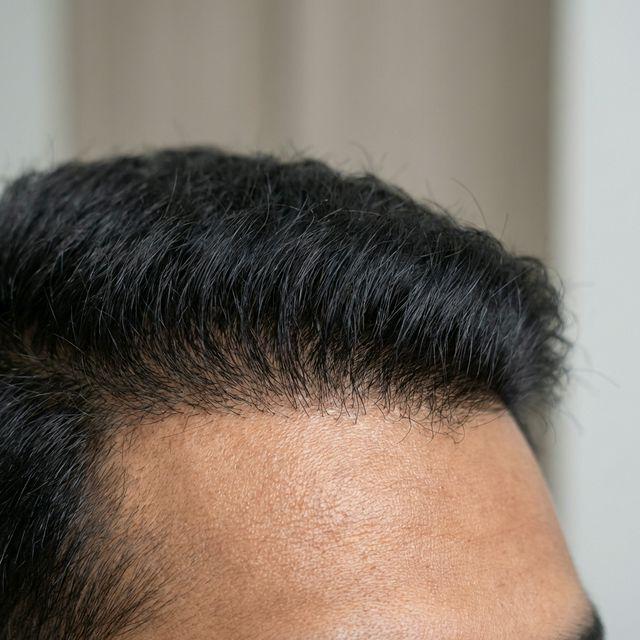
FFA commonly causes a band of hair loss along the front and sides of the scalp. It may also affect the eyebrows. Some people notice itching, burning, soreness, redness or scale around the remaining hairs; others have little discomfort. It can occur in women and men, although it is more often recognised in women after menopause. The condition is not contagious. American Academy of Dermatology (AAD) overview.
The important word is scarring. Inflammation can destroy a follicle and leave smooth skin where it used to grow. Once a follicle is lost, medicines cannot bring that same follicle back. Treatment aims mainly to protect the hair that remains and calm symptoms. Early assessment therefore matters even if the visible change seems small. The British Association of Dermatologists (BAD) explains that progression varies and treatment response is not the same for everyone.
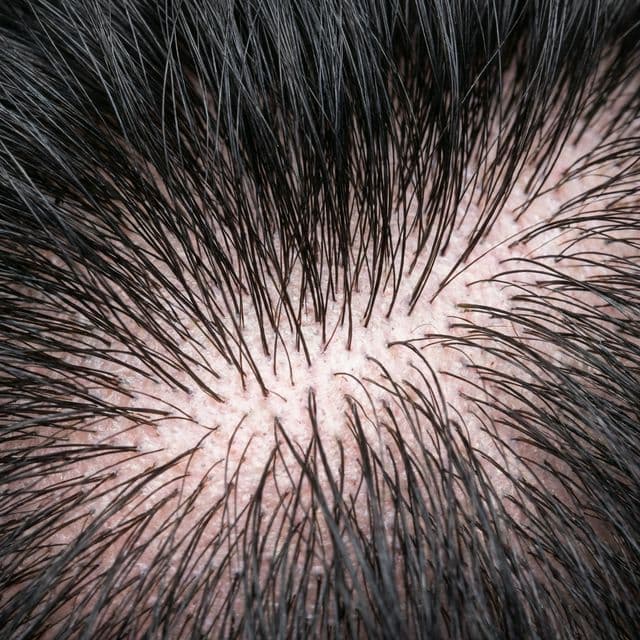
A newly visible forehead does not prove FFA. Pattern hair loss, traction from a tight hairstyle and other scalp conditions can look similar. More than one cause can occur together. Do not buy a transplant package based only on a photograph or a label of “receding hairline”.
Why might a transplant fail to give a lasting result?
A transplant moves living follicles from a donor area, usually towards the back of the scalp, into an area with less hair. It does not remove the process that caused FFA. If inflammation remains active or returns, native and transplanted hairs may be lost. The recipient skin may also be scarred, which can make graft growth less predictable. These are separate uncertainties: the graft must first establish itself, and then the disease must remain controlled over time.
The published evidence is limited. A 2021 systematic review found only a small number of people with FFA or related lichen planopilaris who had undergone transplantation. Results differed, and follow-up was uneven. A 2026 review included more published cases but still found no prospective trials and found that, in the small mixed studies reviewed, reported graft survival declined after the second year. Those reports cannot predict an individual person's outcome, nor do they establish a universal waiting period. They do make guaranteed or permanent-result claims inappropriate.
This is different from filling a stable scar after an old injury. An injury scar may have stopped changing. FFA is a medical condition that can progress beyond the visible bare band. Our separate article on transplanting into scar tissue covers tissue quality and grafting limits more generally; this article focuses on the disease that may keep affecting hair.
How is the diagnosis checked before surgery?
A dermatologist should examine the hairline, remaining hairs and eyebrows, and ask how the change developed. Tell them about itch, burning, pain, flaking, eyebrow thinning, hair loss elsewhere and any treatment you have tried. Old photographs can help show whether the border has moved, but different hairstyles and camera angles can make change look larger or smaller.
The clinician may use close scalp examination and, when the diagnosis remains uncertain, a small scalp biopsy. A biopsy is not needed for every person. It can help distinguish FFA from another cause when the result would change treatment or a surgical decision. The AAD diagnosis and treatment guide describes this assessment and notes that FFA can coexist with pattern or traction hair loss.
Ask what diagnosis explains each affected area. A widening central part may need a different plan from a smooth frontal band. An eyebrow problem may also need separate assessment. The goal is to avoid treating every thinning area as one condition and spending limited donor hair before the cause is understood.
What does “inactive” disease mean?
Before considering surgery, the treating dermatologist and surgeon need evidence that FFA is stable. They may look at symptoms, redness or scale around follicles, the position of the hairline and changes seen at follow-up. A single quiet-looking photograph is not enough to show what happened over months. The team should agree how stability will be monitored and what would count as renewed activity.
There is no reliable rule that a certain number of quiet months makes every person safe for a transplant. The 2026 review found that the length of reported inactivity before surgery varied widely across small studies. Decisions therefore need individual clinical judgement, a clear explanation of uncertainty and a plan for ongoing dermatology follow-up. The word “inactive” means controlled at the time of assessment; it is not a guarantee that FFA can never return.
If the border is moving, the scalp is newly sore or inflamed, or there are fresh patches, put the cosmetic plan on hold and arrange review. Do not use a proposed transplant date as a reason to stop or change prescribed treatment yourself.
Can treatment restore the lost hairline?
Treatment can reduce inflammation and may slow or stop further loss in some people. It can also ease symptoms. It is less likely to restore a smooth area where follicles have already been destroyed. The dermatologist chooses treatment according to the examination, other health conditions and the risks of each option. Several approaches may be combined. AAD treatment guidance and the BAD patient leaflet describe the purpose and limits of treatment.
This article does not recommend a medicine or dose. Some treatments need monitoring, may be unsuitable in pregnancy or interact with other medicines. Bring your current prescriptions and relevant medical history to the appointment. Ask what each suggested treatment is meant to do, how response will be checked and when you should report side effects.
If a treatment calms itch, that is useful, but symptom relief alone does not prove that all disease activity has stopped. Likewise, a hairline can appear unchanged over a short period while the longer pattern remains uncertain. Follow-up matters more than a single good day.
When might transplantation be discussed?
For a person with a confirmed diagnosis, prolonged stability, healthy donor hair and realistic expectations, a specialist team may discuss transplantation as a cosmetic option. That is a possibility, not a routine recommendation. The surgeon must explain the expected coverage, the chance of poor or declining growth, the effect of scars and the need to continue watching the underlying condition. A smaller staged approach may be discussed, but it cannot remove the long-term uncertainty.
Donor hair is limited. A plan should consider whether FFA or another hair-loss pattern affects the donor area, how much hair can safely be moved and what happens if future loss continues around the new hairline. A hairline that looks dense immediately after planning is not the same as a durable result. Ask what the proposed design would look like if some grafts do not survive or nearby native hair thins later.
The small published studies involve selected patients under particular clinical care. Their short-term success cannot be treated as an average success rate for all people with FFA in India. The 2021 review found mixed outcomes and specifically cautioned that evidence is limited. The later 2026 review also found a decline in graft survival in longer follow-up. A consultation should discuss those limitations plainly.
Are eyebrows a separate decision?
FFA can thin or remove eyebrow hair. Rebuilding eyebrows may sound like a smaller procedure, but it raises the same disease-control question. The shape, direction and source of transplanted hairs also matter. A small published series of ten patients reported good early eyebrow growth for many, followed by loss of transplanted hairs in most after three to four years. This small study does not predict every result, but it is a reason to ask about long-term appearance rather than only the first year.
Eyebrow camouflage, cosmetics or choosing no procedure may be reasonable alternatives. Discuss them without feeling that surgery is the only way to respond to a visible change.
What can you do while the condition is being assessed?
Keep a simple record of changes: the date, symptoms and occasional photographs taken in similar light with the hair parted in a similar way. Bring the record to follow-up rather than judging the hairline day by day. Tell the clinician if you use tight hairstyles, hairpieces, adhesives or products that irritate the scalp. Those details can affect comfort and may point to a second cause of hair loss.
Ask which gentle styling or camouflage options are suitable while treatment is underway. A hairpiece or cosmetic cover can help some people without using donor follicles. The practical choice depends on scalp sensitivity, daily routine and personal preference. Avoid applying strong or irritating products over an inflamed area without checking with the treating clinician.
Be careful with online photographs of “FFA transplant success”. They may show an early result, a different diagnosis or no long-term follow-up. A useful consultation should show how the diagnosis was confirmed, what happened after treatment and how the outcome will be monitored, while respecting patient privacy.
When should you seek medical review sooner?
Arrange a dermatology review if the hairline is moving, eyebrows are thinning, or you develop new itching, burning, pain, redness or scale around the remaining hairs. These signs do not diagnose FFA on their own, but early assessment can help protect follicles that remain. AAD advises prompt review because established scarring loss cannot be reversed.
If the scalp develops spreading redness, pus, marked swelling, fever or a persistent painful sore, seek prompt medical care rather than waiting for a routine cosmetic appointment. These symptoms may reflect an infection or another problem and need a clinician to examine them. If you have already had a transplant and notice new loss or inflammation, contact the treating team and a dermatologist; do not assume it is ordinary shedding.
Questions worth asking before any transplant decision
- Has a dermatologist confirmed FFA, or could another cause also be present?
- What evidence shows the disease is stable, and for how long has it been watched?
- What treatment and follow-up will continue if I choose surgery?
- Is my proposed donor area healthy, and what is the limit on usable grafts?
- What improvement is realistic if the recipient skin is scarred?
- How would the result look if transplanted or nearby hairs are lost later?
- What alternatives would help me now without surgery?
You do not need to decide at the first appointment. Ask for an understandable written plan and take time to consider the uncertainty.
Frequently asked questions
Is FFA the same as ordinary pattern hair loss?
No. Both may change the hairline, and they can coexist, but FFA is an inflammatory scarring condition. Pattern loss has a different course and treatment plan. The distinction affects whether and when surgery is sensible. A dermatologist can assess the cause rather than relying on the shape of the hairline alone.
Does a quiet scalp mean the FFA is cured?
No. A quiet scalp is encouraging, but FFA may become active again. Monitoring is still needed. The decision to discuss transplantation should include that possibility and the limited evidence for long-term graft survival.
Will a transplant bring back my original hairline?
It cannot promise that. The amount of lost skin, donor supply, scarring and future disease activity all matter. Even if some grafts grow, the aim may be modest camouflage rather than the original density. Ask to discuss both the hoped-for result and the less favourable outcome.
Can I book a transplant while taking treatment for FFA?
Being on treatment does not by itself prove suitability or rule it out. The dermatologist and surgeon need to assess whether the disease is controlled, how stable it has been and what treatment will continue. Never stop prescribed medicine to qualify for surgery without advice from the doctor who prescribed it.
Takeaway
For FFA, diagnosis and disease control come before cosmetic restoration. A transplant may be considered in selected stable cases, but graft growth may decline and no fixed waiting period guarantees success. Start with a dermatologist, keep track of change and ask for a joint plan if surgery is eventually considered. Our hair transplant service page explains the general procedure; the decision for FFA needs individual medical assessment.
References
- American Academy of Dermatology: FFA overview
- American Academy of Dermatology: diagnosis and treatment
- British Association of Dermatologists: FFA patient information
- 2026 systematic review of transplantation in LPP and FFA
- 2021 systematic review of transplantation in LPP and FFA
- Eyebrow transplantation case series in FFA