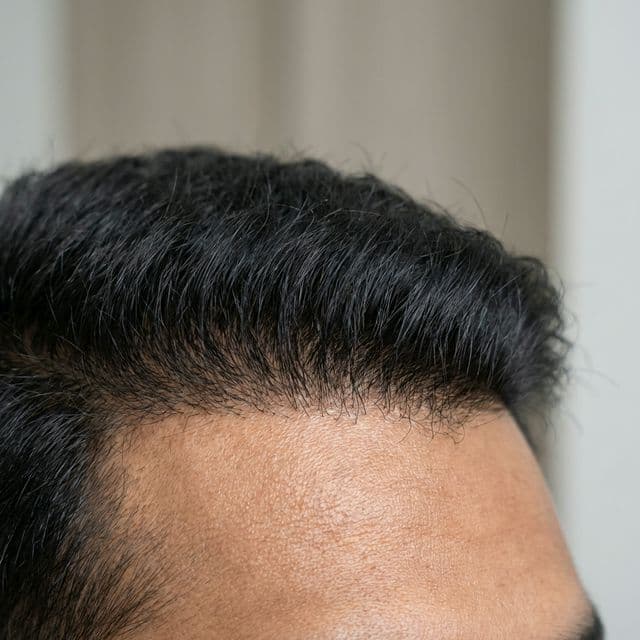
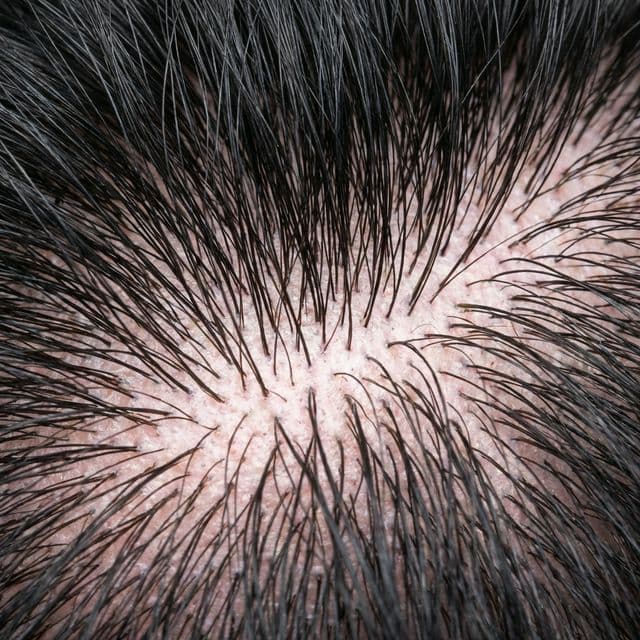
A hair transplant may be possible on a healed scalp scar, but it is not suitable for every scar. The main questions are why the scar is present, whether the skin is stable, how much blood supply remains, and whether enough healthy donor hair is available.
If you are considering hair restoration, start with a proper examination and read about hair transplant planning and candidacy before choosing a method or asking for a graft number.
A scar can follow an accident, burn, infection, previous surgery, a cosmetic procedure, or an inflammatory condition called scarring alopecia. These causes do not behave in the same way. A small, quiet scar from an old injury may be considered for grafting. A red, painful, scaly or enlarging patch needs medical assessment first.
The short answer
Yes, some people can have a hair transplant on scar tissue. The chance of useful growth is usually less predictable than in normal scalp skin because scar tissue may be tighter, less flexible and less well supplied with blood. A surgeon may recommend a test area, a smaller first session or another option instead of immediate full coverage.
A consultation cannot promise that every graft will grow. It should explain the likely benefit, the chance of poor growth, the donor-area limits and whether the scar itself needs treatment.
Why scar tissue makes transplantation different
A transplant moves follicles from a donor area to a bald or thin area. For a graft to survive, it needs to be placed at a suitable depth and receive oxygen and nutrients from the surrounding tissue. Healthy scalp has a normal network of small blood vessels and a natural texture. A scar may have denser collagen, less stretch and altered circulation.
This does not mean every scar is unable to support hair. It means the tissue must be examined rather than judged from a photograph. The age, size, depth and cause of the scar all matter. A flat, pale and stable scar is different from a thick, raised or actively inflamed scar.
What type of scar is it?
Before discussing grafts, the doctor should identify the type of hair loss and the cause of the scar. This is important because a scar may be a visible mark from an old injury, or it may be a sign that an active disease is still damaging follicles.
- A stable injury or surgical scar may be considered after it has fully healed and stopped changing.
- A burn scar may have uneven thickness, reduced blood supply or tight skin, so it may need a more cautious plan.
- A scar after infection needs review if there is ongoing discharge, tenderness, crusting or recurrent swelling.
- Scarring alopecia can be linked with inflammation or an autoimmune condition. A transplant is usually delayed until the condition is inactive.
- A donor-area scar is a separate issue. It may sometimes be camouflaged, but the donor supply and the scar width must be checked first.
If the diagnosis is not clear, a dermatologist may recommend scalp examination, dermoscopy, blood tests or a small biopsy. A biopsy is not needed for every old scar, but it may help when there is active inflammation or unexplained patchy loss.
When a scar may be suitable for a hair transplant
A person may be considered when the scar is fully healed, stable and free from active inflammation. The surrounding scalp should have a clear reason for hair loss, and the donor area should contain enough healthy follicles for the amount of coverage being planned.
The doctor will also look at skin movement and scar texture. A scar that is very tight may not accept a dense session safely. In some cases, the goal is not to fill every millimetre. The aim may be to soften the contrast between the scar and the surrounding hair.
Timing matters. Hair transplantation is usually a planned procedure, not an emergency treatment for a new scar. Waiting can allow the skin to settle and can show whether hair loss is still progressing. The safest interval depends on the cause and the advice of the treating doctor.
When a transplant should be delayed or avoided
A transplant should not be used to cover a changing scalp problem without finding the cause. Delay is sensible when the scar is still healing or when there are signs that inflammation is active.
- The area is becoming larger or new bald patches are appearing.
- The skin is red, warm, painful, itchy, scaly, crusted or bleeding.
- There are pustules, discharge, blisters or repeated infections.
- The hair loss has not been diagnosed, especially when it is sudden or patchy.
- The person expects full density or a guaranteed result from one session.
- There is not enough donor hair to cover the scar without overharvesting the back or sides of the scalp.
These signs do not prove a serious condition, but they do mean that a cosmetic procedure should wait for assessment. Scarring alopecia can continue even after a transplant, and active disease can affect both existing and transplanted hair.
What does the assessment involve?
A useful consultation is more than counting hairs. The doctor should examine the scar closely, check the surrounding hair, and ask when the injury or hair loss began. Bring old photographs, operation records or burn-treatment details if you have them.
- Cause and date of the injury, surgery, burn, infection or hair loss.
- Changes in size, colour, thickness, pain, itching or sensitivity.
- Previous treatments, including steroid injections, scar revision, laser treatment or medicines.
- Family history of pattern hair loss or autoimmune disease.
- Medicines, smoking, diabetes and other factors that may affect wound healing.
The doctor will assess donor density, hair calibre, curl, colour contrast and the direction of nearby hair. Indian hair may provide useful visual coverage because of its thickness and darker colour, but this varies between people. A local plan should be based on the actual scalp, not on a standard package.
FUE, FUT and scarred scalp: does the method change?
FUE removes individual follicular units, while FUT removes a strip of hair-bearing skin and divides it into grafts. The choice is not decided by the scar alone. It depends on the donor area, previous operations, hair length, the size and position of the scar, and the surgeon’s experience.
FUE may be useful when grafts are needed in a small area, but placing grafts into scar tissue can still be technically difficult. FUT may be considered in selected patients who need a larger number of grafts, but it creates or extends a linear donor scar. Neither method removes the need for careful diagnosis or guarantees growth.
Some patients are offered a small test session before a larger procedure. This can show how the scar accepts grafts and how the skin heals. A test session is not a guarantee, but it may reduce the risk of making a large plan on uncertain tissue.
What results should you expect?
The realistic goal may be camouflage rather than the same density as normal scalp. Scarred skin can produce slower, uneven or lower growth. Some grafts may not survive, and more than one session may be needed. The final appearance also depends on how the scar reflects light and how the surrounding hair changes with time.
Transplanted hair usually takes months to show new growth. Early shedding can happen and does not by itself mean the procedure has failed. A meaningful review is usually planned after several months, with the final result taking longer. Your doctor should explain the review schedule for your case.
A good plan also protects the future donor area. If pattern hair loss is still progressing, untreated native hair around the scar may thin later. The design should allow for this possibility and should not spend all available donor hair on a single session.
Other options for a scalp scar
A transplant is only one option. Depending on the cause and size of the scar, alternatives may include scar revision, medical treatment for active inflammation, camouflage fibres, a hairpiece or scalp micropigmentation. These options have different benefits and limits.
Scar revision may reduce width or improve the shape, but it creates a new wound and may not remove the need for camouflage. Scalp micropigmentation can reduce the colour contrast but does not grow hair. A hairpiece can cover a larger area without surgery but requires fitting and maintenance.
The right choice depends on the medical diagnosis, the person’s priorities and the risk they are willing to accept. A specialist should explain why one option is being suggested and what it cannot do.
Questions to ask at a Hyderabad consultation
- What caused the scar, and is the diagnosis certain?
- Is the scar stable enough for grafting, or should I wait?
- Do I need a dermatologist review or biopsy before surgery?
- Would you recommend a test area before a larger session?
- How will you estimate growth in this scar compared with normal scalp?
- How many grafts can be used without weakening my donor area?
- What happens if some grafts do not grow?
- What are the alternatives if surgery is not suitable?
Ask for a written plan that separates what is known from what is uncertain. Be cautious with claims of guaranteed growth, instant coverage or a fixed graft count before the scalp has been examined.
FAQs
Can a hair transplant cover a scar from an accident?
Sometimes. An old, flat and stable scar from an accident may be considered if the skin is healthy enough and enough donor hair is available. The result can be less predictable than transplantation into normal scalp, so a test area or staged treatment may be discussed.
Can you transplant hair into a burn scar?
It may be possible in selected cases, but burn scars can have reduced blood supply, tight skin and uneven thickness. The size and depth of the burn matter. A specialist should examine the tissue and set a modest goal before any surgery.
Is hair transplant safe for scarring alopecia?
Usually it is not the first step when scarring alopecia is active. The cause and inflammation should be assessed and controlled first. If the condition has been inactive for a long period, a specialist may consider hair restoration, but growth is not guaranteed.
Will transplanted hair grow normally in scar tissue?
It may grow, but growth can be slower, thinner or less complete than in normal scalp. Scar tissue can affect circulation and the space available for the graft. Your doctor should discuss the chance of poor growth rather than promise a normal density.
Can a hair transplant remove the scar?
No. Grafts can camouflage a scar, but they do not remove the scar itself. Scar revision, micropigmentation or other treatments may be considered when the scar remains visible between hairs.
Practical takeaway
A healed scalp scar does not automatically rule out a hair transplant, but it does make diagnosis and planning more important. Before booking surgery, arrange a specialist examination, confirm that the scar is stable, review the donor supply, and agree on a realistic coverage goal. You can read the clinic’s hair-transplant service information as a next step, but use an in-person assessment to decide whether your scar is suitable.
References
Cleveland Clinic: Scarring (Cicatricial) Alopecia
Cleveland Clinic: Hair Replacement Surgery
American Society of Plastic Surgeons: Hair Transplant Risks and Safety
International Society of Hair Restoration Surgery: Is It Possible to Do a Hair Transplant on a Scar?