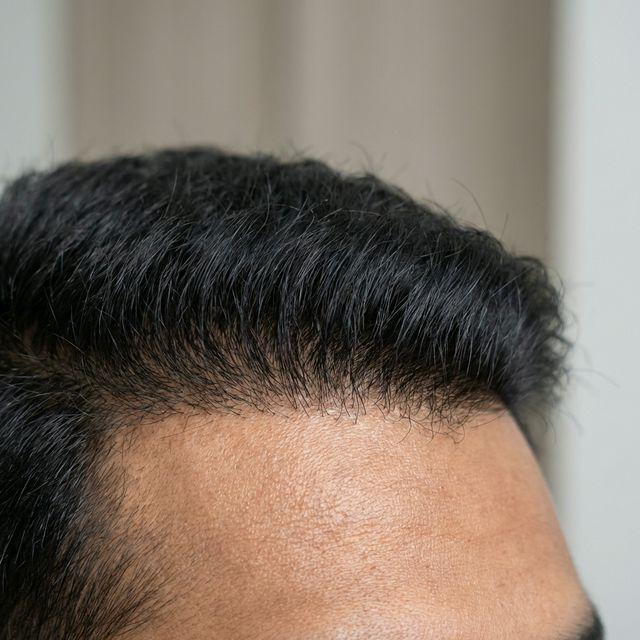
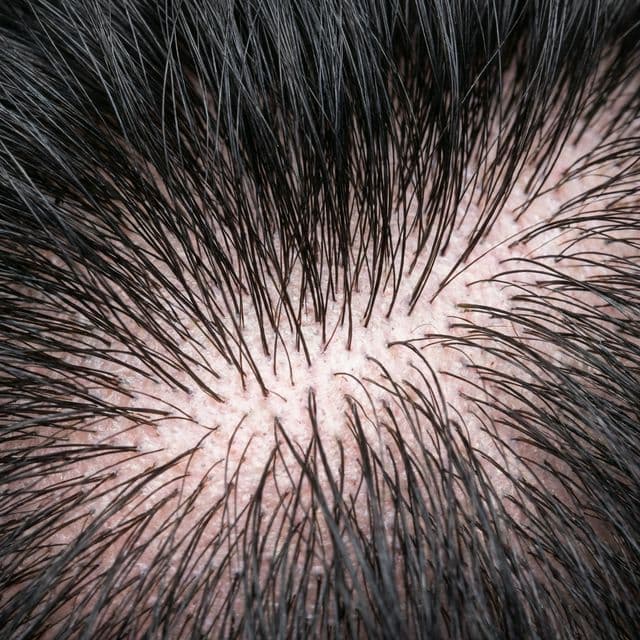
Short answer: Do not book a haircut for the freshly treated scalp until your surgical team says the recipient and donor areas have healed enough. A clinical review in NCBI Bookshelf describes waiting about one month before cutting or dyeing hair. That is a general care recommendation, not a guarantee that a razor shave or very close clipper cut is safe at one month. Those tools touch the skin differently from scissors. If you normally shave your head, discuss that habit before planning a hair transplant, so the first haircut and the eventual hairstyle are part of the treatment plan.
Why does the first haircut need a plan?
A transplant involves moving follicles from a donor area into tiny openings in the recipient area. The skin at both sites needs to recover. In FUE, individual follicles are taken from the donor area; in FUT, a strip is removed and the donor incision is closed with stitches or staples. The NHS explains these two methods and advises being especially careful with the grafts during the first two weeks.
Haircut tools can affect the scalp even when the aim is only to shorten hair. A comb may drag across a crust. Clippers may press or scrape the skin. A razor touches the skin directly and may cause a small cut. A stylist may wash, brush or hold the head firmly without knowing where grafts were placed. These are practical reasons to wait for healing and clear instructions, rather than assuming the hair itself is fragile forever.
The International Society of Hair Restoration Surgery notes that small scabs can remain during FUE recovery and that postoperative policies vary among surgeons. The first safe haircut depends on the actual scalp and the method used, not only on the number of days since surgery.
What does the one-month guidance mean?
The NCBI Bookshelf hair transplantation review lists one month before cutting or dyeing hair among general postoperative instructions. This is a clinical review, not a trial comparing scissors, guarded clippers and razors. It does not establish one exact date for every graft placement or donor wound.
For that reason, ask your own team two questions: when may the hair be shortened, and which tool may touch each part of the scalp? A light trim of longer hair with scissors may involve less contact with the skin than a zero-guard clipper or razor shave. That difference is a practical inference from how the tools work, not a measured risk percentage. Your surgeon may give different advice for the recipient area and the donor area.
Do not use a photograph of a healed scalp as permission to cut yours. Redness, lingering scabs, an open spot, tenderness or a FUT stitch line can change the plan. A date offered before surgery may need to move if healing is slower than expected.
Can the donor area be cut before the transplanted area?
Possibly, but only with advice for your procedure. The donor area and recipient area are different wounds. FUE leaves small extraction sites, while FUT leaves a linear incision. A clipper passing over the donor area may be uncomfortable or disturb skin that is still healing; a close cut may also make a FUT scar more visible. The ISHRS describes the different scars and recovery considerations.
If you want to tidy hair around the back or sides, show your surgical team the exact area and desired length. Ask whether scissors can be used without touching the healing skin. Avoid asking a barber to decide based on how the scalp looks from across the room. A transplant follow-up is the right place to clarify which areas are ready.
What about clippers, a buzz cut or a razor shave?
These are not interchangeable. Scissors can shorten hair away from the skin. Clippers have a guard or blade that passes over it. A close razor shave has the most direct skin contact. Even after a general haircut is allowed, it is sensible to ask separately before a close buzz cut or shave on the grafted area. No published source here establishes a universal safe day for a zero-guard clipper or blade.
If you usually shave for work, sport or personal preference, tell the surgeon before treatment. A very short hairstyle can also make the donor pattern or a FUT scar more noticeable. The ISHRS notes that FUE and FUT have different scar patterns. The long-term appearance of a short cut deserves discussion when choosing the technique, not only during recovery.
When cleared for a barber visit, explain that you had scalp surgery and point out the donor and recipient areas. Ask the barber to avoid pressure, scratching and a close blade over any sensitive spot. Stop the haircut if it causes pain or catches a crust. Do not try to hide the procedure from the person handling your scalp.
Will cutting the hair damage the graft permanently?
Cutting a hair shaft after proper healing is different from pulling a fresh graft out of healing skin. The early concern is trauma to the scalp and attached crusts. A small graft-anchoring study found that pulling attached crusts could dislodge grafts during the first days. It studied 42 patients and deliberate pulling, not haircuts. It should not be used to promise that a clipper or razor is safe on a particular day.
The transplanted hairs often shed before new growth becomes visible. The NHS explains that early shedding can happen. Finding short hairs after a later haircut therefore does not, by itself, prove that grafts have failed. Bleeding or a torn scab during a haircut is a different matter and warrants a call to the surgical team.
Can you dye or chemically treat hair at the same visit?
Do not combine the first haircut with dyeing, bleaching, straightening or another chemical treatment without approval. The NCBI Bookshelf review describes waiting a month before dyeing, and the ISHRS grooming guidance advises against styling products before healing is complete. Ask separately about each product and any known scalp condition.
There is no need to dye hair just because it is time for a haircut. If you have a planned event, allow room for recovery rather than scheduling several grooming procedures on the earliest possible date.
When should you delay the appointment or get help?
Postpone the haircut and contact your surgical team if the scalp has open or bleeding areas, attached crusts that a comb may catch, increasing pain, spreading redness, pus or fever. Do not let a barber shave over a sore patch to make it look even. The NHS lists bleeding and infection among possible problems after transplantation and advises contacting the clinic promptly for severe pain or unexpected symptoms.
If a tool catches the scalp and fresh bleeding starts, stop the haircut and follow the surgical team's instructions. Do not rub or pull at nearby crusts. If bleeding is persistent or you feel unwell, seek prompt medical care.
Common questions
Can I trim only the ends of long hair?
Ask your team first, especially if a comb or hand must pass over the grafted area. A trim that stays away from the healing skin may be different from a close cut, but your surgeon knows where the grafts and donor wounds are.
Is shaving after FUE always safe sooner than after FUT?
No. Both methods create a recipient area that needs protection. Their donor wounds differ, and an FUT scar may matter for a short hairstyle. Clearance should be based on your scalp and planned tool, not a technique label alone.
Will shaving make new hair grow thicker?
No. Cleveland Clinic explains that shaving cuts the visible shaft and does not make hair grow back thicker. It does not create new follicles or change the number of grafts. The transplant result develops over months, and native hair may continue thinning around it. The NHS notes the long growth timeline and continued native hair loss.
Can I use a home trimmer instead of visiting a barber?
The question is still whether the scalp is healed and whether the tool can touch it safely. A home trimmer can scrape or press just as a barber's tool can. Ask for clearance, keep the tool clean and avoid any spot that is tender or crusted.
Takeaway
Think of the first haircut as two decisions: when the scalp is healed and which tool can safely touch each area. One-month guidance is a useful discussion point, while close shaving needs its own answer from your surgeon. Plan the style and follow-up before treatment if regular shaving matters to you. You can discuss this alongside the donor and hairline plan at a hair transplant consultation.