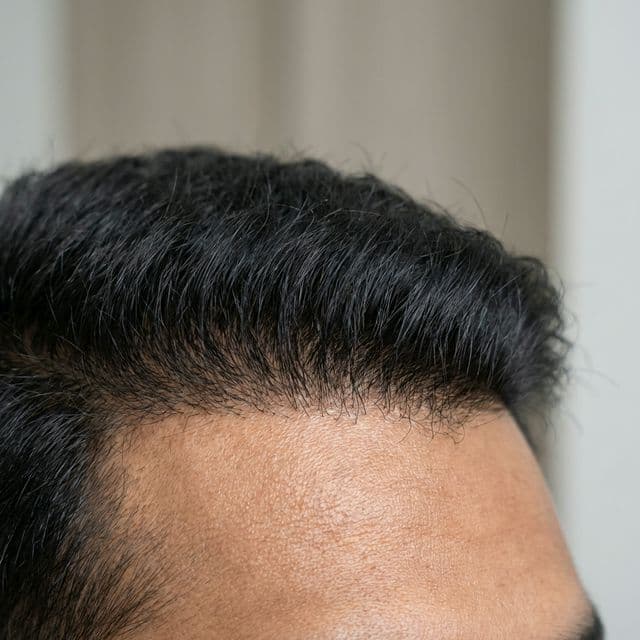
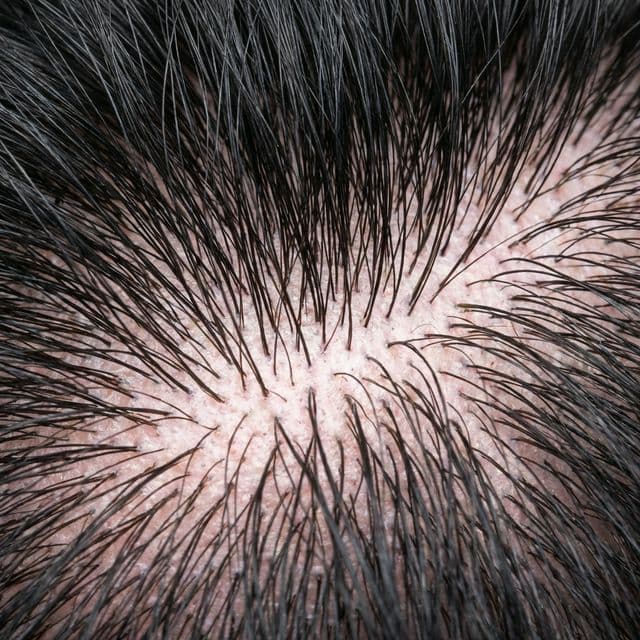
Sudden diffuse shedding can make a hair transplant feel urgent. If the cause is telogen effluvium, the more useful first step is to diagnose the trigger and allow recovery rather than place grafts into an unstable scalp. Telogen effluvium often follows illness, fever, major stress, childbirth, surgery or rapid weight loss. It can affect women and men. A transplant may eventually help a separate, stable pattern of hair loss, but it does not treat the reason a large number of existing hairs entered the shedding phase.
What is telogen effluvium?
Hair follicles cycle through growth, transition and rest. A physical or emotional stressor can shift more follicles than usual into the resting phase. Those hairs then shed after a delay, so the apparent cause may have happened months earlier. The American Academy of Dermatology describes telogen effluvium as excessive shedding and lists childbirth, high fever, surgery, major weight loss and stress among common triggers.
Many people notice hair across the pillow, shower drain and comb rather than a single smooth bald patch. The scalp can appear generally less dense, particularly where parting shows. The amount of shedding varies. A person may also have inherited pattern hair loss at the same time, which is why a clinical diagnosis matters. A sudden increase in loose hairs does not prove that all follicles have been permanently lost.
Telogen effluvium is different from the short-term shedding of transplanted shafts after a procedure. It also differs from traction damage, alopecia areata and scarring disorders. A consultation should identify which process is present before anyone estimates graft numbers. The treatment plan can change completely when the diagnosis changes.
Why is a transplant usually postponed during active shedding?
A transplant redistributes hair from a donor region. It does not stop follicles elsewhere from responding to illness, nutrition or hormonal change. If the recipient area is still losing hair, the surgeon cannot confidently map where permanent coverage is needed. Natural regrowth could fill in the same area later. At the same time, a diffusely affected donor region may not provide a stable source of grafts.
Operating during active shedding also creates confusing before-and-after comparisons. Surgery itself can trigger a temporary loss of nearby native hairs. If shedding from telogen effluvium is continuing, it may be impossible for a patient to distinguish natural recovery, procedural shedding and longer-term pattern loss. The result may look thinner for a period despite technically successful grafting.
A cautious surgeon asks when shedding began, whether it is slowing, and what the scalp looked like before the trigger. They may request serial photographs and a follow-up rather than offer an immediate date. Delaying cosmetic surgery is an active plan when it protects donor hair and improves the accuracy of the final design. A hair transplant consultation is most informative after shedding has settled and the donor hair can be reassessed.
How is the cause checked?
A dermatologist will ask about the preceding months: illness, fever, new medicines, changes in eating, recent operations, pregnancy and childbirth, major stress, and family hair-loss patterns. Examination looks for scalp inflammation, miniaturisation, focal patches and the condition of the donor hair. Pull testing or magnified scalp examination may help. Tests are directed by the history rather than ordered as a universal panel.
The AAD diagnosis guidance explains that blood tests or a scalp biopsy may be needed if disease, deficiency, hormonal imbalance or infection is suspected. An iron or thyroid test may be reasonable in a specific person, but normal or abnormal results must be interpreted in context. Do not self-prescribe iron or high-dose vitamins simply because hair is shedding; excess supplements can cause other problems.
A clinician should also consider a persistent thinning pattern that preceded the sudden shed. Telogen effluvium can expose underlying androgenetic alopecia that was less visible when the scalp had more hair. The two diagnoses require different expectations. The shedding may recover while the underlying pattern still needs longer-term management.
How long can recovery take?
Because the trigger and visible shed are separated by time, improvement is often gradual. Many acute episodes settle after the trigger resolves, but new growth must become long enough to change appearance. Photos of the same parting and angles every few weeks are more reliable than daily hair counting. A prolonged or recurring episode deserves review for continuing triggers or another diagnosis.
The AAD notes that hair shedding can stop on its own after a stressor ends, while some people continue to have a cause of loss that needs treatment. Do not use a single date, such as three months, as proof of permanent damage. Equally, do not wait indefinitely if the hairline is receding, patches form, the scalp becomes painful or inflamed, or the shedding continues. An early diagnosis can prevent unnecessary anxiety and delayed treatment.
The rate of visible regrowth depends on hair length and texture. Long hair takes time to restore its prior bulk even when short hairs have reappeared. People with curl or dense coils may notice volume change differently. A careful clinician explains this without promising a fixed percentage of regrowth.
What if shedding happens after an operation or childbirth?
A major operation and childbirth are recognised triggers of excessive shedding. The timing can be surprising: the hair may look normal immediately after the event, then shed noticeably later. This is one reason a person considering elective hair transplantation should give a full recent medical history. Treating the shedding as a permanent bald area too early can lead to an unnecessary graft plan.
After childbirth, additional factors such as interrupted sleep, nutritional needs and thyroid changes may be relevant. A dermatologist can decide whether testing is indicated and what is safe during breastfeeding. Hair transplant surgery is usually a later consideration, after the pattern has settled and the person has had a chance to recover. The decision should reflect health and practical ability to follow aftercare, not pressure to return quickly to a previous appearance.
After a different operation or illness, the same basic principle applies. First establish that the original health problem is controlled and that shedding is improving. If a local scar remains bare, that is a separate question from diffuse telogen effluvium and needs its own tissue and donor assessment.
When can transplantation become relevant?
Transplantation may be considered when there is a distinct stable area of permanent loss, the cause has been assessed, active shedding has settled, and donor hair is reliable. For example, someone can have an inherited receding hairline alongside a temporary diffuse shed. The temporary component should be followed before the surgeon decides how many grafts to use and where to place them.
The hair transplant service page describes the procedure, but a consultation must answer a prior question: is the area being treated likely to remain sparse without surgery? Grafts are finite. A conservative hairline design should account for future change in untreated hair and preserve donor capacity. An estimate made during peak shedding may be misleading.
For diffuse unpatterned loss that affects the donor area as well as the top, a transplant may not be useful. Moving weak donor hair into another weak region cannot create density. Medical diagnosis and options such as camouflage may be more appropriate. Be wary of anyone who promises that adding a large graft count will correct every diffuse-thinning pattern.
What can you do while waiting for a clear diagnosis?
Keep a simple timeline of events, shedding, medicines and any scalp symptoms. Take consistent photographs rather than repeatedly tugging at hair to count strands. Eat adequately, particularly if recent illness or dieting is involved, and ask a clinician about a suspected deficiency. Handle fragile hair gently. The AAD hair-care tips advise gentle shampooing and avoiding practices that cause breakage.
Do not assume a supplement advertised for hair growth treats telogen effluvium. A product cannot correct an unidentified medical trigger simply by increasing biotin content. Discuss minoxidil or other medicines with the clinician who knows your diagnosis and circumstances. If the shed is related to a medicine, do not stop that medicine without speaking to its prescriber.
Cosmetic options can make the waiting period easier. Changing the parting, a suitable haircut, a topper or hair fibres may improve confidence while recovery is assessed. These are legitimate choices, not signs that a person has given up on treatment. The aim is to avoid irreversible graft use before the diagnosis is clear.
Questions for your clinician
- Which pattern do you see: telogen effluvium, pattern hair loss, a combination or something else?
- Is the likely trigger still present, and do my symptoms suggest testing?
- Does the donor area show the same thinning as the recipient area?
- What visible changes should we expect to monitor over the next several months?
- If permanent pattern loss remains later, what non-surgical and surgical options would fit it?
These questions help distinguish a temporary biological response from a stable surgical target. They also put the plan in writing, so the next consultation can compare actual change with the original examination.
Frequently asked questions
Can a hair transplant cure telogen effluvium?
No. It cannot correct the trigger that shifted follicles into the resting phase. Many of those follicles may recover. Transplantation is considered for selected stable permanent loss after a diagnosis, not for a temporary diffuse shed. The decision may change if a separate pattern of permanent thinning becomes clear.
Does a sudden shed mean I have lost donor hair forever?
No. Donor hair can also be affected temporarily by diffuse shedding. That is precisely why the donor region should be assessed again after recovery. If donor thinning persists, further examination is needed before a surgeon can say whether grafts would be safe to remove.
Should I wait if I also have a receding hairline?
You should at least have the current shed diagnosed. A pre-existing stable hairline pattern may eventually be a transplant target, but the surgeon needs to separate that from the temporary loss and discuss medical maintenance. Waiting for the diffuse process to settle usually gives a more dependable graft plan.
Will minoxidil stop all shedding immediately?
No treatment can promise an immediate stop, and the right medicine depends on the diagnosis. Minoxidil is used for certain types of hair loss and takes time to show benefit. Do not start or stop it solely to prepare for a transplant without advice, particularly during pregnancy, breastfeeding or treatment for another condition.
What should make me seek review sooner?
Pain, burning, scale, a rapidly enlarging patch, scarring, a rash, or continued substantial shedding without an obvious resolving trigger deserves assessment. A clinician can distinguish conditions that may need more urgent treatment. Do not let the label telogen effluvium replace an examination when the pattern is atypical.
A considered next step
If shedding began suddenly, arrange a dermatology assessment and bring your timeline. If a stable surgical target remains after evaluation, a hair transplant consultation can assess donor quality and plan realistic coverage. The sequence matters: diagnose, allow recovery where appropriate, and then decide whether surgery adds value.