Quick Answer
PRP (Platelet-Rich Plasma) and hair transplant are not competing alternatives — they work in fundamentally different ways and suit different stages of hair loss. PRP is a biological treatment that stimulates existing follicles to function better — it cannot restore hair where follicles are already permanently gone. A hair transplant physically relocates healthy follicles from the back of the scalp to thinning or bald areas — it cannot improve follicle function in areas where follicles are still present but struggling. Understanding this distinction tells you which treatment you actually need.
What Is PRP for Hair Loss?
PRP therapy uses your own blood, processed to concentrate the platelets and growth factors, and injects it into the scalp at the hair follicle level. Platelets release growth factors (including PDGF, VEGF, and IGF-1) that stimulate follicle activity, improve blood supply to the scalp, and can extend the growth phase of the hair cycle.
The mechanism is real and well-studied. The question is not whether PRP works in theory — it is whether the effect is clinically significant for a given patient's stage of hair loss.
PRP produces its best results when:
- Hair loss is in its early-to-moderate stages
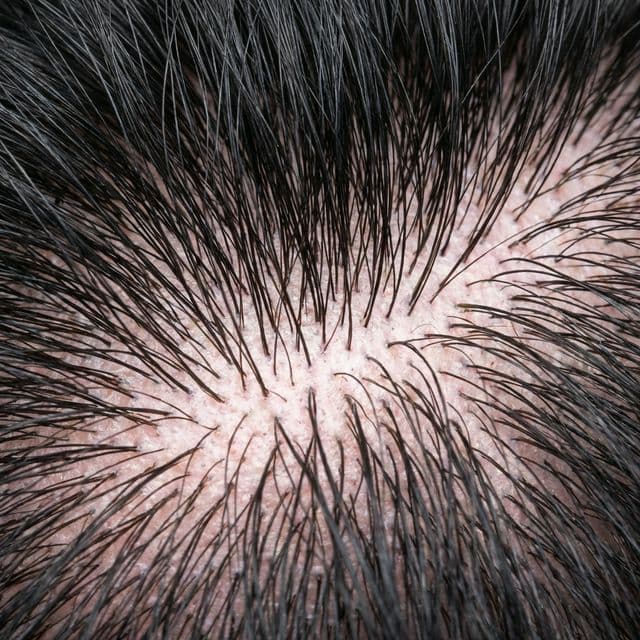
- Miniaturised follicles (thinning hairs that are still present) are the dominant finding
- The patient has diffuse thinning rather than established bald patches
- It is used as part of a broader hair maintenance protocol alongside medical treatment (finasteride, minoxidil)
PRP is not effective when:
- Follicles are already permanently lost (the scalp is smooth and shiny with no hair of any size)
- The hair loss is advanced (Norwood scale 5–7 in men, or Ludwig grade 3 in women)
- The patient expects results equivalent to a transplant
In short: PRP maintains and improves what is already there. It cannot create where there is nothing.
What Is a Hair Transplant?
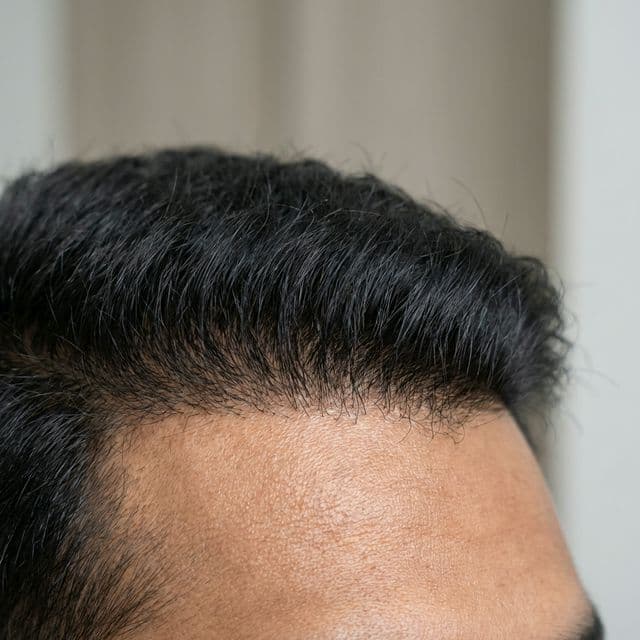
A hair transplant surgically relocates follicles from the donor area (typically the back and sides of the scalp, which are genetically resistant to DHT and therefore permanent) to the recipient area (thinning or bald zones). The two main techniques are:
FUT (Follicular Unit Transplantation): A strip of scalp is removed from the donor area, individual follicular units are dissected under a microscope, and grafts are placed. Higher graft yield; leaves a linear scar at the donor site.
FUE (Follicular Unit Excision): Individual follicular units are extracted one by one using a punch tool. No linear scar; donor site shows small dot scars that are imperceptible with short hair. Multiple sessions may be needed for large areas.
Transplanted follicles are permanent — they retain their DHT resistance from the donor area. Once established (fully grown in by 12 months), they do not shed.
Hair transplant produces its best results when:
- The patient has established thinning or baldness with insufficient density in specific zones
- Donor hair is adequate in density and quality
- Hair loss is stable or being medically managed
- Expectations are aligned with what the donor supply can deliver
Hair transplant is not sufficient when:
- The donor area is itself thinning (hair loss affecting the back and sides) — common in diffuse thinners
- PRP-responsive follicles are present in the recipient zone and have not been addressed — transplanting into an unoptimised scalp may produce suboptimal graft survival
Comparing PRP and Hair Transplant
Duration of Effect
PRP results are not permanent. Growth factor stimulation improves follicle function, but hair loss (if caused by genetics or hormones) continues to progress. Most patients need maintenance sessions every 3–6 months to sustain the improvement. Without maintenance, the benefit gradually diminishes.
Hair transplant results are permanent. Transplanted follicles grow in your recipient area for life — they do not re-shed due to DHT because they came from DHT-resistant donor zones. However, native non-transplanted hair in adjacent areas may continue to thin if the underlying cause (androgenetic alopecia) is not addressed medically.
Invasiveness and Recovery
PRP is minimally invasive — multiple small injections across the scalp using a fine needle, with no incision, no stitches, and no significant downtime. Scalp tenderness for 24–48 hours is the typical experience.
Hair transplant is a surgical procedure taking 4–12 hours depending on graft count. Recovery involves visible scabbing at recipient sites for 7–10 days, donor area healing, and a temporary "shock loss" of transplanted hair (telogen effluvium) before regrowth begins at 3–6 months. The full result is visible at 12 months.
Cost
PRP sessions in Hyderabad typically cost ₹5,000–₹15,000 per session, with 3–6 initial sessions recommended, followed by maintenance. The total first-year cost for a maintenance protocol is comparable to or can exceed the cost of a single hair transplant over time.
Hair transplant in Hyderabad costs ₹90,000–₹2,80,000+ depending on graft count and technique. It is a one-time surgical investment with permanent results.
Evidence
PRP for hair loss has genuine supporting evidence from multiple randomised controlled trials showing improvement in hair density, shaft diameter, and growth phase duration — particularly in androgenetic alopecia. The quality of evidence has improved significantly in the past decade.
Hair transplant evidence is established over decades of surgical outcomes. For patients with appropriate donor supply and realistic expectations, it is the most effective and permanent solution for established hair loss.
Who Should Choose PRP?
You are a good PRP candidate if:
- Your hair loss is early-to-moderate and you still have thinning hairs (miniaturised follicles) in the affected area
- You are not yet ready for or do not need a transplant
- You want to slow the progression of hair loss while responding to medical treatment
- You have had a hair transplant and want to optimise native hair health in surrounding areas
- You want to improve overall scalp health and hair quality
Who Should Choose a Hair Transplant?
You need to consider a hair transplant if:
- You have established baldness or thinning in specific zones that will not respond to PRP
- Your hair loss has been stable for 1–2 years and the bald areas are not going to repopulate spontaneously
- Medical treatment has been tried and is not sufficient for the areas of concern
- Your donor area is assessed as adequate for the coverage you need
- You are at a point where maintenance treatments are not sufficient to meet your goals
When to Combine Both
For many patients, the right answer is both — used at different stages and for different purposes.
A common protocol at Inform Clinic:
- PRP is used in the months leading up to a hair transplant to optimise scalp vascularity and follicle health, improving the environment for graft survival
- Post-transplant PRP sessions (typically at 1, 3, and 6 months after transplant) support graft establishment and stimulate surrounding native follicles
- Long-term PRP maintenance manages the native (non-transplanted) hair that continues to thin over time
This combination approach addresses both the permanent restoration of bald areas (transplant) and the ongoing management of active hair loss in surrounding zones (PRP + medical treatment).
The Most Practical Advice
If you are uncertain whether you need PRP, a hair transplant, or both — the answer is a proper scalp assessment by a qualified hair restoration specialist. At Inform Clinic, Dr. Dushyanth Kalva uses dermoscopy and clinical staging to assess the degree of miniaturisation, donor density, and the extent of permanent loss. This gives a clear, evidence-based answer rather than a treatment recommendation driven by what is most profitable to offer.
Hair loss treated at the right stage with the right tool produces the best long-term outcome. Book a consultation at Inform Clinic in Hyderabad to understand exactly where you are and what your options actually are.