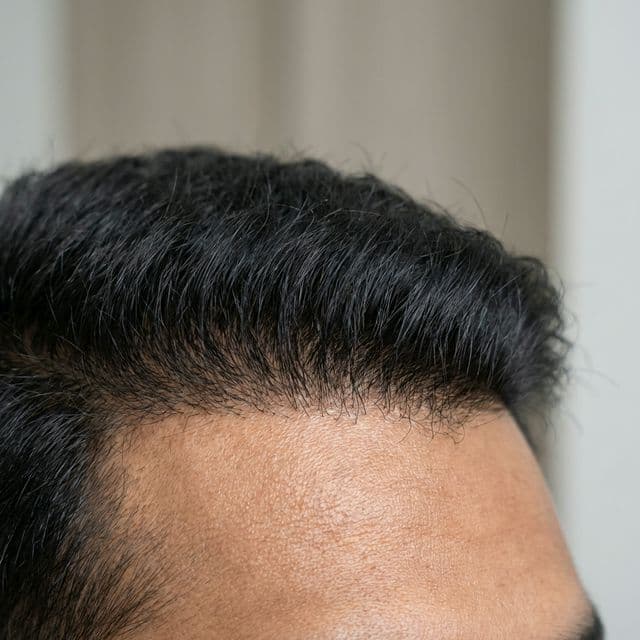
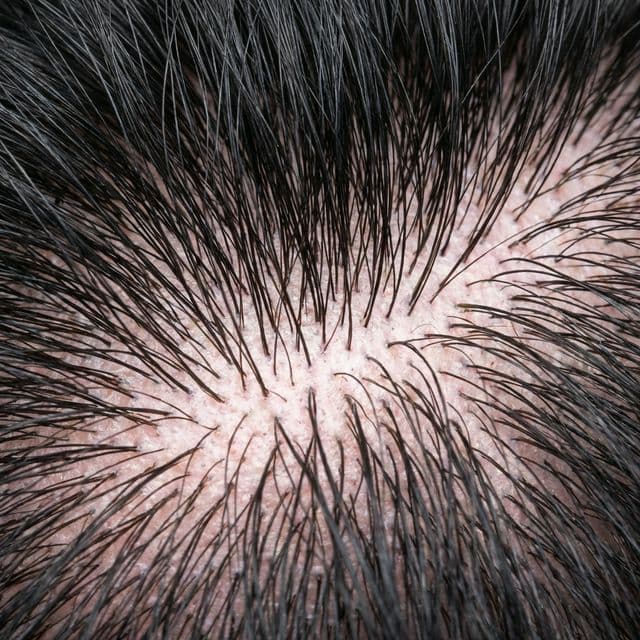
Choosing a hair transplant clinic is not the same as choosing the cheapest per-graft quote. In Hyderabad, patients may see large differences in price, technique names, promised graft counts, doctor involvement, and what is included after surgery. The difficult part is knowing which differences matter for your scalp and which are mainly marketing.
A good clinic should help you answer four questions before you book: Do I actually need a transplant now? What area should be treated first? How many grafts can be used safely? Who will plan and perform the important parts of the procedure? This checklist is designed to help you compare clinics using those questions, not just star ratings or package prices.
Start with the diagnosis, not the procedure name
Hair loss has several possible causes, and a transplant only treats the areas where hair has already been lost. It does not stop ongoing miniaturisation of your existing hair. A consultation should therefore begin with a history and scalp examination rather than jumping straight to FUE, DHI, robotic transplant, or a fixed number of grafts.
What a responsible consultation should assess
- The pattern and speed of your hair loss, including whether the hairline, mid-scalp, crown, or all three areas are changing.
- Family history, previous treatments, medical conditions, medications, nutrition, and any recent illness or major stress.
- The density and quality of the donor area at the back and sides of the scalp.
- Hair calibre, curl, contrast between hair and skin, scalp laxity, and the direction in which your hair naturally grows.
- Whether medication, observation, PRP, or another non-surgical approach should come before or alongside surgery.
Be cautious if the first conversation is mainly about a discount, a “limited-time” offer, or a guaranteed number of grafts before anyone has examined your scalp. A transplant plan is an anatomical decision. It should be personalised to your present loss and your likely future loss.
Compare the surgeon’s role, not just the clinic brand
Hair transplantation is a team procedure, but not every team is organised in the same way. Trained technicians may assist with graft handling and other steps, while the surgeon should remain responsible for the clinical plan and the critical surgical decisions. Ask the clinic to explain, in plain language, which parts the surgeon personally performs and which parts are delegated.
Questions to ask about surgeon involvement
- Who examines my scalp and decides whether I am a candidate?
- Who designs the hairline and decides the density in each zone?
- Who makes the recipient-site incisions or channels?
- Who performs or directly supervises extraction and implantation?
- Who is available if there is a complication or an unexpected healing issue?
- Will I meet the operating surgeon before I pay a deposit and on the day of surgery?
The goal is not to demand that one person perform every movement. The goal is to understand accountability. You should know who is making the decisions that affect hairline shape, graft direction, donor safety, and the clinical response to problems.
Evaluate the graft plan for logic and long-term safety
A graft is a naturally occurring follicular unit that may contain one, two, three, or more hairs. The number of grafts is not the same as the number of hairs, and a bigger graft estimate does not automatically mean a better result. A sound plan explains where the grafts will go, why that distribution is appropriate, and how the donor area will be protected.
A written plan should make these points clear
- The zones to be treated now: hairline, frontal forelock, mid-scalp, crown, or a combination.
- The estimated graft range, with an explanation of what could change that estimate after examination.
- The intended density and the reason for prioritising one area over another.
- The expected use of single-hair grafts at the front and appropriate multi-hair grafts behind them where suitable.
- The donor-area strategy, including how much can reasonably be harvested over your lifetime.
- Whether a second procedure might be needed and how the first plan preserves options for the future.
A responsible clinic should be willing to show you a plan rather than only quoting a total. Ask whether the estimate is based on grafts or hairs, whether it includes beard or body hair, and whether “extra grafts” may be added on the day. A clear answer helps you compare like with like.
Understand FUE, FUT, DHI, and robotic terminology
Technique names can be useful, but they should not replace case planning. FUE describes removing follicular units individually from the donor area. FUT removes a strip of scalp and separates it into follicular units. DHI is often used to describe direct implantation with a specialised implanter, but it does not by itself tell you who is performing the procedure or whether it is the right choice for your scalp. Robotic or assisted systems may support parts of planning or extraction, but they do not remove the need for clinical judgement.
How to compare techniques sensibly
- Ask what problem the recommended technique solves in your particular case.
- Compare likely graft quality, donor scarring, recovery, graft capacity, and future options—not only the label.
- Ask whether the quoted technique changes because of your hair calibre, donor density, prior surgery, or the number of grafts required.
- Ask what happens if the preferred technique is not suitable once the surgeon examines your scalp.
For many patients, the most important variables are careful hairline design, atraumatic handling, appropriate graft placement, and long-term donor planning. A newer-sounding technique is not automatically a better technique for every patient.
Look for evidence of natural results, not only dramatic photographs
Clinic galleries can help, but they need to be read critically. A single striking photograph may hide the lighting, styling, camera angle, or the time elapsed after surgery. Hair transplant growth develops gradually, and final assessment usually requires patience. Ask to see multiple cases that resemble your own pattern, hair characteristics, age, and degree of loss.
A useful results gallery should show
- Before photographs with consistent lighting, angles, hair length, and wet or dry conditions.
- The frontal, top, and crown views—not only a carefully selected hairline close-up.
- A clear time point after surgery, ideally with later follow-up rather than only an early “after” image.
- The approximate graft count and the areas treated.
- Patients with different hair textures and stages of hair loss, not just the most photogenic examples.
Naturalness is about more than coverage. Look for an irregular, age-appropriate hairline; correct direction and angle; gradual transition from fine hairs to denser grafts; and a donor area that does not look overharvested. A clinic that discusses limitations openly is often more useful than one that promises perfect density.
Compare cost by what is included, not by the headline number
Current Hyderabad search results show that clinics commonly present hair transplant pricing as a range or as a per-graft figure, but the final quote can change with graft count, technique, surgeon experience, facility standards, and aftercare. Two quotes that look different may include different services. Two quotes that look similar may provide very different levels of surgical involvement.
Ask for an itemised written estimate
- Consultation and scalp assessment.
- Surgeon and operating-team fees.
- Facility, sterile supplies, local anaesthesia, and monitoring.
- The estimated graft range and the method used to count grafts.
- Medicines, dressings, wash instructions, and follow-up appointments.
- Any optional PRP, GFC, medication, or supportive treatment—and whether it is genuinely recommended.
- The policy if fewer grafts are used than estimated, or if the procedure needs to be staged.
Do not choose a clinic solely because it quotes the lowest per-graft rate. A low base rate may exclude medical review, surgeon time, post-operative care, or treatment for continuing hair loss. At the same time, a high quote is not proof of quality. The useful comparison is value: a medically appropriate plan, safe donor management, accountable surgery, transparent inclusions, and realistic follow-up.
Check safety and aftercare before you book
A hair transplant is elective surgery. Even when it is performed under local anaesthesia, it needs proper patient selection, sterile practice, emergency planning, and follow-up. A clinic should be able to explain the common short-term effects—swelling, crusting, temporary numbness, and shedding—as well as uncommon problems such as infection, poor growth, excessive scarring, or an unnatural result.
Before paying a deposit, confirm
- Where the procedure will take place and who is medically responsible for you.
- What pre-operative tests or medication instructions apply to you.
- How the clinic handles pain, bleeding, swelling, fever, or an unexpected reaction.
- How soon you can contact the clinical team after you go home.
- When the first wash, review, and later growth assessments are scheduled.
- What the clinic recommends for protecting existing non-transplanted hair.
Be especially careful with guarantees of “100% growth” or “permanent results for everyone.” Transplanted hairs can be durable, but outcomes depend on diagnosis, donor quality, surgical technique, healing, and the progression of native hair loss. A serious consultation discusses uncertainty instead of hiding it.
A practical shortlist scorecard for Hyderabad clinics
Once you have spoken to two or three clinics, score each one using the same questions. This reduces the influence of persuasive sales conversations and makes it easier to compare a premium quote with a budget quote.
- Diagnosis: Did the consultation investigate the cause and pattern of loss?
- Plan: Did the clinic explain zones, graft range, density, and donor limits?
- Surgeon: Do you know who makes the key decisions and performs the critical steps?
- Results: Did you see comparable cases with credible follow-up?
- Safety: Were facility, emergency contact, and aftercare explained clearly?
- Cost: Is the estimate itemised, written, and clear about exclusions?
- Trust: Did the team answer uncomfortable questions without pressure?
You can give each category a score from one to five, but do not average away a serious red flag. A clinic with an excellent price but unclear surgeon accountability should not be rescued by a good review score. Safety, diagnosis, and transparency are decision gates, not optional extras.
When you may need more time before surgery
A consultation may end with a recommendation to wait. That is not necessarily a lost opportunity. If your hair loss is changing quickly, your donor area is limited, the diagnosis is uncertain, or you have not tried appropriate medical treatment, time can protect your future choices. Younger patients in particular may need a conservative hairline and a plan for ongoing loss rather than an aggressive attempt to recreate their teenage hairline.
You should also pause if you feel rushed to pay, if the graft count changes without explanation, if the clinic will not let you meet the surgeon, or if the photos and promises seem too good to be true. A second consultation with a qualified plastic surgeon or hair-restoration specialist can clarify whether the plan is realistic.
Frequently Asked Questions
What is the first thing I should compare between hair transplant clinics in Hyderabad?
Compare the quality of the diagnosis and the clarity of the surgical plan first. You should understand the cause and pattern of your loss, the zones being treated, the estimated graft range, the donor-area limits, and the surgeon’s role before comparing package prices.
Is the cheapest hair transplant clinic in Hyderabad a bad choice?
Not automatically, but price alone cannot tell you whether a plan is safe or appropriate. Ask what the quote includes, who performs the critical steps, how the graft count is calculated, and what follow-up is provided. A transparent, medically suitable quote matters more than the lowest headline rate.
Should I choose FUE or DHI?
The right choice depends on your donor area, hair characteristics, recipient zones, graft requirements, and the surgeon’s plan. DHI is not a universal upgrade over FUE, and a technique label should never replace an examination and a discussion of trade-offs.
How many grafts will I need?
There is no safe universal number. The estimate depends on the area of loss, desired coverage, follicular-unit distribution, hair calibre, donor density, and the need to preserve grafts for future loss. A good clinic should give you a range with reasons rather than a random fixed number.
When will I see the final hair transplant result?
Growth is gradual. Early shedding can be part of the normal course, while visible improvement develops over several months. The exact timeline varies, so follow-up photographs should be interpreted in context and not compared with heavily edited online images.
Can a hair transplant stop future hair loss?
No. It redistributes donor hair to areas of loss. Existing native hair can continue to thin, which is why diagnosis, medical treatment when appropriate, and long-term planning are important even after surgery.
The practical takeaway
The best hair transplant clinic for you is not necessarily the one with the biggest graft promise, the newest technique name, or the lowest price. It is the clinic that can explain your diagnosis, design a conservative and natural plan, protect your donor area, keep the surgeon accountable for critical decisions, show credible results, and provide transparent aftercare.
Take your shortlist to a proper consultation, ask the same questions at every clinic, and give yourself time to compare the answers. If a Hyderabad clinic can make the plan understandable—and can also explain its limitations—you are in a much stronger position to decide whether a transplant is right for you and when to proceed.
This article is for general education and does not replace an in-person medical consultation. Your eligibility, technique, graft plan, risks, and expected result must be assessed individually by a qualified surgeon.