Quick answer
There is no single graft number that suits every person. A graft is a small group of hair follicles moved from the donor area to a thinning or bald recipient area. The number needed depends on the size of the area, the pattern of hair loss, your donor density, hair thickness, the number of hairs in each graft, and how much future hair loss needs to be planned for.
A small hairline correction may need far fewer grafts than a front-and-crown restoration. A person with fine hair may need a different plan from someone with thick hair and naturally dense donor hair. The aim is not to place the largest possible number. The aim is to use a safe number of suitable grafts to create a natural frame and useful coverage while protecting the donor area for the future.
If you are considering a procedure in Hyderabad, start with an assessment of your scalp and donor area. Our hair transplant treatment guide explains the main techniques and recovery. This article focuses only on how graft needs are estimated and why a number copied from another patient can be misleading.
What does a hair graft mean?
A graft is not always one hair. It is a follicular unit that may contain one, two, three or sometimes more hairs growing together. In everyday conversation, people may use “graft” and “hair” as if they mean the same thing. They do not. A plan for 2,000 grafts may contain more than 2,000 individual hairs, depending on the average number of hairs in each graft.
This difference matters when you compare two quotations. Ask whether the number refers to grafts or individual hairs. Also ask how the clinic counted the grafts, whether the number is an estimate or a confirmed plan, and which parts of the scalp it is meant to cover.
A graft count alone also cannot predict the appearance. Hair calibre, curl, colour contrast with the scalp, skin quality and placement pattern affect how much coverage is seen. Two people with the same graft number can have different visual results.
The main factors that decide the number
The size and location of hair loss
The first question is where coverage is needed. A small recession at the temples, a low-density hairline, a broad frontal zone, a crown, or the whole top of the scalp are different planning problems.
The recipient area is measured rather than guessed from a photograph. A clinical planning model considers the area to be covered and the density that may be sensible for that person. The density is not pushed as high as possible in every case. Very dense placement can increase the demand on the donor area and may not be safe or useful for every scalp.
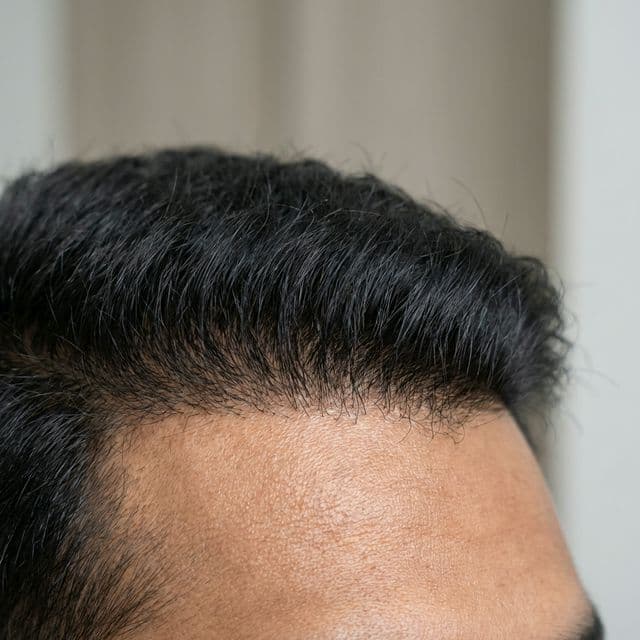
The hairline usually needs fine, single-hair grafts placed in an irregular pattern so that the front edge does not look like a straight row. Behind it, the surgeon may use grafts with more hairs to build density. The crown has a changing swirl and may need careful direction and distribution rather than simply filling every visible gap.
Donor density and donor quality
The donor area is usually the hair-bearing region at the back and sides of the scalp. Its density, hair thickness, hair direction, curl, skin characteristics and response to extraction all affect how many grafts can be used safely.
A donor area can look dense when the hair is long but appear different when it is cut short. The assessment should consider both the number of available follicular units and how the area will look after some are removed. The donor supply is limited. Taking too many grafts or taking them too close together can make the area look thin or patchy.
A safe plan also considers whether the donor hair is likely to remain stable. The safe donor area is not identical for every person. Hair that looks stable today may still be affected by a wider pattern of hair loss in the future. That is why a young patient with active or unclear hair loss may need observation and medical assessment before a large operation.
Hair thickness and hair-to-graft ratio
Thicker hair shafts can give more visual coverage with fewer grafts than fine hair. A graft containing several hairs may also contribute more coverage than a single-hair graft. The surgeon should assess these features rather than using a fixed package number.
The contrast between hair and scalp also matters. Dark hair over a lighter scalp may show thinning more clearly. Curly or wavy hair can create more visual bulk. These are planning factors, not promises. They help the surgeon choose where to use fine grafts, where to build density and when a smaller change may look more balanced.
Your age and future hair loss
A transplant moves hair. It does not stop the hair that was not transplanted from thinning. If native hair behind or between the transplanted areas continues to weaken, the original plan may look uneven over time.
For this reason, the design should allow for possible future loss. A very low hairline can use a large number of grafts now and leave fewer grafts for later. A conservative hairline may give a more flexible long-term plan. The right choice depends on age, family pattern, diagnosis, rate of loss, treatment options, donor supply and personal goals.
Do not assume that a large graft number is proof of a better plan. A responsible consultation should explain what happens if more hair loss occurs and whether medical treatment may be useful for protecting native hair. Do not start or stop medicines without advice from a qualified clinician.
How graft needs differ by area
These are planning patterns, not fixed numbers or a quotation.
Hairline and temples
The front edge is seen first and needs careful design. The surgeon may use finer grafts at the leading edge, with denser grafts behind them. Temples also affect facial balance and may need fewer grafts than a broad frontal restoration.
The amount required depends on the width of the recession, the desired hairline position, facial proportions, hair density and the need to keep the result natural as you age. Lowering a high hairline can require many more grafts than filling a small mature recession.
Frontal scalp
The frontal scalp often has high visual value because it frames the face. If the hairline is present but the area behind it is thin, grafts may be distributed to improve density rather than rebuild the whole front edge.
The surgeon must decide whether the existing hair is miniaturising and whether it can be protected. Placing grafts into an area with active loss without a wider plan may lead to patchy density later.
Crown
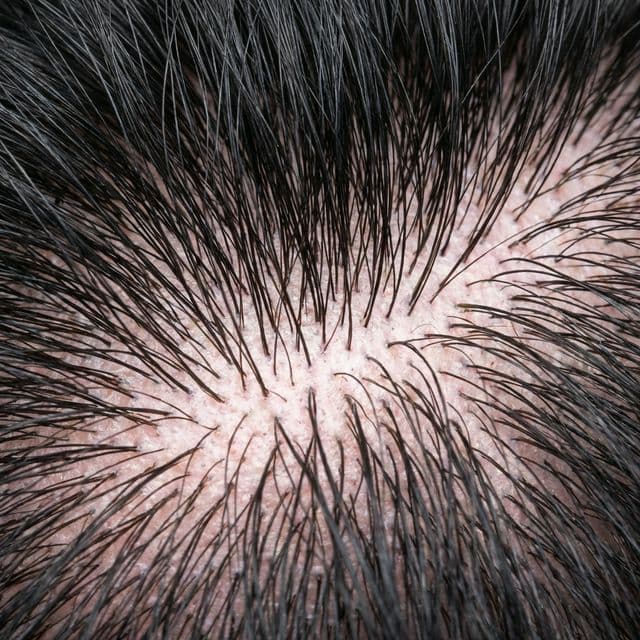
The crown is a rounded area with a natural whorl. Its size can be difficult to judge from above, especially in photographs. A small change in the crown may require a wider area of distribution than a patient expects.
The crown also sits further back and may be less visible than the hairline in daily conversation. Some plans prioritise the front first and keep the crown under review. Others treat both areas in stages. The choice depends on age, loss pattern, donor capacity and the patient’s priorities.
Front, mid-scalp and crown together
When the front, mid-scalp and crown are all thin, the available donor hair may not be enough to recreate the density of a youthful scalp everywhere. The plan may therefore focus on framing the face, improving coverage in priority areas, or dividing treatment into stages.
Staging is not a sign that treatment has failed. It may be safer when the recipient area is large, the donor area is limited, the operation would otherwise be too long, or future hair loss is uncertain. The surgeon should explain what each stage is expected to achieve and what remains untreated.
Why online graft calculators have limits
A calculator can help you understand the idea of area and density. It cannot examine your scalp, measure donor density, assess miniaturised hair, confirm the cause of hair loss or predict your future pattern. A photograph can also hide the crown, change the apparent density and make the hairline look different because of lighting or styling.
Be careful with offers that promise the same large number to every patient. A number given before an examination may be a marketing package rather than a surgical plan. Ask whether the plan was made by the operating surgeon, how the donor area was assessed, and what will happen if the surgeon finds that fewer grafts are safe.
A proper assessment may include a history of hair loss, family pattern, past illness, medicines and supplements, scalp examination, donor density and hair calibre review, photographs and a discussion of medical options. Further tests may be needed if the pattern is sudden, patchy, inflamed or not typical of common pattern hair loss.
Grafts, sessions and recovery planning
A graft count should be discussed together with the operation itself. The method of harvesting, the number of areas treated, the length of the session, anaesthesia, graft handling and aftercare all affect the plan.
FUE removes individual follicular units through small punches. FUT removes a strip of scalp and divides it into follicular units. The suitable method depends on the patient and the surgeon’s assessment. It is not safe to choose a method only because one label sounds newer or because a clinic advertises a large number in one day.
A larger session may mean more swelling, more fatigue and a greater demand on the donor and recipient areas. A staged plan may allow the team to protect the donor area and assess healing between sessions. Recovery instructions may cover washing, sleeping, exercise, sun exposure, caps and medicines. Follow the instructions given for your own procedure.
When a graft estimate should be delayed
An estimate should be treated carefully when hair loss is rapidly changing, the diagnosis is uncertain, the scalp is inflamed or scarred, there are unexplained bald patches, or the donor area is weak. Sudden or patchy loss needs medical assessment. A transplant is not a substitute for finding the cause of hair loss.
A person who expects one procedure to restore the exact density of teenage hair may need an expectation discussion before deciding. Hair transplant surgery has limits. It can redistribute suitable donor hair, but it cannot create new donor follicles or guarantee a particular density, hairline or future result.
Seek a medical review before cosmetic planning if you have scalp pain, marked scaling, sores, bleeding lesions, a rapidly enlarging bald patch or sudden shedding. Any suspicious scalp lesion should be assessed rather than covered by a cosmetic procedure.
Questions to ask at a Hyderabad consultation
- How many grafts do you recommend, and which areas will they cover?
- Does the number mean grafts or individual hairs?
- How did you measure my recipient area and donor density?
- What is the average number of hairs in my grafts?
- Which grafts will be used at the hairline, and how will the crown be planned?
- What future hair loss do you expect, and how does the design allow for it?
- Is one session enough, or would staging be safer for me?
- Who will design the hairline, perform the extraction and place the grafts?
- What happens if fewer grafts are safe on the day of surgery?
- What are the likely recovery restrictions and follow-up visits?
These questions help you compare plans by clinical reasoning rather than by the largest number on a package.
Frequently asked questions
Is 2,000 grafts enough for a hair transplant?
It may be enough for a limited hairline or frontal correction in one person and not enough for a large front-and-crown area in another. The answer depends on the recipient area, density goal, hair characteristics, donor supply and future hair loss. A fixed number cannot be called enough without an assessment.
How many grafts are needed for a receding hairline?
A small recession may need fewer grafts than a wide, low hairline reconstruction. The surgeon also needs to consider the hairline shape, temple points, facial proportions and whether native hair behind the front edge is still thinning. A conservative design may use grafts more efficiently over time.
How many grafts are needed for a crown?
The crown size, the width of the thinning area and the direction of the natural whorl affect the number. The front may be prioritised when donor supply is limited because it has greater effect on facial framing. This is a planning choice, not a universal rule.
Can a hair transplant use unlimited grafts from the donor area?
No. The donor area is limited. Removing too many grafts can make it look thin and can reduce the options available for future treatment. Safe harvesting depends on donor density, hair characteristics, the pattern of future loss and the method used.
Does a higher graft number mean a better result?
No. A natural result depends on diagnosis, design, graft quality, placement, donor protection, healing and future hair loss. More grafts can be useful when safely planned, but using more than the donor or recipient area can support may increase risk and reduce long-term flexibility.
Can graft numbers be decided from a photograph?
A photograph may support an initial discussion but cannot replace an examination. It may not show donor density, hair calibre, scalp health, miniaturisation or the full crown. A final plan should be made after appropriate assessment.
Practical takeaway
The right graft number is the smallest safe number that addresses the priority areas with a natural design and a long-term plan. It is based on recipient size, donor supply, hair characteristics and the likely future pattern of loss. Do not compare your head with another patient’s package or accept a fixed number without asking how it was measured.
If you want to understand whether you are a suitable candidate, arrange an in-person review and discuss the diagnosis, donor protection, hairline design, future loss and staged options. Read the hair transplant treatment page for the next step, but remember that only a qualified clinician examining your scalp can give a personal graft estimate.
References
- International Society of Hair Restoration Surgery and peer-reviewed authors: Hair Transplant Practice Guidelines
- National Center for Biotechnology Information: Hair Transplantation, StatPearls
- British Association of Aesthetic Plastic Surgeons: Hair Transplant Surgery patient information
- Hair Transplant Forum International: Optimizing the efficiency of recipient area estimation
- International Society of Hair Restoration Surgery: FUE terminology and donor-area guidance