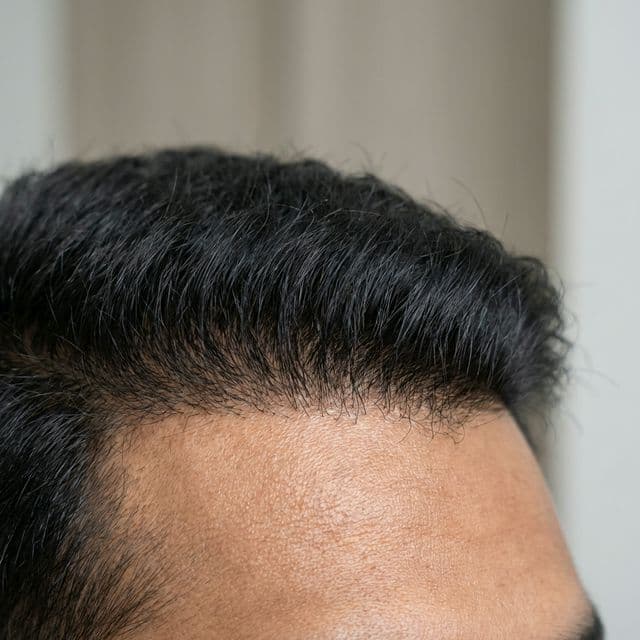
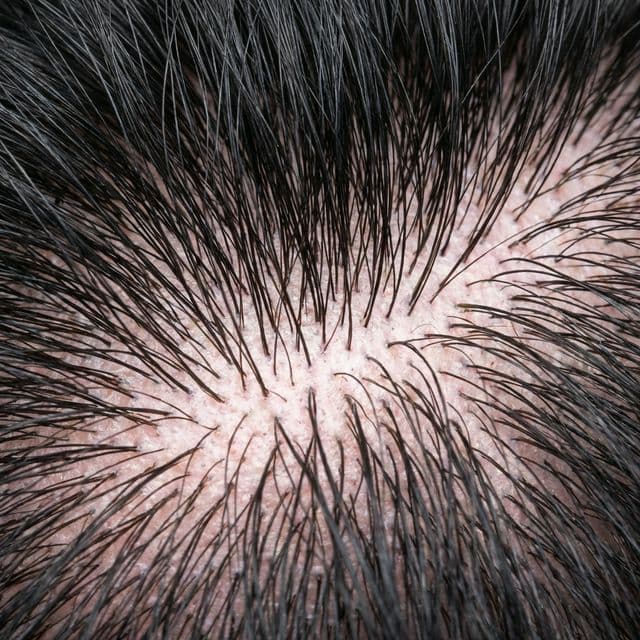
A hair transplant is a planned surgical procedure. Hair is taken from a donor area, usually the back or sides of the scalp, and placed into areas that are thinning or bald. The main steps are consultation and design, donor harvesting, graft preparation, recipient-site creation, graft placement, and aftercare.
For a patient in Hyderabad, the important question is not only which technique is advertised. It is whether the diagnosis is correct, whether the donor area can support the plan, who will perform the surgical parts, and how future hair loss will be managed. You can read about the treatment pathway on the hair transplant service page before arranging a consultation.
Step 1: Confirm the cause of hair loss
A transplant is mainly considered for permanent hair loss, such as pattern hair loss, when there is a suitable donor supply. It is not a general treatment for every type of shedding. Sudden hair loss, patchy loss, scalp inflammation, active infection, or unexplained scarring may need a medical assessment first.
During the consultation, the doctor looks at the pattern and speed of hair loss, family history, scalp health, hair calibre, donor density, and the stability of the hairline. Questions about medicines, recent illness, nutrition, stress, and previous procedures may also matter. If the pattern is unclear, tests or a dermatology opinion may be advised before surgery.
What the doctor assesses
- The front hairline, temples, mid-scalp and crown, rather than only the area that bothers you today.
- The density and quality of hair at the back and sides of the scalp.
- Whether native hair around the proposed transplant may continue to thin.
- Whether the scalp has conditions such as dermatitis, infection or scarring that need treatment.
- Your expectations about density, coverage, hairline shape and the time needed to see growth.
This step prevents a common mistake: using too many grafts for a short-term design and leaving too little donor hair for future needs. A natural plan should look acceptable as the person ages, not only on the day of surgery.
Step 2: Plan the hairline and grafts
The doctor marks the areas that may receive grafts and discusses how much coverage is realistic. The design should follow facial proportions, age, hair characteristics and the amount of donor hair available. A very low or straight hairline may look unnatural and can use a large part of the donor supply.
A graft is a small tissue unit containing one or more hair follicles. Single-hair grafts are often useful near the front edge because they can create a softer transition. Grafts with more hairs can be placed behind the hairline where greater coverage may be possible. The exact plan depends on the patient, not on a fixed number that suits everyone.
Photographs, scalp examination and, where available, magnified assessment help with planning. The doctor should explain what the proposed graft count is intended to achieve and what it cannot achieve. A transplant can improve coverage, but it cannot recreate the density of a full, untreated scalp in every patient.
Step 3: Prepare for the procedure
The clinic gives instructions about washing the scalp, medicines, alcohol, smoking and the day of surgery. Tell the doctor about all medicines and supplements, allergies, bleeding problems, diabetes, blood-pressure treatment and any previous scalp surgery. Do not stop a prescribed medicine on your own; ask the treating doctor what to do.
Most hair transplants are performed as outpatient procedures with local anaesthesia. You remain awake, but the scalp is numbed. Some clinics may use light sedation, depending on the plan and the patient’s needs. The procedure may take several hours, especially when a larger area is being treated, and you should arrange transport home if sedation is used.
Step 4: Harvest grafts from the donor area
FUE harvesting
In follicular unit excision, often called FUE, individual follicular units are removed from the donor area using a small punch. The surgeon or trained medical team makes careful extractions while trying to protect the surrounding follicles. The tiny extraction sites heal as small marks, which may be difficult to see once healed, although they are not guaranteed to disappear completely.
The donor area may be fully or partly trimmed, depending on the planned work. Overharvesting can make the donor area look thin or patchy and can reduce the options for future surgery. This is why the number of grafts should be based on donor assessment, not only on a patient’s requested number.
FUT or strip harvesting
In follicular unit transplantation, or FUT, a narrow strip of hair-bearing skin is removed from the donor area. The strip is divided under magnification into individual grafts, and the donor wound is closed with stitches. This method leaves a linear scar, which is usually covered by surrounding hair but may be visible with very short hairstyles.
FUE and FUT both have a place in hair restoration. The suitable approach depends on the donor area, hair characteristics, previous surgery, graft requirement, hairstyle, healing factors and the doctor’s assessment. The name of the technique alone does not guarantee a better result.
Step 5: Prepare and protect the grafts
After harvesting, grafts are sorted and kept in a controlled solution while they wait for placement. They are delicate. Drying, crushing, overheating, prolonged handling or poor storage can reduce the chance that a graft will grow. Graft preparation therefore needs careful handling and a clean, organised operating area.
The team counts and groups grafts according to the plan. The doctor may separate finer grafts for the hairline from larger grafts for the deeper zones. Good preparation also helps the team place grafts in the correct direction and avoid mixing up the planned areas.
Step 6: Create recipient sites
The recipient area is cleaned and numbed. The doctor creates tiny openings or channels in the scalp where the grafts will sit. Their angle, direction, spacing and depth matter. Hair does not grow straight up from the scalp, so the sites must follow the natural direction of nearby hair and the changing pattern across the hairline, temples and crown.
This is one of the most important design steps. Poorly angled sites can make transplanted hair stand up, point in the wrong direction or look plug-like. Sites that are too close together may also affect blood supply and healing. A safe plan balances coverage with the scalp’s ability to heal.
Step 7: Place the grafts
The prepared grafts are inserted into the recipient sites, usually with fine forceps or an implanter device. The placement follows the agreed design. Single-hair grafts are commonly used at the leading edge, while fuller grafts may be placed behind it. The doctor should check the pattern as the work proceeds so that the result is balanced from the front, sides and top.
Placement is not simply filling empty spaces. The surgeon must consider hair direction, curl, skin characteristics, existing native hairs and how the result may change if surrounding hair continues to thin. The final appearance depends on diagnosis, planning, graft quality, surgical technique and healing.
Step 8: Dress the scalp and go home
At the end, the scalp is cleaned and may be covered with a light dressing. Most patients go home the same day. It is normal to have tightness, tenderness, mild bleeding or swelling, scabs and temporary numbness. Forehead or eyelid swelling can occur in the first few days in some patients.
Your clinic should give written instructions for sleeping, washing, spraying or applying medicines, pain relief, sun protection and exercise. Follow the treating doctor’s instructions because the timing can vary with the technique and the extent of surgery. Do not scratch, pick scabs or rub the grafts.
What happens during the first weeks?
The grafts need gentle care while they settle. Washing is usually restarted carefully according to the clinic’s instructions. Strenuous exercise, swimming, direct sun and anything that causes rubbing or pressure may need to be limited for a period. If FUT stitches are not dissolvable, they are removed at the time advised by the surgeon.
Some transplanted hair commonly sheds a few weeks after surgery. This can be alarming, but the hair shaft may shed while the follicle remains in the skin. New growth takes time. Early changes should not be used to judge the final result, and the full result may take many months.
Contact the clinic if you notice
- Increasing rather than settling pain, redness, warmth or swelling.
- Persistent bleeding that does not stop with the advice given by the clinic.
- Fever, pus, foul-smelling discharge or other signs of infection.
- Sudden severe swelling, breathing difficulty, or any symptom that feels urgent.
If you have severe symptoms or feel seriously unwell, seek urgent medical care. Do not wait for the next routine follow-up.
When will the transplanted hair grow?
Growth is gradual. The first visible new hairs may appear after a few months, but the timing varies. Hair can look uneven during the early stages, and the texture may be fine or curly before it matures. A doctor will usually assess progress over several visits rather than promising a result at a fixed early date.
A transplant does not stop ongoing hair loss in the native, non-transplanted hair. Some patients may be advised to consider medical treatment to protect existing hair, if appropriate for them. This should be discussed with a qualified doctor, especially if there is rapid or unexplained shedding.
How to choose a safe hair transplant plan in Hyderabad
Before you book, ask who will examine you, design the hairline, perform the extractions and create the recipient sites. Ask how the clinic assesses donor capacity, how grafts are stored, who handles them, what aftercare is included and what support is available if a problem occurs.
- Ask for a diagnosis, not only a package or graft quote.
- Ask which technique is recommended for you and why.
- Ask what donor-area changes and scars are possible.
- Ask how future hair loss will be considered in the design.
- Ask what results are realistic at 6, 12 and 18 months.
- Ask for a clear follow-up plan and an emergency contact.
Be careful with claims of guaranteed density, painless surgery, unlimited grafts or permanent protection of all your hair. A responsible consultation includes limitations, risks and alternatives. If you are unsure, a second medical opinion is reasonable.
Frequently asked questions
Is a hair transplant painful?
The scalp is numbed with local anaesthetic, so sharp pain during the main surgical steps should be limited. You may feel pressure, movement or brief discomfort during injections. Tenderness, tightness or aching can occur after the procedure and is usually managed with the medicines advised by the clinic.
How long does a hair transplant take?
It often takes several hours, but the duration depends on the number of grafts, the technique, the donor area and the amount of detail in the design. Larger sessions may be split or may need a longer operating day. The clinic should explain the expected duration before surgery.
Does FUE leave scars?
FUE leaves many small extraction marks. They may be hard to notice after healing, especially when hair is kept at a suitable length, but no surgery is completely scar-free. FUT leaves a linear donor scar. Your risk of visible scarring depends on technique, healing, donor planning, skin factors and how short you keep your hair.
Does transplanted hair fall out after surgery?
Temporary shedding of the transplanted hair shaft can happen during the early healing phase. It does not automatically mean that the graft has failed. New growth takes months, and the doctor should review you if shedding is accompanied by severe pain, infection, marked inflammation or other unexpected symptoms.
Can everyone with hair loss have a transplant?
No. A transplant may not be suitable when hair loss is active or unexplained, the donor area is weak, there is a scarring scalp condition, or expectations are not realistic. Some patients benefit from medical treatment or further diagnosis first. A consultation is needed to assess this safely.
Can I return to work after a hair transplant?
Some people return to desk work after a few days, while others prefer more time because of swelling, scabs or the visibility of the procedure. Your work, hairstyle, technique and the size of the session matter. Follow the recovery advice given by your surgeon.
Practical takeaway
A hair transplant is a sequence of small but important surgical decisions. The visible result depends on the diagnosis, donor planning, hairline design, graft handling, site direction, placement and aftercare. A larger graft number is not automatically a better plan.
If you are considering treatment in Hyderabad, start with a proper medical consultation and a realistic plan for both transplanted and native hair. The hair transplant treatment page is the next step for understanding the local service, but the final decision should follow an examination of your scalp and donor area.