Quick Answer
A hair transplant and a hair system solve visible hair loss in completely different ways. A transplant redistributes your own permanent donor hair into thinning or bald areas, so the result grows from your scalp and can be managed like natural hair. A hair system, sometimes called a hair patch or non-surgical hair replacement, covers the area immediately with a custom-made base and attached hair, but it needs regular cleaning, refitting, replacement, and ongoing maintenance.
For a person with a stable pattern of hair loss, a healthy donor area, and enough time to wait for growth, a well-planned hair transplant is usually the more permanent option. A hair system may be more practical when you need an immediate cosmetic change, are not ready for surgery, have limited donor hair, or are not a suitable surgical candidate. The right choice depends on your diagnosis, age, donor supply, expectations, budget over several years, and tolerance for maintenance.
This guide compares hair transplant vs hair system in Hyderabad so you can walk into a consultation knowing what to ask and what each option can realistically deliver.
Hair Transplant and Hair System: What Is the Difference?
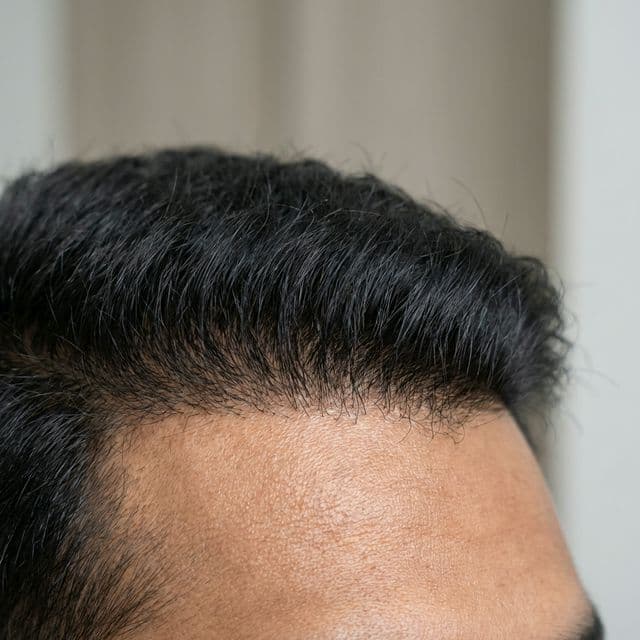
A hair transplant is a surgical hair-restoration procedure. Follicular units are taken from a donor area, usually the back and sides of the scalp, and placed into carefully designed recipient sites. Techniques may include FUE, FUT, DHI-style implantation, or robotic assistance depending on the patient and the surgeon's plan. The transplanted follicles continue to grow after healing because they are selected for their relative resistance to pattern hair loss.
A hair system is a cosmetic replacement. A fine mesh, lace, skin, or hybrid base carries human or synthetic hair and is attached to the scalp using adhesive, clips, or another fitting method. It can create the appearance of density on the same day, but it does not restore follicles or stop the underlying hair-loss process.
That difference is the central decision: a transplant changes the biology and distribution of hair; a system changes the visible appearance for as long as it is worn and maintained.
Side-by-Side Comparison
Hair Transplant
- Uses your own donor follicles.
- Requires a procedure, healing time, and patience.
- Results develop gradually, often over six to twelve months.
- New hair can usually be washed, cut, and styled normally after recovery.
- Does not create unlimited density; donor supply is finite.
- May need medical treatment to protect non-transplanted hair.
- Has a larger upfront cost but limited recurring maintenance compared with a system.
Hair System
- Gives an immediate visual change without follicle surgery.
- Requires regular cleaning, attachment checks, refitting, and styling.
- The base and hair wear out and must be replaced periodically.
- Heat, sweat, swimming, friction, and adhesive sensitivity may affect comfort or durability.
- It can conceal extensive hair loss, but it does not restore the scalp.
- It may be reversible and useful while you decide whether surgery is right for you.
- The long-term cost depends on the quality of the system and how often it is replaced.
Neither option is automatically better for every patient. The better option is the one that matches the cause and stage of your hair loss as well as your lifestyle.
Cost in Hyderabad: Compare Total Cost, Not Just the First Quote
The cost of a hair transplant in Hyderabad is usually influenced by the number of grafts, the technique, the surgeon's involvement, the operating setup, and what is included in the package. A small hairline restoration and a large crown-and-midscalp reconstruction are not comparable cases. A transparent quote should explain the estimated graft range, who performs the critical surgical steps, the facility, medicines, follow-up, and what happens if the plan changes after examination.
A hair system usually has a lower initial price than surgery, but it is not a one-time purchase. You may pay for the base, fitting, cutting and blending, adhesive or clips, cleaning, periodic servicing, and replacement when the hair or base begins to show wear. The replacement interval varies with the material, quality, climate, care routine, and how often the system is worn.
A useful way to compare the two is to estimate your likely spend over three to five years:
- Hair transplant: procedure, consultations, medicines, possible maintenance treatment, and any future touch-up planning.
- Hair system: initial fitting plus recurring servicing, attachment products, repairs, replacement systems, and travel or salon time.
A transplant can be the larger financial commitment at the beginning, while a system can become the larger commitment over time if it needs frequent replacement. Ask for a complete written breakdown rather than comparing a headline package number with a single system price.
Which Option Looks and Feels More Natural?
A hair system can look very natural when the base, hair density, colour, texture, hairline, and blending are well matched. The immediate result can be useful for an event or for someone who wants to see how a fuller hairstyle changes their appearance. However, the system remains an external attachment. Wind, sweat, close inspection, a visible edge, colour mismatch, or changes in attachment can reveal it, especially when the hairline is exposed.
A transplant takes longer to look natural because the hairline must be designed and the follicles must grow. When grafts are placed at the correct angle and density, the hair becomes part of your scalp rather than a covering on top of it. The quality of the result depends heavily on donor assessment, hairline planning, graft handling, placement technique, and how future hair loss is anticipated.
Naturalness is not simply about how dense the hair looks on day one. It is also about whether the hairline fits your age, whether the pattern remains balanced as you age, and whether the result is sustainable with the donor hair you actually have.
Hair Transplant Recovery vs Hair System Maintenance
What Recovery from a Transplant Involves
Most patients need a short period of practical recovery rather than prolonged bed rest. Swelling, tightness, redness, small scabs, and temporary sensitivity can occur. The scalp needs gentle washing and protection during the early healing stage, and strenuous activity is usually restricted for a period advised by the surgeon. The transplanted hair may shed before new growth begins; this is a normal part of the cycle and should not be mistaken for failure.
The major time commitment is not the first week but the waiting period. Early growth is often uneven, and the final density cannot be judged too soon. The transplanted hair usually begins to show progressively over the following months, with meaningful assessment around the six- to twelve-month mark depending on the area and the individual growth cycle.
What Ongoing Hair System Care Involves
A system avoids surgical recovery but creates a maintenance routine. The base must be removed or serviced at regular intervals, the scalp cleaned, adhesive managed, and the hair reshaped or blended as it grows. Some people enjoy this routine; others find it tiring because the system becomes part of their schedule.
Hyderabad's heat, humidity, dust, commuting, gym use, and outdoor activity can all influence comfort and attachment. That does not make a system unsuitable, but it does mean you should ask how the clinic or provider manages sweat, edge lifting, scalp irritation, and maintenance during travel or exercise.
Who Is a Better Candidate for a Hair Transplant?
A consultation is needed, but a transplant may be worth considering if:
- Your hair loss pattern is diagnosed and reasonably stable.
- You have adequate donor hair with acceptable density and quality.
- Your expectations are realistic about coverage and density.
- You can wait several months for visible growth.
- You are willing to protect existing hair if medical treatment is recommended.
- You want a result that does not depend on daily attachment or replacement.
Age alone does not decide candidacy. A younger person with rapidly progressing hair loss may need a more conservative plan than an older person with stable loss. The important question is whether the proposed hairline and graft use make sense for your current pattern and likely future loss.
Who May Prefer a Hair System?
A hair system may make sense when:
- You need an immediate cosmetic result.
- You are not ready for a surgical procedure.
- The donor area cannot provide enough grafts for your desired coverage.
- You have a medical reason to postpone or avoid surgery.
- You want to test a new hairstyle before committing to a restoration plan.
- You understand and accept the maintenance routine.
A system can also be a temporary bridge while a patient completes medical evaluation, stabilises active hair loss, or waits before deciding on surgery. Choosing one does not prevent you from seeking a transplant consultation later, although scalp and adhesive care still matter.
Donor Area: The Factor Many People Underestimate
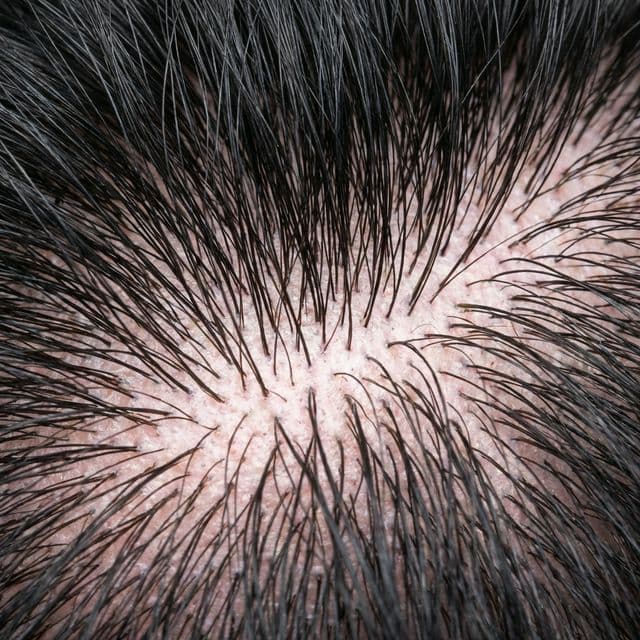
A transplant moves hair; it does not manufacture new follicles. The donor area therefore determines how much coverage is possible and how conservative the plan must be. A good assessment looks at density, hair calibre, the stability of the donor zone, the contrast between hair and skin, previous procedures, and the likely progression of hair loss.
Trying to fill every thin area at maximum density can use donor hair too quickly and leave no reserve for future needs. A responsible plan may prioritise the frontal hairline and midscalp, use density strategically, and set expectations for the crown. The crown can require substantial grafts because of its size and whorl pattern, and it should be planned in the context of the entire scalp.
This is where a system differs fundamentally: it can cover a large area regardless of donor supply, but it does not solve the underlying loss or provide growing hair.
What About PRP and Medicines?
Neither a transplant nor a hair system should be considered without diagnosing the cause of hair loss. Pattern hair loss, nutritional deficiency, thyroid disease, inflammatory scalp conditions, and temporary shedding need different approaches. Medicines or treatments such as minoxidil, finasteride for appropriate patients, or PRP may be recommended to slow progression or improve the quality of existing hair. They do not create the same immediate coverage as a system and do not replace a transplant when substantial permanent loss has occurred.
Treatment decisions should account for medical history, pregnancy plans where relevant, side-effect concerns, and the difference between preserving existing hair and replacing lost follicles. A reputable consultation explains those trade-offs rather than presenting one product or procedure as the answer to every type of hair loss.
Questions to Ask Before Choosing in Hyderabad
- What is causing my hair loss, and has it been properly diagnosed?
- If I choose a transplant, how many grafts are realistically safe for my donor area?
- Who designs the hairline and performs the extraction, incisions, and placement?
- What happens to my untreated hair over the next five to ten years?
- What is included in the transplant quote, and what costs are separate?
- If I choose a hair system, how often will it need servicing and replacement?
- How are sweat, swimming, exercise, travel, and scalp irritation managed?
- Can I see results from patients with a similar pattern and hair characteristics?
- What would make you advise against surgery in my case?
The last question is especially revealing. A surgeon who is willing to say that a transplant is not appropriate yet is usually thinking about long-term outcome, not just the immediate sale.
Frequently Asked Questions
Is a hair transplant permanent?
The transplanted follicles are selected from a donor region that is more resistant to pattern hair loss, so they can provide long-lasting growth. “Permanent” does not mean that every existing hair on the scalp is protected forever. Untreated native hair can continue to thin, which is why diagnosis, planning, and maintenance treatment matter.
Is a hair system better than a transplant for severe baldness?
It can provide broader immediate coverage when the donor area is limited or when a person is not a surgical candidate. A transplant may still be possible in selected cases, but coverage and density must be realistic. Severe baldness should be assessed by donor capacity, not by the amount of coverage a person would ideally like.
Can I wear a hair system after a hair transplant?
Some patients use a system temporarily or for special occasions, but the scalp must be allowed to heal and the timing should be cleared by the treating surgeon. Adhesives, pressure, and removal technique can irritate healing skin or newly transplanted grafts if used too early.
Which option is cheaper in the long run?
There is no single answer. A transplant has a higher upfront cost but usually limited recurring hair-replacement expenses. A system has continuing costs for servicing, products, and replacement. Compare a realistic three- to five-year estimate for your specific plan rather than only the first quote.
Does a hair transplant hurt more than wearing a hair system?
A transplant involves a procedure and a short healing period, so temporary discomfort, swelling, and scalp sensitivity are expected. A hair system avoids surgical pain but can cause discomfort, itching, or irritation if the fit or adhesive is unsuitable. The better choice depends on whether you prefer short-term recovery or ongoing maintenance.
Can a hair transplant restore a very low teenage hairline?
A responsible surgeon is cautious about designing a low hairline in a young patient because future hair loss may leave an unnatural pattern and consume donor hair prematurely. The plan should match facial proportions, current loss, family history, and expected progression rather than a temporary hairstyle preference.
Practical Final Takeaway
Choose a hair system when immediate coverage, reversibility, or limited surgical candidacy matters most and you are comfortable with regular maintenance. Choose a hair transplant when you want growing hair, can wait for the result, have a workable donor area, and are prepared to plan for future hair loss. In many cases, the best first step is not choosing a technique or a brand; it is a scalp and donor-area assessment with an experienced hair-restoration surgeon.
Bring your questions, clarify the total cost, and ask to see comparable results. A good Hyderabad hair-transplant consultation should leave you with a realistic map of what can be restored, what cannot, and which option fits your life rather than simply the most impressive promise.