Quick Answer
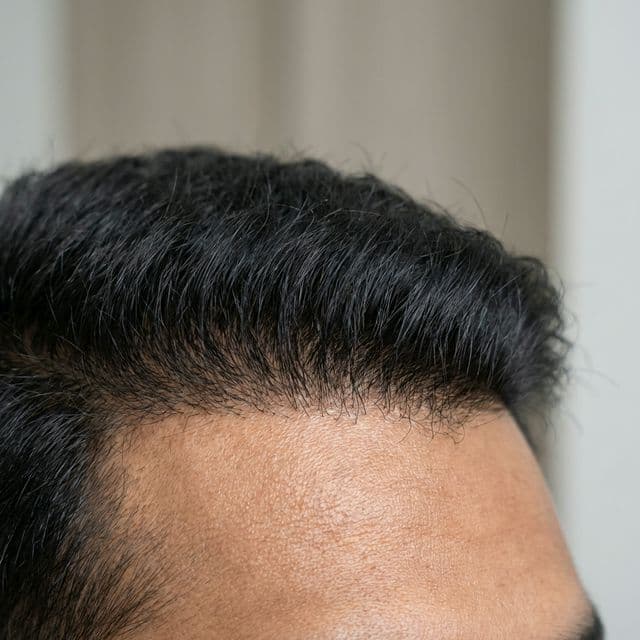
Hair transplant surgery moves permanent, DHT-resistant follicles from the donor zone at the back and sides of the scalp to areas of thinning or baldness. The transplanted hairs grow for life — they retain the genetic characteristics of the donor area and do not shed due to the androgenetic process affecting the recipient zone. The result takes 12 months to fully mature: grafts shed at weeks 2–6, regrowth begins at months 3–4, and density builds progressively to the 12-month mark. For Indian men, where androgenetic alopecia affects a large proportion of the population and often progresses aggressively, hair transplant done at the right stage with the right technique and the right medical management around it produces a natural, lasting result. Done at the wrong stage, with poor technique, or without addressing the underlying progression — it looks good briefly and disappoints over time.
How Male Pattern Hair Loss Progresses in Indian Men
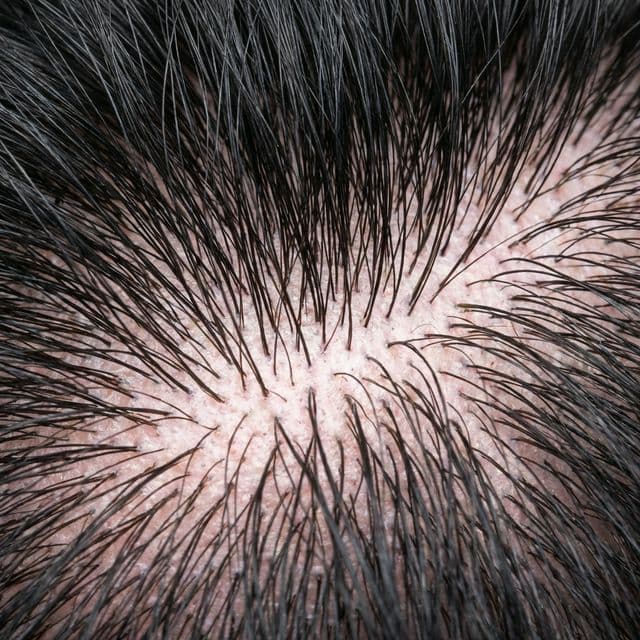
Androgenetic alopecia — male pattern baldness — is driven by DHT (dihydrotestosterone), a metabolite of testosterone that binds to androgen receptors in genetically predisposed follicles. This binding causes the follicle to miniaturise over repeated hair cycles: each cycle produces a thinner, shorter hair until eventually the follicle produces no visible hair at all. The process is gradual, spanning years to decades, and follows a predictable pattern classified by the Norwood-Hamilton scale.
Indian men are not more susceptible to androgenetic alopecia than other populations in terms of incidence, but the condition is extremely prevalent — affecting approximately 50% of Indian men by age 50. The pattern of progression can be aggressive in Indian men, particularly in those with a strong paternal family history. Many Indian men in their 20s and 30s present with Norwood grade 3–5 hair loss, having experienced rapid progression in their early adult years.
Several factors modulate progression rate in Indian men: chronic stress, nutritional deficiencies (particularly iron, vitamin D, and zinc, which are common in the Indian diet), and unmanaged hormonal factors including thyroid dysfunction. These factors do not cause androgenetic alopecia — the genetic predisposition determines susceptibility — but they can significantly accelerate its pace. Addressing them before and after transplant is part of a complete treatment approach.
The Norwood scale grades hair loss from 1 (no significant loss) through 7 (only a horseshoe of hair remaining at the back and sides). The grade at which transplant is considered appropriate depends on the patient's goals, donor density, and the stability of the pattern — but most patients in India present for their first consultation at Norwood grade 3–5.
What Hair Transplant Can and Cannot Achieve
A hair transplant redistributes existing hair — it does not create new hair. The total hair density of the head remains the same; what changes is where on the scalp that density is located. This means the total graft supply is finite, and planning how to use it wisely is one of the most important aspects of the pre-operative consultation.
What a transplant does well: restoring hairline position, filling in the crown (with realistic expectations for coverage), adding density to the mid-scalp, and recreating the illusion of a full head of hair in patients with moderate hair loss and adequate donor density. In a patient with Norwood grade 3 hair loss and a dense donor area, a well-planned transplant produces results that are genuinely difficult to distinguish from natural hair.
What a transplant cannot do: it cannot provide infinite coverage. A patient with Norwood grade 7 hair loss and a thin donor area has limited donor grafts available — attempting to cover the entire scalp with insufficient grafts produces sparse, see-through coverage that looks worse than a shaved head. The honest surgeon explains the realistic coverage achievable for the specific patient, rather than overpromising based on what the patient hopes for.
What a transplant does not prevent: the native non-transplanted hair continues to thin due to androgenetic alopecia unless medically managed. This is the most important dynamic that young transplant patients miss. A 27-year-old who gets a transplant without taking finasteride or minoxidil may look excellent for 3–4 years and then find that the surrounding native hair has thinned significantly, leaving the transplanted hair as an isolated island surrounded by thinning hair. Medical management is not optional after transplant — it is the strategy that makes the transplant look natural for decades rather than years.
Assessing Donor Density: The Most Important Pre-operative Step
The donor area is the safe zone at the back and sides of the scalp where hair is genetically programmed to resist DHT. Follicles in this zone, when transplanted, maintain their DHT resistance and grow permanently. But the density and area of the donor zone varies significantly between individuals — and this variation determines the maximum graft yield over a lifetime of potential sessions.
At Inform Clinic, donor assessment uses dermoscopy to measure follicular unit density and to check for miniaturisation within the donor zone itself. Miniaturisation of donor-zone hair — which occurs in diffuse unpatterned alopecia (DUPA), a specific subtype of androgenetic alopecia — makes those follicles unreliable as permanent grafts. DUPA patients are not good transplant candidates because their donor hair is also affected by the androgenetic process and will eventually thin even after being transplanted.
Average safe donor density in Indian men is approximately 70–90 follicular units per square centimetre, with each follicular unit containing 1–4 hairs. From a standard safe donor zone, a typical Indian male patient can yield 3,000–7,000+ grafts over multiple sessions depending on the scalp size and density. The upper limit of graft yield sets the ceiling on achievable coverage — and this ceiling must be respected in planning.
The scalp laxity assessment is also performed: tight scalps yield fewer grafts from a strip (if FUT is being considered) and make FUE extraction more technically challenging. Patients with tight scalps who perform scalp massage exercises in the months before FUT harvest a wider strip and more grafts.
Choosing Between FUE and FUT for Indian Men
The choice between FUE and FUT is detailed in a separate guide on this site. For Indian men specifically, several factors favour one technique or the other:
FUE suits Indian men who: wear their hair short on the sides (a popular style in India — fades, undercuts); are in professional environments where the back of the head is often visible; want staged extraction across multiple sessions over years; have a scalp laxity that limits strip width; or are getting their first transplant at a younger age and want to preserve donor flexibility.
FUT suits Indian men who: need a large number of grafts in a single session to address advanced hair loss; will wear their hair at a length that covers the linear scar (2cm+ on the sides); are price-sensitive and value the lower per-graft cost; have a donor density and scalp laxity well suited to strip harvest. The important caveat: once FUT removes a strip, the skin does not regenerate. Subsequent sessions must work around or above the linear scar, eventually using FUE for areas that cannot be included in a second strip.
The combination approach — FUT for the first large session, FUE for subsequent sessions — maximises total lifetime graft yield in patients with advanced hair loss who need the maximum available coverage over multiple sessions. This strategy is appropriate for Norwood grade 5–7 patients with adequate donor density who have realistic coverage goals.
The Hairline: Design Principles for Indian Men
Hairline design is the single most visible determinant of whether a transplant looks natural or artificial. An artificial-looking hairline immediately identifies a hair transplant. A natural hairline is imperceptible.
The characteristics of a natural hairline in Indian men: The hairline is not a straight line. Natural hairlines have gentle irregularities — a slight central peak (widow's peak tendency in many Indian men), gradual temporal recession at the corners, and a soft transition zone where single-hair grafts create the edge before moving to denser multi-hair grafts behind.
The height of the hairline must be appropriate for the patient's facial proportions. The traditional measurement places the hairline at the intersection of the frontalis muscle activity and the upper forehead — typically 6–9cm above the glabella (brow midpoint), depending on facial height. A hairline placed too low looks unnatural in the immediate term, and as the patient's face ages and the brow descends, the hairline will appear even lower relative to the face. A hairline placed too high fails to provide the density improvement the patient sought.
For young patients (20s–early 30s) who are still progressing in their hair loss, designing a hairline that will look natural if the surrounding native hair continues to thin requires forward planning. Recreating the hairline of the patient's teenage years when there is ongoing progressive loss will produce an isolated band of transplanted hairline hair surrounded by thinning mid-scalp as the native hair continues to decline. The hairline must be designed with the expected long-term pattern in mind.
At Inform Clinic, hairline design is done with the patient upright, using facial proportion measurements, photographs, and a discussion of what a 20-year result should look like — not just the 1-year result. Patients are shown reference templates and the hairline is drawn and confirmed before any incision.
The Role of Finasteride Before and After Transplant
Finasteride is an oral 5-alpha-reductase inhibitor that reduces DHT production by approximately 70%. In men with androgenetic alopecia, finasteride slows or stops the miniaturisation of native hair follicles, and in many patients produces partial regrowth of miniaturised hair. It is the most evidence-backed pharmaceutical treatment for male pattern hair loss available.
Its role around hair transplant surgery is critical and frequently underemphasised by clinics focused on selling procedures:
Before transplant: Patients who have been on finasteride for 6–12 months before transplant have a more stable native hair loss baseline, reducing the risk that the transplant plan will be immediately undermined by continuing rapid progression. In younger patients with rapidly progressing loss, starting finasteride and waiting 12 months before transplant allows the progression to stabilise and the transplant plan to be made on a more predictable canvas.
After transplant: Finasteride protects the native non-transplanted hair surrounding the transplanted areas. Without it, the native hair continues to thin, progressively exposing the transplanted areas as isolated patches of density against a receding background. With it, the native hair is preserved and the transplant integrates naturally into the surrounding field for significantly longer.
Side effects of finasteride are the most discussed concern: sexual side effects (reduced libido, erectile dysfunction, reduced ejaculatory volume) occur in approximately 2–4% of men. They are fully reversible on stopping the medication. Post-finasteride syndrome — persistent side effects after stopping — is described in a very small proportion of patients, the evidence for which is debated. The vast majority of men taking finasteride experience no sexual side effects, and for those who do, the effects are reversible.
The risk-benefit calculation for most men with androgenetic alopecia is clearly in favour of taking finasteride, particularly those investing in a hair transplant whose long-term success depends on protecting the surrounding native hair. At Inform Clinic, the discussion of finasteride is part of every transplant consultation — patients who decline it are counselled about the implications for their long-term result.
The Transplant Procedure: What Happens on the Day
A hair transplant is a full-day procedure — typically 6–10 hours depending on graft count. Patients arrive in the morning having been counselled not to take aspirin, fish oil, or vitamin E for 2 weeks prior (blood thinners increase bleeding during extraction). The scalp is shaved in the donor zone for FUE, or a strip region is trimmed short for FUT. Photographs are taken.
Local anaesthetic is infiltrated — first with a ring block (nerve block around the scalp) and then tumescent anaesthetic across the donor and recipient zones. The ring block is the most uncomfortable part of the procedure and takes 5–10 minutes. Once it takes effect, the scalp is numb and the patient feels pressure but no pain for the remainder of the procedure.
FUE extraction proceeds across the donor zone over 3–5 hours. Grafts are placed in chilled preservation solution and sorted by the team into 1-hair, 2-hair, and 3-4-hair follicular units. Recipient sites are then made in the hairline, mid-scalp, and crown according to the pre-operative plan — the site-making determines the angle, direction, and density of the final result. Graft placement follows, with single-hair grafts at the hairline for naturalness, progressively denser multi-hair grafts behind.
Patients are seated or semi-reclined throughout. A lunch break, toilet breaks, and rest periods are incorporated. A responsible clinic manages the ischaemia time of grafts (the time between extraction and placement) carefully — grafts left in solution for more than 6 hours show reduced survival rates. Rapid, disciplined workflow is as important as technical skill.
On leaving the clinic, grafts appear as small red dots across the recipient zone with a light dressing. Instructions are provided for graft care in the first critical 48 hours.
Post-Operative Care: The First 10 Days Are Critical
The grafts placed during a hair transplant are not immediately secured in their new location — they are held in place only by the clotting of the small puncture wounds around them for the first few days. Dislodging grafts during this period results in permanent graft loss. This is why post-operative instructions for the first 10 days are strict.
Days 1–2: Do not touch or disturb the recipient area. Sleep with the head elevated at 45 degrees on a travel pillow (to avoid contact between the transplanted area and the pillow). Avoid anything that causes the face to sweat excessively. The donor area may be lightly dressed.
Days 3–5: Gentle saline spraying of the recipient area is permitted from day 3 to keep the small scabs moist. This prevents the scabs from drying and cracking in a way that could dislodge grafts. Direct water pressure from a shower is avoided.
Day 5 onwards: Gentle washing with dilute baby shampoo poured over the scalp (not scrubbed) begins. The scabs soften with daily washing and begin to fall off naturally.
Days 8–12: All scabs should be gone by day 12. Once scabs are cleared, the recipient area looks smooth with very short, barely visible stubble where grafts were placed. The donor area has healed.
The most common mistake patients make in this period: excessive physical activity, sun exposure, and touching or picking at scabs. All three increase the risk of graft loss through dislodgement, swelling, or infection. The first 10 days determine a significant proportion of the final graft survival.
The Shedding Phase: Weeks 2–8
Between weeks 2 and 8, most transplanted hairs shed. This is called telogen effluvium of the transplant and is universally expected — it is not a sign of failure. The hair shaft falls but the follicle remains dormant in the scalp, beginning its new growth cycle. The scalp at week 6 looks completely bald in the transplanted area — this is the low point of the recovery experience and the moment at which patients most commonly panic.
Understanding this phase is important: the follicle is not gone. Regrowth begins at 3–4 months. By 6 months, approximately 50–60% of the final density is visible. By 12 months, 90%+ of the final density is visible.
Native hair in adjacent areas also sheds temporarily due to the inflammatory response of the procedure — this telogen effluvium of the native hair resolves at 3–6 months as the follicles re-enter anagen.
Growth Timeline: Month by Month After Transplant
Month 1: Grafts shed. Scalp looks bare in transplanted area. No cause for concern.
Month 2: Scalp still appears bare. Fine hair shafts beginning to emerge from some follicles but too fine to see without magnification.
Month 3: First visible growth. Fine, initially kinked and irregular hairs emerge. This is often called "pencil hair" — thin, weak hairs that look nothing like the final result but confirm the grafts are alive.
Month 4–5: Progressive thickening and darkening of regrown hair. Density continues to build.
Month 6: Approximately 50–60% of final density visible. Significant improvement is clear in photographs compared to the pre-operative state. Patients at this point are typically satisfied but aware more growth is coming.
Month 8–10: Continued density improvement. Hairline sharpness increasing as single-hair grafts at the hairline mature to their full calibre.
Month 12: Full density established for approximately 90% of grafts. A small proportion of follicles continue maturing to month 18.
Month 18: True final result in patients with thick hair characteristics or slower growth rates.
Cost of Hair Transplant in Hyderabad: What Determines It
Hair transplant cost in Hyderabad varies considerably between clinics — from very low-cost high-volume centres to higher-cost specialist clinics. The cost differential reflects real differences in what is included.
Factors that determine cost: Number of grafts — the primary pricing unit. More grafts require more extraction time, more placement time, and more team members involved.
Technique — FUE costs more per graft than FUT due to the labour-intensive extraction process.
Surgeon involvement — in high-volume low-cost clinics, the surgeon may only perform hairline design and marking, with technicians performing extraction and placement. In specialist clinics, the surgeon is involved in or supervises all critical stages. This directly affects quality consistency.
Equipment — manual FUE vs motorised punch systems vs robotic systems have different capital costs reflected in pricing.
Clinic overhead — a fully equipped surgical facility with trained staff, sterile technique, and follow-up care costs more to run than a basic procedure room.
At Inform Clinic, hair transplant pricing is per graft, based on the technique selected, with a transparent breakdown of what is included. The consultation provides a graft estimate after donor assessment, and cost follows from there. Patients are encouraged to understand that the graft estimate is based on what is needed for the planned coverage — not an arbitrary upsell.
Questions Indian Patients Ask Most Often
My father and grandfather are completely bald. Does that mean I will be too?
Family history is the strongest predictor of androgenetic alopecia severity and pattern. A paternal grandfather with Norwood 7 baldness and a father with Norwood 5 does indicate elevated risk of significant progression. However, the pattern is polygenic — it is not a simple Mendelian inheritance, and maternal family history also contributes. Seeing Dr. Kalva early for an assessment and starting finasteride while hair is still present is far more cost-effective than waiting for significant loss to occur.
At what age is the right time to get a hair transplant?
There is no fixed answer — the correct time is when the hair loss is causing sufficient distress, the pattern has been relatively stable for 12–18 months, and the patient is willing to commit to long-term medical management. Transplanting at 22 in a rapidly progressing Norwood 3 pattern without finasteride is likely to look poor at 30. Transplanting at 35 in a stable Norwood 4 pattern on finasteride for 3 years is appropriate timing. Age is not the variable; stability and medical management readiness are.
Will anyone be able to tell I had a hair transplant?
With modern technique, excellent hairline design, and appropriate graft density — no. The goal of a quality hair transplant is a result that is genuinely indistinguishable from natural hair. The "pluggy" look associated with older transplant techniques resulted from large grafts placed in obvious rows. Modern follicular unit transplantation, with single-hair frontal grafts and attention to angle and direction, produces entirely natural results that pass the highest scrutiny.
Can I transplant hair from my beard or body?
Body hair transplant (BHT) uses beard, chest, or other body hair as supplementary donor material when scalp donor supply is exhausted or inadequate. Beard hair is the most viable source — it is coarser than scalp hair and its characteristics may differ, but it can contribute meaningful additional grafts for patients who have exhausted their scalp donor. BHT requires specific experience because body hair follicles are angled differently than scalp hair and require different punch calibration. It is used as a supplement to scalp donor hair, not as a primary source, at Inform Clinic.
What happens if my hair loss continues after the transplant?
The transplanted hair is permanent — it will not thin due to androgenetic alopecia. The native surrounding hair will continue to thin unless medical management (finasteride, minoxidil) prevents it. The most important conversation after a transplant is about medical management of the native hair. Patients who maintain finasteride after transplant retain an integrated, natural-looking result for significantly longer than those who do not.