Quick Answer
The donor area is the part of the scalp from which grafts are taken during a hair transplant, and it is the most important long-term resource in the entire procedure. The number of grafts that can be safely harvested depends on donor density, hair caliber, scalp laxity, the pattern of hair loss, the chosen technique, and how much hair may still be lost in the future. There is no single safe number that applies to everyone.
This matters because patients often focus only on the front of the scalp and ask how many grafts they need to cover the bald area. A responsible surgeon asks a different question first: how much donor hair can be used without creating visible thinning in the back and sides or compromising future options? That is what separates planning from overselling.
If you want the shortest useful summary, it is this: a hair transplant is limited not by what can be implanted in one day, but by what can be harvested responsibly over a lifetime.
What the Donor Area Actually Means
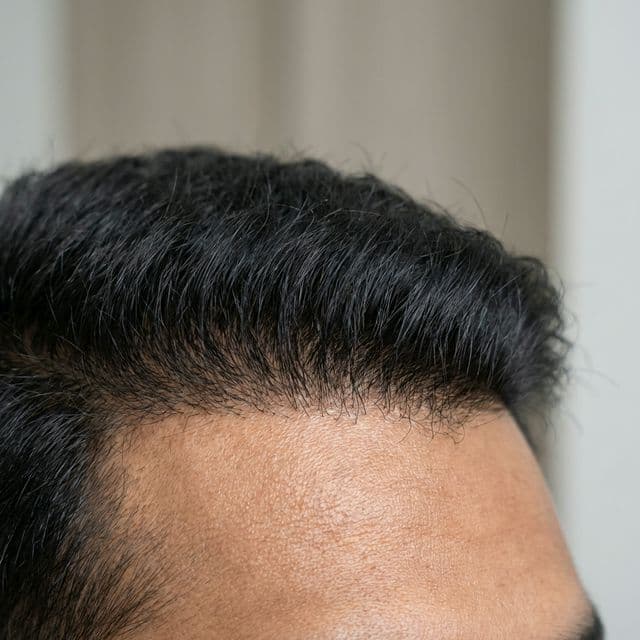
In most hair transplant procedures, the donor area is the zone at the back and sides of the scalp where hair is genetically more resistant to common male-pattern hair loss. Those follicles are redistributed to thinning or bald zones during a hair transplant.
Patients sometimes assume donor hair is an unlimited supply because the back of the scalp still looks full. It is not unlimited. Even a good donor area has a ceiling, and that ceiling must be respected if the result is supposed to look natural not only today, but years later.
The donor area is often described as the bank account of hair restoration. That analogy is useful because it reminds patients that every graft extracted today is a graft that cannot be put back later.
Why Safe Graft Numbers Differ So Much
There is no responsible online calculator that can tell every patient the same donor capacity. Hair density varies from person to person. Some patients have naturally dense donor hair with thick shafts and low scalp contrast. Others have finer hair, wider spacing, or miniaturization that reduces how much can be taken safely.
Scalp characteristics matter too. In FUT, scalp laxity affects how comfortably a strip can be taken. In FUE, the distribution and spacing of extracted follicles matter because the remaining donor hair must still look natural after healing.
Future hair loss matters just as much as current baldness. A younger patient with progressive thinning often needs a more conservative donor strategy than someone with a stable mature pattern. Good planning protects the future, not just the front hairline.
Why More Grafts Are Not Always Better
This is one of the most misunderstood parts of hair restoration. Patients often hear large graft numbers and assume they are automatically getting a better transplant. That is not true. A big graft count can be appropriate in some cases, but it can also become a warning sign if it ignores donor limits.
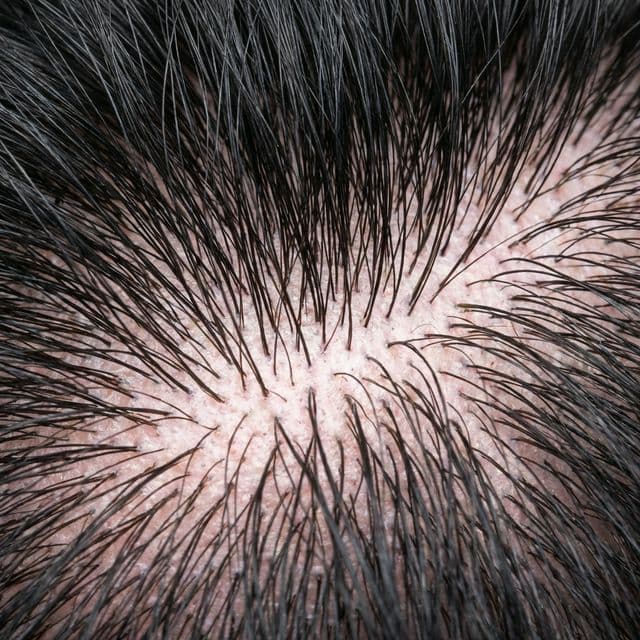
Every extraction changes the donor area. If too many grafts are removed too densely from the wrong places, the donor zone can start looking patchy, moth-eaten, or visibly thinned, especially with shorter hairstyles. That is called overharvesting, and it can be much harder to correct than frontal thinning.
A strong transplant is not just about filling the front. It is about leaving the back and sides looking believable as well. A natural result requires balance between recipient ambition and donor preservation.
How Surgeons Estimate Donor Capacity
Donor planning usually considers several factors at once:
- Native donor density and how tightly follicles are packed.
- Hair shaft caliber and curl, which affect visual coverage.
- The contrast between hair color and scalp color.
- Whether the procedure is FUE, FUT, or a staged long-term plan.
- The pattern and likely future progression of hair loss.
This is why two patients with apparently similar baldness can receive very different recommendations. One may be advised to use grafts aggressively in the frontal zone. Another may be told to stay more conservative because the donor area is not strong enough to support an ambitious design.
FUE and FUT: How They Affect the Donor Area Differently
In FUE, grafts are extracted individually from the donor area. This avoids a linear scar but makes extraction pattern critical. If the grafts are taken too close together or from an unsafe donor boundary, visible thinning can appear even when each punch site is tiny.
In FUT, a strip is removed and the donor wound is closed as a line. This can preserve surrounding density well in selected patients and can be efficient for larger graft numbers, but it creates a different type of scar and depends on scalp laxity and hairstyle goals.
Neither method is automatically better for every donor area. The right choice depends on donor quality, graft goals, hairstyle preference, scar tolerance, and long-term planning. Technique should serve the donor strategy, not the other way around.
What Overharvesting Looks Like
Patients often hear the term overharvesting but do not know what it really means. It usually refers to removing so many grafts, or removing them so unevenly, that the donor area begins to look visibly thinned. The hair may appear patchy when short, the scalp may show through more than expected, or the donor zone may lose its natural density gradient.
Overharvesting is not always obvious when the hair is long. It can become much more apparent after a short haircut, under bright lighting, or when the hair is wet. This is why donor planning should be judged not only in the clinic chair, but in the context of how the patient actually lives and styles his hair.
The safest clinics treat donor preservation as a core outcome, not as a secondary detail.
Can the Donor Hair Grow Back?
This is a very common question. In a true hair transplant, the donor follicles that are moved do not regenerate as new follicles in the exact spot they were harvested from. The surrounding hair may still provide coverage, but the extracted graft itself has been relocated.
That is why the donor area must be harvested selectively and responsibly. Patients who believe the donor fully regrows may underestimate how permanent extraction decisions really are.
Some temporary post-operative changes such as redness, short stubble, or visual shock to the donor zone do improve. But that is different from saying the removed grafts grow back in place.
Beard Hair and Other Backup Sources
In selected cases, additional donor sources such as beard hair may be considered, especially in revision work or when scalp donor reserves are limited. But these options are not universal substitutes for a strong scalp donor area. Hair texture, growth characteristics, and cosmetic blending all matter.
Patients should be cautious with the idea that every donor problem has an easy backup solution. Alternative donor sources can sometimes help, but they do not erase the need for disciplined first-time planning.
Why Long-Term Planning Matters More Than a Single Session
Hair loss is a moving target. A patient may be delighted with a dense frontal restoration today, then continue thinning behind it over the next several years. If too much donor hair was used early without a long-term plan, later options become limited.
This is why mature hairline design, sensible density distribution, and a clear discussion about future loss are so important. The best transplant is not always the most aggressive one. It is the one that still makes sense five to ten years later.
Patients searching for a number such as "How many grafts can I take?" are asking a fair question. The truthful answer is that the safe number only makes sense in the context of donor quality and the future plan.
Frequently Asked Questions
How many grafts can be safely taken from the donor area?
There is no universal number. Safe graft count depends on donor density, hair caliber, technique, existing miniaturization, and how much donor reserve needs to be preserved for the future.
Does FUE thin the back of the scalp?
It can if too many grafts are removed or if extraction is poorly distributed. Well-planned FUE aims to keep the donor area looking natural, even after healing.
Is FUT better than FUE for donor preservation?
Not automatically. Each technique affects the donor area differently, and the better choice depends on scalp characteristics, scar preference, graft goals, and long-term strategy.
Can a previous transplant reduce my donor options now?
Yes. Prior extraction, strip scars, or already-thinned donor zones can change what is safely possible in future procedures.