The short answer: robotic assistance is not automatically better
If you are researching a hair transplant in Hyderabad, you may hear FUE and robotic hair transplant described as two completely different procedures. That is not quite accurate. Robotic hair transplant is generally a form of FUE in which technology assists part of the donor-hair harvesting process. The bigger decision is whether the plan protects your donor area, creates a natural hairline, and matches the way your hair loss is likely to progress.
This comparison explains what FUE and robotic-assisted FUE involve, who may benefit from each, what changes the cost in Hyderabad, and how to assess a clinic before booking. It is for people who are already considering surgery and want a practical way to compare consultations—not a promise that one technique is best for everyone.
For many patients, the choice is between physician-directed FUE using a manual or motorised punch and physician-directed robotic-assisted FUE harvesting. Both can remove individual follicular units through small punch openings. Both still depend on diagnosis, donor assessment, hairline design, recipient-site creation, graft handling, implantation, and follow-up.
A robotic system may improve consistency or efficiency during a selected part of harvesting. It cannot independently diagnose hair loss, decide how many grafts you can safely use, design an age-appropriate hairline, place grafts for natural direction, or take responsibility for complications. Current International Society of Hair Restoration Surgery guidance treats FUE—including robotic FUE—as surgery requiring trained, licensed physician involvement.
The practical conclusion is simple: choose the surgeon and treatment plan first, then choose the harvesting tool that fits your hair characteristics, graft requirements, time, and budget.
What is FUE hair transplantation?
FUE, more precisely called follicular unit excision, removes individual follicular units from the donor area—usually the back and sides of the scalp—using a small punch. A follicular unit may contain one to four hairs. The grafts are sorted, kept viable, and placed into carefully planned recipient sites in the hairline, mid-scalp, or crown.
What the surgeon controls in FUE
- Diagnosis: distinguishing pattern hair loss from alopecia areata, scarring alopecia, active scalp disease, or temporary shedding.
- Donor strategy: mapping density, hair calibre, curl, direction, and the safe donor zone before estimating grafts.
- Hairline design: choosing the position, shape, irregularity, and density that will still look appropriate as you age.
- Extraction: selecting punch size, angle, depth, spacing, and harvest order to limit transection and overharvesting.
- Implantation: placing grafts with the correct direction, angle, depth, and distribution for a natural transition.
Why patients often choose FUE
FUE avoids the linear scar created by strip harvesting and can suit people who prefer shorter hairstyles, need a smaller or moderate number of grafts, or want a flexible donor-harvesting approach. It does not mean scarless surgery: each punch creates a small circular wound, and excessive extraction can thin or visibly damage the donor area. The quality of the result depends on restraint as much as on graft numbers.
What is robotic hair transplant?
Robotic hair transplant usually refers to robotic-assisted FUE. A computer-guided system uses imaging and a robotic arm to assist with identifying and incising around selected follicular units during donor harvesting. The grafts still require careful removal, inspection, storage, preparation, and implantation under the direction of the hair-restoration surgeon.
The word “robotic” can create the impression that the full operation is automated. It is not. A machine may assist with a defined technical step, but the operation remains a surgical process with human decisions at every important stage.
Where robotics may help
- Image-guided targeting may help identify suitable follicular units in a planned donor zone.
- Consistent punch movement may be useful in selected patients with favourable hair direction and donor characteristics.
- Technology may improve workflow or harvesting efficiency for an appropriately selected case.
- Digital mapping can support planning, documentation, and discussion of graft distribution.
Where robotics does not remove the need for expertise
- Curly, sharply angled, fine, grey, or mixed-direction hair can still require substantial surgeon judgement.
- The robot does not decide whether surgery is appropriate or whether medication should be tried first.
- It does not guarantee low transection, high graft survival, a natural hairline, or permanent density.
- It does not replace physician oversight, graft handling, recipient-site creation, implantation, or aftercare.
FUE vs robotic hair transplant: the practical comparison
Technique
Traditional FUE may use a manual or handheld motorised punch directed by the surgeon. Robotic FUE adds computer-assisted imaging and robotic movement to part of the extraction step. The recipient area is still planned and implanted surgically. Because robotic FUE is a type of FUE, the comparison is between different ways of harvesting—not between a manual operation and a fully automated one.
Natural-looking results
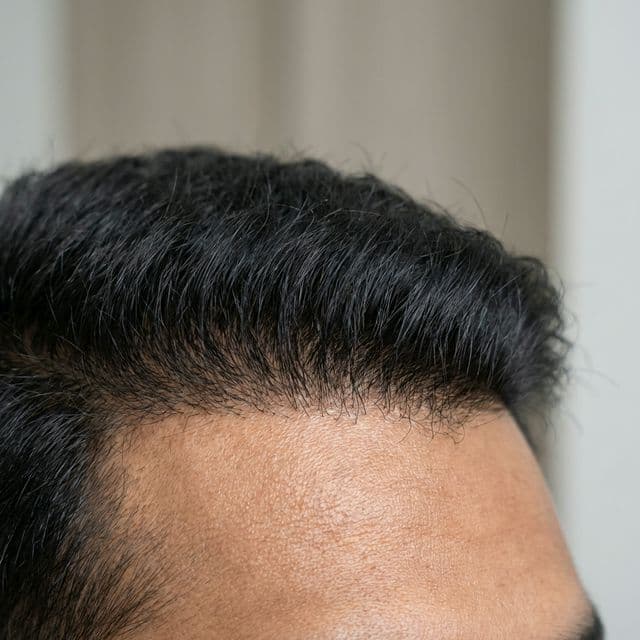
Naturalness comes primarily from diagnosis, hairline design, graft selection, recipient-site angles, density planning, and careful implantation. A robot can assist harvesting, but it cannot create an artistic hairline or compensate for poor placement. Ask to see long-term results from patients with similar hair type and degree of hair loss, not only close-up early photographs.
Graft quality and survival
Grafts are living tissue. They can be damaged by transection during extraction, rough handling, dehydration, prolonged time outside the body, poor storage, or imprecise implantation. The relevant question is not “How advanced is the machine?” but “What is the clinic’s process for protecting grafts from consultation through implantation?” A credible team should explain who performs each step and how grafts are counted and handled.
Candidacy
Robotic assistance may be considered when the donor hair is suitable for the system’s imaging and punch approach, the target area is clearly defined, and the graft number is appropriate. Physician-guided FUE may offer more flexibility when hair direction is complex, the donor area is uneven, a repair is needed, or the surgeon must adapt continuously to the scalp.
Neither approach is a shortcut for an unstable diagnosis. If hair loss is rapidly progressing, the donor area is weak, or scalp inflammation is untreated, the consultation may focus first on medical stabilisation and realistic expectations.
Scarring and recovery
Both approaches use small punch openings and usually avoid a single linear donor scar. Both can cause temporary redness, scabbing, tightness, swelling, numbness, or sensitivity. Recovery depends on graft count, recipient area, skin response, aftercare, and whether the procedure is shaved or non-shaven. A smaller visible scar pattern does not mean zero healing time.
Cost in Hyderabad
Quotes vary with graft count, surgeon involvement, facility standards, technology, anaesthesia, medicines, follow-up, and whether additional sessions or supportive treatments are recommended. Robotic-assisted cases may cost more because of equipment and workflow expenses, but a higher price is not proof of better growth. A useful quote states the graft range, what is included, who performs each surgical step, and what happens if the plan changes on the day.
Who may be a better fit for FUE?
A physician may consider conventional FUE when you want individual-graft harvesting, prefer to avoid a linear scar, need a modest or moderate session, or have donor characteristics requiring close manual adaptation. It may also suit a complex recipient plan where the surgeon wants maximum control over each stage.
FUE is not automatically the right answer for a very large bald area, a depleted donor zone, or someone expecting teenage density. The safer plan may be staged surgery, medical treatment, a different harvesting strategy, or no surgery until the diagnosis is clearer.
Who may be a better fit for robotic-assisted FUE?
Robotic assistance may be discussed when you have a suitable donor zone, relatively predictable follicle direction, a clear graft plan, and a preference for technology-assisted harvesting. It may appeal to patients who value structured digital planning and accept a premium for the technology.
It should not be selected solely because a clinic uses “AI,” “automatic,” or “scarless.” Ask what the system actually does, which steps remain manual, whether the surgeon is present throughout, and whether your hair characteristics suit the workflow.
Questions to ask at a Hyderabad consultation
Use these questions to compare clinics on safety and value rather than marketing language:
- Who will diagnose my hair loss and perform donor harvesting, recipient-site creation, and implantation?
- What is my safe donor area, and how many grafts can be harvested without compromising future options?
- How was my graft estimate calculated, and how will you prioritise the hairline, mid-scalp, and crown?
- If you recommend robotic harvesting, which exact step does the system perform and which steps remain manual?
- What is your plan for graft sorting, hydration, storage, and time outside the body?
- What density can I realistically expect, and what happens if existing hair continues to thin?
- Can I see healed results from patients with similar hair calibre, skin tone, goals, and graft needs?
- What is included in the quote: surgeon fees, facility, anaesthesia, medicines, follow-ups, and later sessions?
- What are common risks, and who do I contact after hours about bleeding, fever, severe pain, or unusual swelling?
A realistic recovery timeline
Many patients return to light routine activities within a few days, but the timeline is individual. The recipient area may look pink or scabbed during early healing. Transplanted hairs commonly shed before new growth begins, which can be unsettling but is often expected. Visible growth is gradual; meaningful assessment usually takes several months and final maturation can take close to a year or longer.
Follow instructions about washing, sleeping position, sun exposure, exercise, helmets, alcohol, smoking, and medicines. Do not judge the result week by week or compare healing with edited social-media images. Contact the surgical team if symptoms worsen rather than improve or if you are concerned about infection or significant bleeding.
Frequently asked questions
Is robotic hair transplant better than FUE?
Not automatically. Robotic hair transplant is generally robotic-assisted FUE. It may help with a selected part of harvesting, but results still depend on diagnosis, donor planning, physician oversight, graft handling, hairline design, implantation, and aftercare.
Does robotic FUE give a scarless result?
No. Any punch that enters the skin can leave a small circular scar. These marks may be hard to see once healed, but overharvesting or poor technique can make the donor area look thin or mottled.
Is robotic hair transplant painless?
The procedure is usually performed with local anaesthesia, so the surgical area is numb. You may still feel injections, pressure, movement, or temporary discomfort. Pain and swelling vary by person and procedure size.
Can a robot implant the hair grafts?
Robotic systems used for FUE primarily assist a defined part of donor harvesting. Graft inspection, recipient-site creation, placement, and overall decisions remain physician-led and team-dependent.
How many grafts will I need?
There is no safe universal number. The estimate depends on thinning area, current density, hair calibre, donor reserve, age, pattern of loss, and the need to preserve future options.
Is robotic hair transplant more expensive in Hyderabad?
It can be, because equipment and workflow costs may be higher. Compare the complete plan, including surgeon involvement, facility standards, graft count, medicines, follow-up, and staged-treatment options.
Should I choose FUE or robotic FUE for a receding hairline?
Start with a hairline and donor-area assessment. A receding hairline often needs careful single-hair graft selection, conservative design, and a plan for future loss. The suitable method depends on hair direction, donor density, graft needs, and the surgeon’s assessment—not the device name.
Practical final takeaway
When comparing FUE and robotic hair transplant in Hyderabad, do not ask only which machine is newer. Ask which plan protects your donor area, who is medically responsible for surgery, how the hairline will age with you, how grafts are handled, and what the complete quote includes. Robotic assistance can be useful in the right case, but technology is only one part of hair restoration. Careful diagnosis, conservative graft planning, skilled implantation, and long-term follow-up matter more than a label.
Bring photographs of your hair-loss progression, a list of medicines and prior treatments, and your preferred hairstyle to consultation. A detailed assessment can determine whether FUE, robotic-assisted FUE, medical treatment, a staged plan, or no surgery yet is the safest next step.