Quick Answer
FUE (Follicular Unit Excision) and FUT (Follicular Unit Transplantation) are the two primary surgical techniques for harvesting donor hair grafts in a hair transplant. FUE extracts individual follicular units one by one using a small punch, leaving small dot scars across the donor area. FUT removes a strip of scalp from the donor area, from which grafts are individually dissected, leaving a linear scar. Neither technique is universally superior — the right choice depends on the extent of hair loss, the patient's planned hairstyle, graft requirements, scalp characteristics, and budget. For most Indian patients seeking their first transplant with moderate hair loss, FUE is the practical first choice. For patients requiring a large number of grafts in a single session, or those with donor area characteristics that limit FUE yield, FUT may produce better outcomes. The most important factor is whether the surgeon can execute the chosen technique with skill — a poorly performed FUE is worse than a well-performed FUT.
What Each Technique Actually Involves
FUE: Follicular Unit Excision
In FUE, the surgeon (or a system operated by the surgeon) uses a circular punch — typically 0.8–1.0mm in diameter — to score around each individual follicular unit in the donor area. The scored unit is then extracted with micro-forceps, leaving a small circular wound that heals to a small dot scar.
Each follicular unit contains 1–4 hairs. A typical session extracts 1,500–3,000 grafts in 6–10 hours. The grafts are stored in a chilled preservation solution while the recipient sites are made and the grafts are placed.
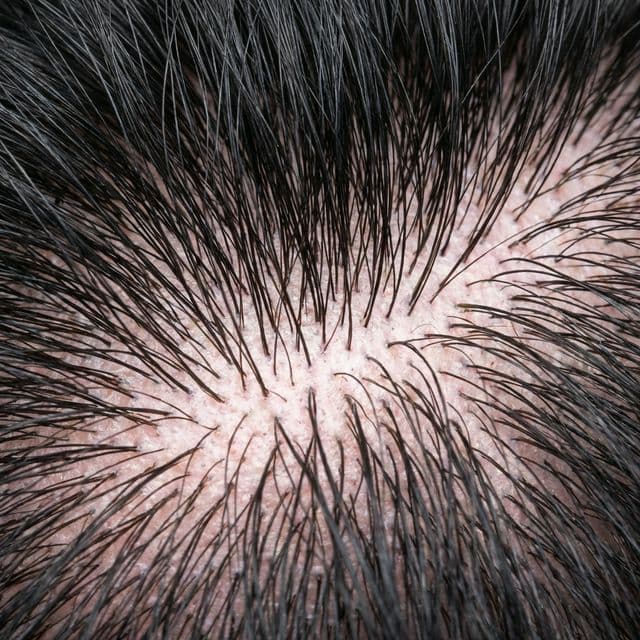
Because extraction is done follicle by follicle across a wide donor area, FUE avoids a linear scar. The small dot scars are individually imperceptible but collectively produce a diffuse thinning of the donor area if a high density of grafts is taken from a limited zone. Proper zone management — distributing extractions evenly across the safe donor area — is the technical discipline that prevents visible donor area thinning.
The FUE donor area typically appears as short, stubbled skin with small red dots immediately post-procedure, healing to smooth skin with small pale dots over 7–14 days. With appropriate hair length, these dots are invisible.
FUT: Follicular Unit Transplantation
In FUT, a horizontal strip of scalp — typically 1–1.5cm wide and 20–30cm long, from the occipital and temporal safe donor zone — is surgically excised under local anaesthesia. The wound is closed primarily with sutures or staples, leaving a single linear scar along the back of the scalp.
The excised strip is taken to a dissection microscope team, who carefully divide it into individual follicular units. This dissection phase is technically demanding and requires experienced staff to minimise transection (accidental cutting) of follicle shafts. The individual grafts dissected from a strip are then placed identically to FUE grafts.
A single FUT strip can yield 2,500–4,000+ grafts depending on the strip dimensions and hair density of the donor area. The graft quality from FUT is generally considered slightly higher because the follicles are removed with more surrounding tissue, reducing mechanical handling stress compared to the punch extraction of FUE.
The FUT linear scar is the defining feature of the technique. In good hands, with trichophytic closure (a suturing technique that allows hair to grow through the scar), the linear scar can be nearly invisible under short hair. In less ideal cases, it can be a wide, noticeable scar that limits hairstyle options.
Comparing the Two Techniques: Key Parameters
Graft Yield Per Session
FUT generally yields more grafts per session than FUE from the same donor area. A single FUT session can produce 3,000–4,500 grafts from a moderately sized strip. A single FUE session typically yields 1,500–3,000 grafts before donor area exhaustion becomes a concern.
For patients with advanced hair loss (Norwood grade 5–7) requiring large graft numbers to achieve meaningful coverage, FUT's higher yield per session can be significant. FUE can match FUT yields through multiple sessions, but each session has its own recovery period and cost.
Graft Survival and Quality
Debate exists about comparative graft survival between FUE and FUT, but the evidence does not clearly demonstrate that one technique produces meaningfully better graft survival when performed by experienced surgeons. The key variable affecting survival is not the extraction technique per se but the time grafts spend out of the body (ischaemia time), the preservation solution used, and the placement technique.
FUT grafts are dissected with more surrounding connective tissue (perifollicular tissue), which may provide slightly better mechanical protection during placement. FUE grafts are more mechanically handled during extraction. In practice, experienced surgeons achieve equivalent results with both techniques.
Scarring
FUE: Multiple small dot scars distributed across the donor area. With hair at 3–4mm length (short fade), these are essentially invisible. With a completely shaved head, they appear as small pale dots — which most people find acceptable and is far less conspicuous than a linear scar.
FUT: Single linear scar at the back of the scalp. With hair at 2–3cm length (which covers the scar), it is typically invisible. With a shaved head or very short hair (grade 1–2 clipper), the scar may be visible. This is the defining disadvantage of FUT for patients who prefer to wear their hair very short.
The scar comparison is the most practically significant factor for most patients choosing between techniques. A patient who will always wear their hair at least 2–3cm long may find either technique acceptable; a patient who wants the option of a very short cut or a shaved head is better served by FUE.
Recovery
FUE recovery is generally faster and less uncomfortable. The donor area heals within 5–7 days (the small wounds close rapidly); there are no sutures to remove; returning to work by day 5–7 is typical.
FUT recovery involves suture management at the donor site — sutures are removed at 10–14 days — and the wound closure creates a tighter, more sore donor area. Some patients experience numbness along the scar line that may persist for weeks to months. Return to normal activity is usually by day 7–10 but the donor scar area requires more careful management.
In both techniques, the recipient area (where grafts are placed) has the same recovery — small scabs forming over each graft that fall off by day 8–12.
Risk of Transection
Transection — accidentally cutting through the hair follicle shaft during extraction — is the primary technical risk in hair transplant surgery. Transected follicles either die or produce a hair with a narrower shaft, reducing overall graft quality.
FUE carries a higher transection risk than FUT in hands that are not highly experienced, because the punch must be blind to the angle and depth of each individual follicle beneath the surface. This is why FUE results are highly operator-dependent. An experienced FUE surgeon using appropriately calibrated punch sizes for the patient's hair characteristics achieves transection rates of under 3%. Inexperienced surgeons may have rates of 10–20%, significantly reducing the graft yield and quality.
FUT transection risk is in the dissection phase — it depends on the quality and experience of the dissection team rather than the surgeon. Well-run FUT programmes with experienced technicians achieve very low transection rates.
Cost
FUE is uniformly more expensive than FUT because:
- The extraction is slower and more labour-intensive per graft
- Equipment (motorised punch systems, robotic systems) adds cost
- Operating time is longer
At Inform Clinic in Hyderabad, FUE is priced per graft; FUT is typically priced per session or per graft at a lower per-graft cost. For equivalent graft numbers, FUE costs approximately 30–50% more than FUT. For patients requiring large graft counts, this difference is financially significant.
Special Considerations for Indian Patients
Hair Characteristics
Indian hair has characteristics that affect both technique choice and expected outcome:
Curl and wave pattern — Indian hair tends to have a moderate wave that creates a challenge in FUE extraction because the curl of the follicle beneath the scalp may not match the exit angle of the hair at the skin surface. The punch must follow the follicle's angle and curve — requiring experience and appropriate punch calibration. Incorrectly calibrated punches on curly hair produce high transection rates.
Shaft diameter — Indian hair is typically medium-to-coarse in shaft diameter, which is advantageous. Thicker hair provides better visual coverage per graft because each follicular unit provides more bulk.
Density contrast — many Indian patients have high contrast between their dark hair and lighter scalp skin. This works in favour of perceived density — even moderate graft density produces good visual coverage because the dark hair against a lighter scalp is prominent. This means Indian patients often achieve good cosmetic results with slightly lower actual graft density than would be needed in patients with blonde hair.
Hairline Design for Indian Men
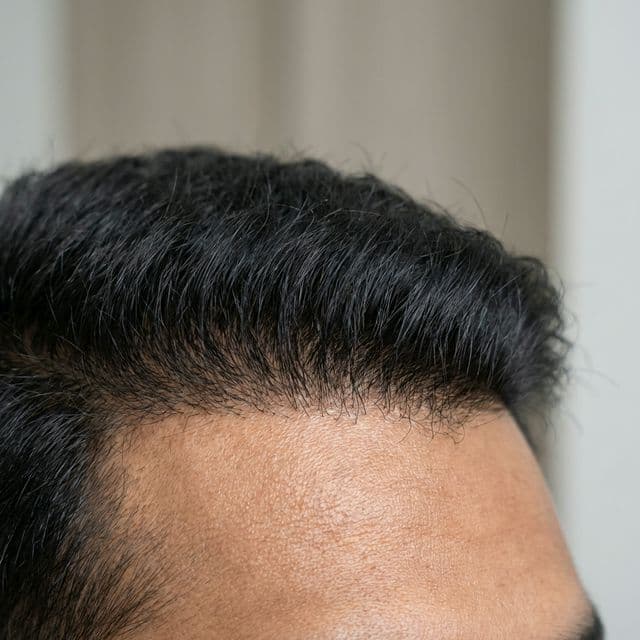
The appropriate hairline position for Indian men is calculated based on facial proportions — specifically the relationship between the hairline and the highest point of the forehead as defined by the frontalis muscle. A hairline that is too low looks unnatural and ages poorly; too high looks sparse and does not create meaningful density improvement at the temples.
At Inform Clinic, hairline design uses standardised facial proportion measurements and considers the expected progression of hair loss — designing a hairline that will still look natural if surrounding hair continues to thin in later years.
Donor Area Planning for Future Sessions
Most Indian men with androgenetic alopecia will experience progressive hair loss even after a transplant. The transplanted hair is permanent; the non-transplanted native hair continues to thin. Planning the first transplant with future sessions in mind — preserving adequate donor density for subsequent procedures if needed — is an important strategic consideration.
FUE allows staged extraction across the donor area over multiple sessions, preserving areas not yet harvested. FUT strip harvesting progressively reduces the available strip-able donor tissue with each session. For young patients with progressive hair loss who may need multiple transplants over decades, FUE's donor management flexibility is a practical advantage.
Robotic and Technology-Assisted FUE
Robotic FUE systems (ARTAS and similar) use imaging and robotics to automate the extraction phase. They identify follicles, calculate extraction angles, and deploy the punch with reduced surgeon variability. They are most effective for straight to minimally wavy hair — hair with significant wave or curl creates challenges for robotic angle identification.
Robotic FUE has a higher per-graft cost than manual FUE. Evidence does not demonstrate meaningfully superior outcomes compared to skilled manual FUE. It is a useful tool for standardisation but is not inherently superior to an experienced manual FUE surgeon.
How to Decide: A Clinical Framework
The following decision framework is used at Inform Clinic for technique selection:
Choose FUE when:
- The patient wants the option of wearing hair very short or shaved
- Graft requirements are 1,500–2,500 grafts (manageable within a single FUE session)
- Scalp laxity is low (tight scalp limits strip width in FUT)
- The patient is young and likely to need future sessions (better donor management with staged FUE)
- Recovery convenience is a priority
Choose FUT when:
- Graft requirements exceed 3,000+ and achieving the target in one session is important
- The patient will wear their hair at a length that covers the linear scar (2cm+)
- Cost is a significant factor and the per-graft cost difference matters
- Hair characteristics (wave, density) are favourable for strip dissection
- Prior FUE sessions have exhausted available FUE donor density
Consider combining both:
- For patients with very advanced hair loss (Norwood 6–7) requiring maximum lifetime graft yield, performing FUT for the first large session and FUE from surrounding donor areas in subsequent sessions maximises total graft availability. This staged approach is used in appropriately selected patients at Inform Clinic.
What No Technique Can Fix
Hair transplant surgery — regardless of technique — cannot create density from nothing. The total number of grafts available is determined by the safe donor area and its density. Patients with extensive baldness and thin donor areas must have realistic expectations about coverage. A surgeon who overpromises density for Norwood 7 hair loss with a limited donor area is setting the patient up for disappointment.
No technique addresses the ongoing thinning of native non-transplanted hair. Medical management (finasteride, minoxidil) must be continued after transplant to preserve the native hair that surrounds the transplanted areas. Transplanting into a scalp where surrounding hair continues to thin without medical management produces an isolated island of transplanted hair surrounded by progressively thinning native hair — which looks worse as years pass.
FUE vs FUT Cost at Inform Clinic Hyderabad
Both FUE and FUT are offered at Inform Clinic. Cost is calculated per graft for both techniques, with FUE costing more per graft due to the extraction labour involved. A consultation with Dr. Dushyanth Kalva includes a donor area assessment — dermoscopy of donor density, assessment of scalp laxity, and evaluation of graft requirements for the target coverage — after which a specific graft estimate and cost breakdown is provided for both techniques, allowing an informed comparison before committing to either approach.