Quick Answer
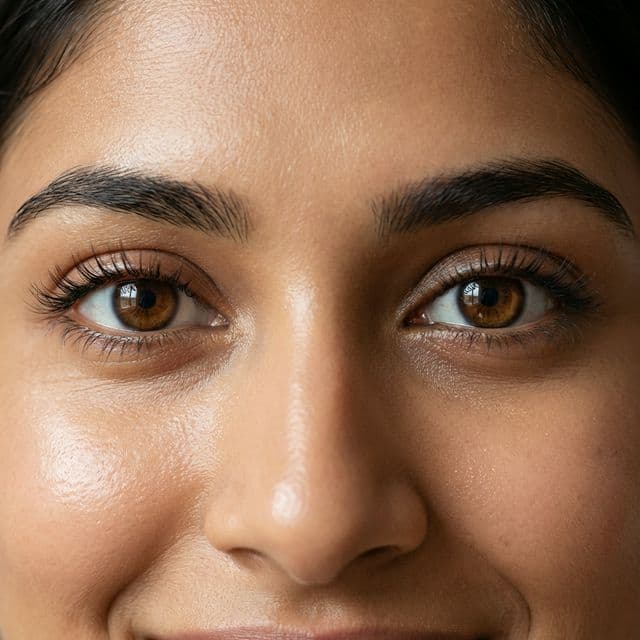
Blepharoplasty (eyelid surgery) removes excess skin and fat from the upper eyelids, lower eyelids, or both, to correct hooding, puffiness, and under-eye bags that make a person look tired, heavy-eyed, or older than they are. Upper blepharoplasty addresses skin that folds over the lash line — which can also impair peripheral vision in significant cases. Lower blepharoplasty addresses the fat pockets that cause persistent under-eye bags unresponsive to sleep, diet, or topical treatments. At Inform Clinic in Hyderabad, Dr. Dushyanth Kalva performs both procedures with techniques designed to preserve natural eyelid appearance rather than produce a hollow or operated look.
What Eyelid Surgery Corrects
The eyes age in specific, predictable ways. Understanding which issue is present determines which procedure is appropriate.
Upper Eyelid Problems
- Excess skin (dermatochalasis) — skin above the lash line that folds downward, creating a hooded appearance and making the upper lid crease invisible
- Fatty fullness — bulging of the medial fat pad (inner corner) that creates a puffy, heavy appearance even without excess skin
- Brow descent contributing to upper lid hooding — this is a brow problem masquerading as an eyelid problem; addressing only the lid without lifting the brow may under-correct or cause early recurrence
Lower Eyelid Problems
- Under-eye bags — fat pockets in the lower lid that herniate forward, creating permanent puffiness unaffected by rest
- Tear trough hollowing — the groove between the lower lid and cheek that creates a shadowed, tired look (often best addressed with filler rather than surgery)
- Fine skin crinkling and excess lower lid skin — addressed with skin excision techniques in appropriate candidates
Upper Blepharoplasty: What Happens
Upper blepharoplasty is performed under local anaesthesia as a day-care procedure and takes approximately 45–60 minutes for both eyes. The technique:
A precise ellipse of excess skin — and fat if indicated — is marked and removed through an incision placed exactly in the natural upper lid crease. The crease position is calculated individually: it differs between males and females and varies with ethnicity. In patients with Indian or Asian lid anatomy, an incorrectly positioned crease creates an unnatural result.
The incision closes with fine sutures and sits invisibly within the lid crease once healed. Bruising and swelling peak at days 3–5 and resolve by 10–14 days for most patients.
The most important technical decision in upper blepharoplasty is how much skin to remove. Too conservative a resection leaves residual hooding; over-resection causes lagophthalmos — inability to fully close the eye — which is a serious and distressing complication. Dr. Kalva measures and marks conservatively, preserving a minimum skin bridge to prevent this risk.
Lower Blepharoplasty: What Happens
Lower blepharoplasty is more technically complex than upper and typically performed under sedation or general anaesthesia. Two approaches exist:
Transconjunctival (no external scar)
The incision is made inside the lower lid — on the conjunctiva — and excess fat is removed or repositioned without touching the external skin. No visible scar. This is the preferred approach when the problem is fat herniation alone and the skin quality is good. It is also the safer approach from a structural standpoint because it avoids weakening the lower lid support structure.
Transcutaneous (external incision)
An incision just below the lash line allows both fat management and skin excision. Used when significant excess lower lid skin is present in addition to fat. Requires greater care to avoid ectropion (lower lid pulling away from the eye), which is the most serious complication of this approach.
At Inform Clinic, the transconjunctival approach is preferred where appropriate because it achieves excellent fat correction without the external scar and with a lower risk of lid position change.
Natural vs Operated Results
The hallmarks of an operated eyelid result that patients want to avoid:
- Upper lids with too much skin removed — a hollow, skeletonised appearance above the eye
- Lower lids with too much fat removed — a sunken, aged look that replaces one problem with another
- Visible lower lid scar that does not fade into the lash line
- A pulled-down lower lid (ectropion) that creates an abnormal rounding of the eye shape
- Visible scar in the wrong position (above rather than in the natural crease)
Natural results come from removing the right amount — not the maximum amount — of skin and fat, placing incisions correctly, and understanding individual anatomy. The goal is an eye that looks rested, open, and youthful — not an eye that looks different in a way people notice.
Is the Brow the Real Problem?
Upper lid hooding is sometimes caused primarily by brow descent rather than true upper lid skin excess. When the brow has dropped, it pushes the upper lid skin downward — creating apparent hooding that is actually a brow problem.
Operating on the eyelid without addressing the brow in these cases produces a suboptimal result. Dr. Kalva assesses the brow-lid relationship at every consultation, and where significant brow descent is present, may recommend combining blepharoplasty with a brow lift for a complete upper-face correction.
Recovery Week by Week
Days 1–3
Significant bruising and swelling around both eyes — the degree varies widely by individual. Cold compresses every 20 minutes while awake reduce swelling. Sleep with the head elevated. Antibiotic eye drops applied as prescribed.
Days 4–7
Bruising starts to yellow and fade. Swelling reduces enough that patients can see clearly and move comfortably. Sutures are removed at day 5–7 in most cases.
Weeks 2–3
Most patients feel comfortable returning to social and professional settings. Residual bruising can be covered with makeup after suture removal. Screen use and reading are comfortable.
Months 1–3
Incision scars fade progressively — they are typically pink at 4 weeks and nearly imperceptible at 3 months within the natural crease. Final result fully visible with swelling resolved.
Risks to Know
- Over-resection of skin (upper) — inability to fully close the eye, dry eye, corneal exposure
- Ectropion (lower) — outward turning of the lower lid caused by inadequate support or over-resection of skin
- Asymmetry — small pre-existing asymmetries become more visible after surgery; perfect symmetry is not guaranteed
- Dry eye aggravation — pre-existing dry eye may worsen temporarily; patients with dry eye should disclose this before surgery
- Infection — rare with appropriate antibiotic prophylaxis
- Scarring — visible scar if the incision is placed incorrectly or heals poorly
Eyelid Surgery Cost in Hyderabad
Cost depends on whether upper lids, lower lids, or both are treated, anaesthesia type, and whether any additional procedure (brow lift, fat grafting) is combined. Inform Clinic provides a transparent quote after examination. Upper blepharoplasty alone under local anaesthesia is among the most cost-effective aesthetic procedures with a high satisfaction rate.
If you are in Hyderabad and concerned about upper lid hooding, under-eye bags, or a persistently tired eye appearance, a consultation with Dr. Dushyanth Kalva at Inform Clinic will clarify whether blepharoplasty, a brow lift, fillers, or a combination approach is the right solution for your specific anatomy.