Quick answer
Mild dandruff does not automatically rule out a hair transplant. The important question is whether the scalp is calm, the diagnosis is clear and the flaking is controlled before surgery. A red, painful, crusted, infected or heavily inflamed scalp needs assessment and treatment first. Your surgeon may delay the procedure until the skin barrier has settled.
If you are considering a hair transplant in Hyderabad, the consultation should include a scalp examination, not only a graft estimate.
Dandruff is often the mildest form of seborrhoeic dermatitis. It can cause flakes and itching without permanent follicle damage. But similar-looking symptoms can come from psoriasis, eczema, fungal infection, folliculitis or a scarring hair-loss condition. These problems need different treatment, and some can make a transplant unsafe or less predictable if they are active.
What dandruff can mean on the scalp
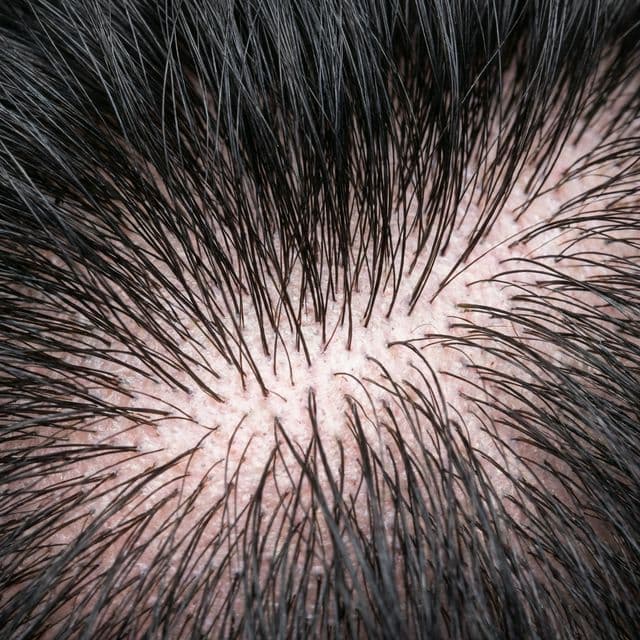
Simple dandruff usually causes fine white or grey flakes. Seborrhoeic dermatitis may add redness, itch, greasy scale or irritation around the scalp, eyebrows, ears and sides of the nose. The condition often comes and goes. Hot weather, sweating, stress and some hair products may make symptoms more noticeable, but a flare is not proof that a person has poor hygiene.
The appearance alone is not enough to diagnose the cause. A dermatologist or hair-restoration surgeon may look for redness, thick scale, pustules, broken skin, scarring, reduced follicular openings and the pattern of hair loss. In some cases, a dermoscope or further tests are needed. This is especially useful in Hyderabad, where heat, sweating, helmets, dust and frequent outdoor travel can make scalp symptoms more noticeable without explaining the whole problem.
Can you have a transplant with dandruff?
Often, yes, when the condition is mild and controlled. This is a clinical planning decision, not a promise that every person with flakes is suitable. A surgeon may proceed when there is no active infection, open skin, significant inflammation or unexplained rapid hair loss. The scalp should be clean and stable, and the hair-loss diagnosis should be understood.
An active inflammatory or infectious scalp condition may increase irritation, scratching and the chance of wound-healing problems. It can also make early redness and itching harder to interpret after surgery. The medical literature on hair-restoration surgery advises controlling seborrhoeic dermatitis and psoriasis before transplantation, and treating active infection or inflammation before the operation.
Scarring alopecias are a separate concern. Conditions such as lichen planopilaris, frontal fibrosing alopecia and discoid lupus can destroy follicles and may become active again after trauma. They must not be assumed to be ordinary dandruff. A person with progressive redness, burning, pustules, shiny skin or loss of follicular openings needs a proper diagnosis before discussing surgery.
Why scalp control matters before surgery
It reduces scratching and skin injury
Itching can lead to scratching, broken skin and small wounds. That matters before a procedure that creates many tiny openings in the scalp. Even if the dandruff itself is not dangerous, scratching can worsen irritation and make the scalp less suitable for surgery on that day.
It helps the surgeon see the real hair-loss pattern
Flakes, thick scale and inflammation can hide the scalp. More importantly, some inflammatory scalp diseases cause hair loss that does not follow the usual male or female pattern. Treating the surface without checking the cause may delay the right care and lead to a poor transplant plan.
It makes recovery easier to monitor
After a transplant, mild tightness, crusting, redness and itching can occur during healing. A calm scalp before surgery gives the team a clearer baseline. New pain, spreading redness, pus, fever or worsening swelling should not be dismissed as routine dandruff.
It protects long-term planning
A transplant moves follicles; it does not stop the underlying cause of pattern hair loss. A scalp review should therefore cover both the skin and the hair. The doctor may discuss medicines for pattern loss, future thinning, donor supply and whether the proposed hairline or crown coverage is sensible over time. Treating dandruff alone cannot make an unsuitable transplant plan suitable.
What treatment may be used before a transplant?
Treatment depends on the diagnosis and severity. For ordinary dandruff or seborrhoeic dermatitis, a doctor may recommend a medicated shampoo. Common active ingredients include ketoconazole, selenium sulphide, zinc pyrithione or other scale-controlling medicines, depending on local availability and the person’s health. The product must be used as directed and left on the scalp for the advised time.
Some patients need a short course of a prescribed anti-inflammatory scalp medicine. Others need treatment for psoriasis, eczema, folliculitis or a fungal infection instead. Do not apply steroid lotions, antifungal creams or strong scale-removing products to a planned surgical area without medical advice. A product that helped before may irritate newly operated skin.
The aim is control, not a permanent cure. Seborrhoeic dermatitis can return, so your team may give a maintenance plan after the scalp has settled. Keep the plan simple and tell the surgeon about all prescription medicines, over-the-counter products, oils and traditional remedies you use. Do not stop a prescribed medicine on your own because you are planning surgery.
Hair oils and home remedies deserve care. Oiling may make a flaky scalp feel softer, but it does not prove that the underlying condition is treated. Heavy products can also make it harder to examine the scalp or may irritate sensitive skin. Ask what to use and when to wash before the procedure.
How long should dandruff be controlled before surgery?
There is no single number of days that is safe for everyone. A small amount of stable flaking may need only a short period of treatment, while recurrent redness, heavy scale or a suspected inflammatory disease may need longer review. The surgeon should decide after seeing the scalp rather than relying on a fixed online timetable.
As a practical guide, do not book surgery during a clear flare. Ask for review if the scalp is red, sore, wet, crusted, bleeding, painful or unusually itchy. If you have recently started treatment, tell the clinic what changed and whether the symptoms are improving. A stable scalp and a stable hair-loss pattern are more useful than simply waiting a certain number of days.
Before the appointment, avoid scratching or picking at scale. Bring photographs from a flare if the scalp looks calmer on the day. Tell the doctor if you have had scalp infections, psoriasis, eczema, autoimmune disease, sudden shedding or earlier problems with wound healing. These details may change the examination and the timing.
Dandruff after a hair transplant
Flaking after surgery can have more than one cause. Healing crusts, dry skin, a reaction to a product, folliculitis or a return of seborrhoeic dermatitis can look similar. Follow the washing and spraying instructions given by your surgical team. Do not pick crusts, scratch the recipient area or restart your usual medicated shampoo without asking when it is safe.
In the early period, the grafts are delicate. Direct rubbing, vigorous shampooing and scraping can injure healing skin or dislodge a graft. The timing of gentle washing and any medicated product depends on the procedure, the condition of the skin and the surgeon’s protocol. If the scalp becomes more inflamed after a product, stop and contact the clinic rather than adding more treatments.
Mild itch may occur during normal healing, but severe or increasing itch needs review. Persistent symptoms may reflect folliculitis, contact dermatitis or another inflammatory problem. A recent review of hair-transplant complications also stresses gentle cleansing and avoiding scratching when itching is present.
Do not compare your recovery with photographs or videos online. The number of grafts, the technique, the medicines used, the scalp condition and the aftercare instructions all affect what is normal. A clinic that performed the operation is best placed to assess a change in the first weeks.
When dandruff may signal something else
Arrange an in-person medical assessment if you notice any of the following:
- thick, sharply defined or silvery scale, especially if it extends beyond the hairline
- pain, burning, pus, yellow crusts, bleeding, swelling or fever
- round patches of hair loss, broken hairs or sudden heavy shedding
- smooth shiny areas with fewer visible follicle openings
- eyebrow or sideburn loss, or a receding hairline with redness and scale
- a scalp rash that does not improve with sensible dandruff care
- rapid hair loss that does not fit your usual pattern.
These signs do not diagnose a serious disease by themselves. They mean that a doctor should examine you before you proceed with cosmetic surgery. A transplant is not a treatment for an undiagnosed scalp disease.
Questions to ask at a Hyderabad consultation
Take clear photographs of your scalp when symptoms are active, and bring the names or photographs of products you have used. Ask the doctor:
- Is this ordinary dandruff, seborrhoeic dermatitis or another scalp condition?
- Is my hair-loss pattern confirmed, and do I need a dermoscopic examination?
- Should treatment be completed or continued before surgery?
- Which shampoo or lotion should I stop before the procedure, and when can I restart it?
- How should I manage flaking or itching during the first weeks after surgery?
- Which symptoms should make me call the clinic urgently?
The consultation should cover donor supply, expected density and future hair loss as well as scalp health. A transplant moves follicles; it does not stop the underlying cause of pattern hair loss. Medical treatment may still be discussed when appropriate.
Ask who will examine you and who will perform the surgical steps. Hair transplantation involves skin incisions, so diagnosis, planning, graft harvesting, recipient-site creation and post-operative care should be under appropriate medical responsibility. A low price or a large graft number does not replace a careful diagnosis.
Frequently asked questions
Does dandruff cause permanent hair loss?
Ordinary dandruff usually does not permanently destroy hair follicles. Scratching can cause temporary shedding or breakage, and another scalp condition may be responsible when hair loss is patchy, painful or progressive. Persistent loss needs diagnosis rather than repeated shampoo changes.
Should I cancel my transplant if I have a few flakes?
Do not cancel automatically, but tell the clinic before the appointment. Mild, controlled flaking may not prevent surgery. A flare with redness, pain, thick scale, open skin or infection may lead the surgeon to postpone treatment until the scalp is stable.
Can anti-dandruff shampoo damage hair-transplant grafts?
A medicated shampoo is not automatically harmful, but timing and technique matter after surgery. The recipient area may need a gentle wash at first, and some products can sting healing skin. Use only the product and schedule approved by your surgical team.
Can dandruff return after a hair transplant?
Yes. A transplant does not permanently remove seborrhoeic dermatitis. The condition can flare again, so maintenance care may be needed. It should be managed without scratching or applying unapproved products to healing grafts.
Is dandruff the same as a scalp infection?
No. Dandruff is commonly linked with seborrhoeic dermatitis, while a scalp infection may cause pus, painful swelling, marked crusting or tender areas. The two can look similar from a distance. If symptoms are severe or changing, do not self-diagnose.
Can I use ketoconazole after a transplant?
That depends on the timing, the state of the grafts and the reason it was prescribed. Do not restart or apply it directly to a healing recipient area unless your surgeon or dermatologist has given a clear plan. The safest schedule is individual rather than copied from an online forum.
Practical takeaway
Dandruff is usually manageable, but a hair transplant should be planned on a healthy and stable scalp. If you have mild flakes, arrange an examination rather than assuming surgery is impossible. If you have redness, pain, pus, thick scale, scarring or fast hair loss, treat the cause first. For next steps, review the hair-transplant treatment page and ask for an in-person plan based on your scalp, donor area and long-term hair-loss pattern.
References
- American Academy of Dermatology: Seborrheic dermatitis — diagnosis and treatment
- NHS: Dandruff
- American Academy of Dermatology: How to treat dandruff
- International Society of Hair Restoration Surgery: Hair restoration in the scarred scalp
- Hair restoration surgery: pre-surgical considerations and pitfalls
- Cleveland Clinic: Seborrheic dermatitis
- Complications in follicular unit excision hair transplantation: current evidence and practical approaches