If you are comparing hair transplant clinics in Hyderabad, you will quickly run into two terms: FUE and DHI. Both are modern follicular unit hair transplant methods. Both can create natural-looking results when the donor area is assessed properly, the hairline is designed conservatively, and grafts are handled with care. The difference is not that one is “real” and the other is “old.” The difference is how the grafts are implanted, how much control the surgeon needs in a particular zone, how many grafts are required, how the donor area is protected, and how the cost fits your plan.
This guide is written for patients who are already close to making a decision. Maybe you have been quoted a per-graft price. Maybe one clinic has told you DHI is more advanced, while another says FUE is enough. Maybe you want dense frontal hairline work but also need crown coverage. The right answer depends less on the marketing label and more on your hair loss pattern, donor supply, hair calibre, age, expectations, budget, and willingness to follow a long-term maintenance plan.
Quick Answer: DHI vs FUE in One Minute
FUE stands for Follicular Unit Extraction or Excision. Individual follicular units are taken from the donor area, usually the back and sides of the scalp, and then placed into tiny recipient sites created in the thinning or bald area. DHI stands for Direct Hair Implantation. In most practical clinic conversations, DHI is a variation of FUE extraction where graft placement is done using an implanter pen, often called a Choi-type implanter, instead of placing grafts into pre-made slits.
- Choose DHI when the main goal is fine hairline refinement, temple work, lower graft numbers, no-shave or partial-shave planning, or dense placement between existing hairs.
- Choose FUE when the priority is larger coverage, crown work, a higher graft count, predictable workflow, or a more cost-efficient plan.
- Consider a combined plan when the frontal hairline needs high precision but the mid-scalp or crown needs broader coverage.
- Do not choose any method until the surgeon has assessed donor density, miniaturisation, scalp laxity, hair calibre, family history, and future hair loss risk.
What Actually Happens in FUE?
In FUE, the donor area is planned first. This step matters more than most patients realise. A safe donor zone is marked so extraction does not thin the back of the head in a patchy or overharvested way. The hair is usually trimmed short so the surgeon can see follicle direction and spacing clearly. Local anaesthesia is used, individual follicular units are extracted with a small punch, and the grafts are sorted and kept hydrated while recipient sites are prepared.
The recipient sites are tiny openings made at the correct angle, direction, density, and distribution. This is where the aesthetic result is largely decided. A natural male hairline is not a straight wall of hair. It has irregularity, single-hair grafts at the front, a transition zone, and density that respects the patient’s donor capacity. After recipient sites are created, the grafts are placed into them.
Where FUE Works Especially Well
- Larger balding zones where 2500 to 4000 grafts may be needed in one or staged sessions.
- Crown coverage, where spiral direction and realistic density planning are more important than simply packing grafts.
- Patients who are comfortable shaving the donor area for accurate extraction.
- Patients who need a cost-conscious but technically sound approach.
What Actually Happens in DHI?
DHI uses the same basic donor principle as FUE: grafts are extracted one by one from the donor area. The difference is in implantation. Instead of first creating all recipient sites and then placing the grafts, DHI loads grafts into an implanter pen. The graft is inserted into the scalp through the pen mechanism, allowing the doctor to control depth, angle, and direction during placement.
This can be useful in delicate zones such as the front hairline, temples, eyebrows, beard patches, or small areas where existing hair must be protected. In selected patients, DHI can also make partial-shave or no-shave planning easier, because the recipient area may not need to be fully shaved. However, DHI is slower, more technique-sensitive, and often more expensive. It is not automatically better for every patient, especially when the case needs broad coverage and thousands of grafts.
Where DHI Works Especially Well
- Frontal hairline detailing where angle, depth, and single-hair graft placement are critical.
- Patients with early-to-moderate hair loss who need density added between existing hairs.
- Selected no-shave or discreet recovery plans, provided graft numbers are realistic.
- Smaller sessions where precision matters more than speed or total coverage.
DHI vs FUE: The Practical Comparison
1. Naturalness of the Hairline
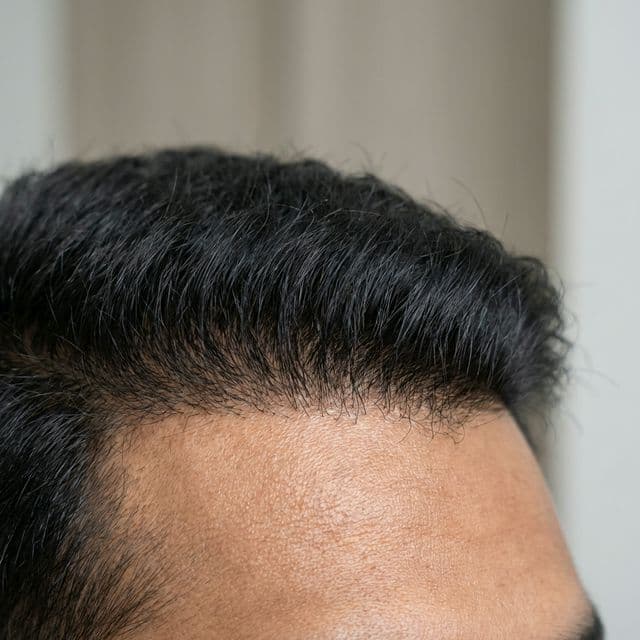
Both techniques can produce a natural hairline. The biggest determinant is not the device; it is design. A good hairline respects age, face shape, forehead height, future recession, graft availability, and the direction of native hair. DHI may give the surgeon excellent control during implantation, but FUE with carefully made recipient sites can also look natural. If a clinic promises a very low, dense, teenage hairline without discussing future hair loss, that is a red flag regardless of technique.
2. Density and Coverage
Patients often ask which technique gives more density. The honest answer is that density depends on donor supply, graft survival, area size, hair shaft thickness, curl, colour contrast between hair and scalp, and placement strategy. DHI can be useful for dense packing in a focused zone. FUE is often more practical when the area is large. For someone with a receding hairline and mild thinning, DHI may be attractive. For someone with extensive Norwood V or VI hair loss, FUE or a staged plan is usually more realistic.
3. Cost in Hyderabad
In Hyderabad, hair transplant pricing usually depends on graft count, surgeon involvement, clinic infrastructure, anaesthesia and medication, technique, aftercare, and whether the case requires special planning. DHI is commonly priced higher than standard FUE because it can require more time, implanter instruments, a smaller controlled workflow, and a highly trained team. FUE may be more budget-friendly for larger graft numbers.
The problem with comparing only per-graft cost is that graft numbers are not always quoted consistently. One clinic may quote 2500 grafts; another may quote 3500 hairs; another may use “follicles” loosely. A proper quote should specify graft count, treated zones, surgeon’s role, whether PRP or medication is included, follow-up schedule, and what happens if growth is patchy.
4. Recovery and Downtime
Recovery is broadly similar because both methods involve extracting grafts from the donor area and implanting them into the recipient area. Expect redness, small scabs, mild swelling, tightness, itching, and temporary shedding in the first few weeks. Many patients return to desk work within a few days, but public-facing comfort depends on shaving, scabbing, redness, and how discreet the plan needs to be. DHI may look neater in selected smaller sessions, but it is not magic recovery.
5. Donor Area Safety
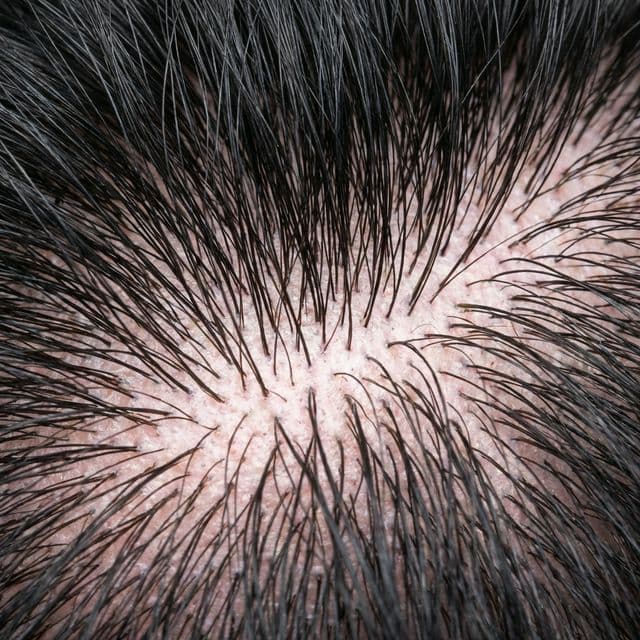
Donor safety is one of the most important topics in hair restoration. The donor area is limited. If too many grafts are removed, or if extraction is uneven, the back and sides can look thin permanently. This matters even more in younger patients because hair loss can progress. Whether you choose FUE or DHI, ask how the donor zone is measured, how many grafts are safe in your case, and whether the plan preserves options for future sessions.
Who Is a Better Candidate for DHI?
DHI may suit you if your hair loss is limited, your main concern is frontal definition, or you want careful placement among existing hair. It may also be considered when you need a discreet plan with less shaving in the recipient area. Patients with strong donor density, realistic hairline expectations, and stable hair loss tend to benefit most.
DHI is less ideal when the balding area is very large, the donor area is weak, the budget is tight, or the patient expects dramatic full-scalp density from a single session. It is also not a shortcut around medical diagnosis. If active shedding is due to telogen effluvium, nutritional deficiency, thyroid disease, alopecia areata, or uncontrolled scalp inflammation, surgery should wait.
Who Is a Better Candidate for FUE?
FUE may suit you if you need broad coverage across the frontal scalp, mid-scalp, or crown. It is often practical for higher graft counts and can be planned efficiently. It may also be a good fit for men who keep short hairstyles and want to avoid a linear scar associated with FUT. For many Hyderabad patients comparing value, FUE provides a sensible balance of coverage, recovery, and cost.
FUE still requires restraint. A large session should not mean aggressive extraction. A crown-first plan in a young patient may look good for a year but become awkward if the frontal hairline continues to recede. The best FUE plans think in decades, not only in before-and-after photos.
Could a Combined DHI and FUE Plan Be Better?
Yes, in some cases. A combined approach can use DHI for the hairline and FUE-style placement for larger areas behind it. This is not necessary for everyone, but it can be useful when the front requires very fine control and the crown or mid-scalp needs more efficient coverage. The key is not to collect techniques like upgrades. The key is to match each zone with the method that serves it best.
Questions to Ask Before Choosing a Clinic in Hyderabad
- Who designs the hairline, and who performs the critical steps of extraction and implantation?
- How is my safe donor area measured and documented?
- Are you quoting grafts, hairs, or follicular units?
- How many single-hair grafts will be reserved for the front hairline?
- Will the donor or recipient area need to be shaved?
- What is the plan if I continue losing native hair after the transplant?
- Do I need medication such as minoxidil or finasteride, and what are the pros and cons?
- What follow-up visits are included after surgery?
- Can I see results from patients with a similar hair loss pattern and hair calibre?
Red Flags in DHI vs FUE Marketing
Be careful with absolute claims. “Scarless,” “guaranteed density,” “unlimited grafts,” “no pain,” and “permanent full head in one day” are not serious medical promises. FUE and DHI both create tiny wounds. Both need sterile technique, trained hands, proper aftercare, and realistic planning. A natural result is possible, but it is never guaranteed by the name of the device alone.
Also be cautious if the consultation focuses only on discounts or graft count. More grafts are not always better. If the donor area is weak, a lower graft count with excellent design can look better over time than an aggressive session that exhausts future options.
Frequently Asked Questions
Is DHI better than FUE for hairline work?
DHI can be excellent for detailed hairline work because it allows controlled placement with an implanter pen. However, FUE can also create a natural hairline when recipient sites are made carefully. Surgeon judgment matters more than the label.
Is FUE cheaper than DHI in Hyderabad?
In many clinics, yes. FUE is often more cost-efficient, especially for larger graft counts. DHI may cost more because it is slower and more instrument-dependent. Always compare the full plan, not only the per-graft number.
Does DHI heal faster than FUE?
Healing is often similar. DHI may feel neater for selected smaller or no-shave cases, but both methods involve donor extraction and recipient implantation. Scabs, redness, mild swelling, and shedding can occur with either technique.
Which method is better for crown hair transplant?
FUE is often practical for crown coverage because crowns can require many grafts and careful spiral planning. DHI may still be used in selected cases, but the crown should be planned cautiously because it can consume many grafts.
Can women choose DHI or FUE?
Yes, but women need a careful diagnosis first because female hair loss is often diffuse or medically driven. Surgery is best considered when the donor area is strong, the loss pattern is suitable, and non-surgical causes have been addressed.
Will transplanted hair fall out?
The transplanted shafts commonly shed in the first few weeks. This is expected. New growth usually starts gradually over the next few months, with visible improvement around six to nine months and further maturation up to twelve months or more.
Final Takeaway
For most patients in Hyderabad, the best hair transplant technique is not chosen from an advertisement. It is chosen after a proper scalp assessment, donor mapping, hairline design, medical history, and budget discussion. DHI may be better for precise hairline detailing and smaller discreet sessions. FUE may be better for larger coverage and value. A combined approach may suit patients who need both precision and coverage. The safest decision is to choose a surgeon who explains why a method fits your case, where its limits are, and how today’s plan preserves your donor area for the future.