Dermal fillers have become one of the most requested non-surgical aesthetic treatments in India. The appeal is understandable: they can be completed in a short appointment, require minimal downtime, and — when performed well — produce visible improvements in facial volume, contour, and youthfulness. But like all injectable treatments, the quality of the outcome depends almost entirely on the products used, the areas treated, and the skill and anatomical understanding of the injector.
This guide covers everything a patient considering dermal fillers in Hyderabad should understand before booking a treatment: what fillers are made of, which areas benefit most, how long results last, what risks exist, and how to tell the difference between a well-planned treatment and one that is likely to look overdone.
What Are Dermal Fillers and What Are They Made Of?
Hyaluronic acid fillers
The most widely used dermal fillers are made from hyaluronic acid — a naturally occurring polysaccharide found in skin, joints, and connective tissue. Hyaluronic acid has an exceptional ability to attract and retain water, which is what gives fillers their volumising effect. Because it is a substance native to the body, it is generally well tolerated and reversible using an enzyme called hyaluronidase.
Different hyaluronic acid fillers are formulated with varying degrees of cross-linking — the molecular bonding that determines how stiff, smooth, or cohesive the gel is. Thicker, more cross-linked gels are suited to deeper injection for volume and structure. Thinner, softer gels work better in delicate areas such as under the eyes or in fine lines. Choosing the right formulation for the right area is a key part of treatment planning.
Other filler types
Beyond hyaluronic acid, other filler materials include calcium hydroxylapatite (a denser, biostimulatory filler suited to deeper structural work), poly-L-lactic acid (a collagen stimulator that works gradually rather than immediately), and permanent or semi-permanent fillers. Most experienced clinicians in Hyderabad work primarily with hyaluronic acid fillers for the large majority of treatments, as they offer reversibility, flexibility, and a strong safety record. Permanent fillers carry higher long-term risks and are generally avoided in cosmetic facial practice.
Which Areas Can Dermal Fillers Treat?
Cheeks and midface
The midface is one of the most impactful areas to address with filler. As the face ages, fat compartments in the cheek descend and lose volume, causing the characteristic hollowing under the eyes, flattening of the cheeks, and early jowling as tissue droops toward the lower face. Restoring volume to the cheek fat pads and the malar region can create a significant lifting effect, improve the under-eye shadow, and soften nasolabial folds — often without directly injecting those folds at all.
Under-eye hollows (tear troughs)
The tear trough — the depression running from the inner corner of the eye toward the cheek — is one of the most technical and high-risk areas to inject with filler. It can cause patients to look chronically tired, even when well-rested. When performed by an experienced injector using a soft, low-viscosity hyaluronic acid gel and appropriate technique (often a cannula rather than a needle), tear trough filler can dramatically improve the shadowing. However, this area also has the highest rate of complications from poorly placed filler, including the Tyndall effect — a bluish discolouration visible under thin skin — and oedema that can make swelling worse rather than better.
Lips
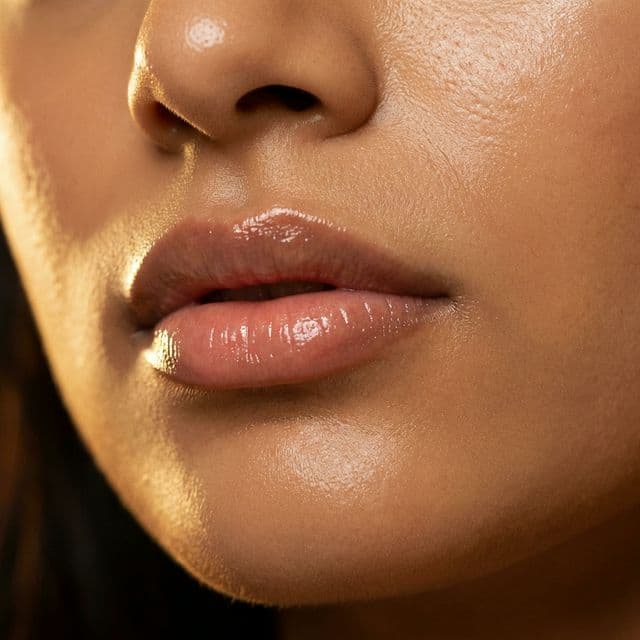
Lip filler is the most commonly requested dermal filler treatment. It can increase volume, define the lip border, improve symmetry, and soften perioral lines. The highest-quality lip filler results are typically subtle — a natural-looking enhancement of the patient's existing shape rather than a uniform inflation. The most common sign of poorly placed lip filler is a lack of natural cupid's bow definition, a shelf-like projection at the lip border, or disproportionate lower lip volume that makes the lips look unnatural.
Jawline and chin
Filler placed along the jawline can create definition and a more sculpted lower face, while chin filler can extend and project the chin forward to improve side-profile balance and the chin-to-nose relationship. These are particularly impactful treatments for patients who have a recessed or short chin, as the improvement in facial proportions can be significant without surgery.
Nasolabial folds and marionette lines
Nasolabial folds — the lines running from the nose to the mouth — and marionette lines — which run from the mouth corner downward — are common concerns for patients in their 30s and 40s. Filler placed directly into deep folds can soften them, though the most natural outcome usually comes from a combination of midface volume restoration (which lifts the fold from above) and selective softening at the fold itself. Treating only the fold without addressing volume loss higher in the face often produces a result that looks filled rather than refreshed.
Temples
Temple hollowing is frequently overlooked but contributes significantly to a gaunt or ageing appearance. Filler in the temples restores the gentle convexity that characterises a youthful sideface. Because the temporal region contains significant blood vessels, this area requires careful technique, and injector experience matters acutely.
How Long Do Dermal Fillers Last?
Longevity varies by product type, the area treated, the depth of injection, the patient's metabolism, and whether the patient is physically active. As a general guide:
- Lip filler: 6 to 12 months in most patients. The lips are a mobile area with high turnover, so filler metabolises faster here than in less dynamic zones.
- Cheek and midface filler: 12 to 18 months for most hyaluronic acid products. Deeper injections in high-viscosity gels tend to last longer.
- Under-eye filler: 9 to 18 months. The lower eyelid area has limited vascularity and movement, which can prolong duration, but the area also swells readily so technique precision is important.
- Jawline and chin filler: 12 to 24 months depending on product and depth.
- Temple filler: 12 to 18 months.
These are averages. Some patients metabolise filler faster than expected; others find results last much longer. The best way to manage duration is through planned maintenance rather than waiting for full dissolution.
What Does a Good Filler Consultation Look Like?
Assessment before injection
A proper consultation begins with a thorough facial assessment — not simply asking the patient what they want and then beginning. The injector should examine facial symmetry, skin thickness, existing volume distribution, bone structure, and the interplay between different facial zones. The face should be assessed three-dimensionally: the relationship between the upper face, midface, and lower face all influence how filler placement in one area will read elsewhere.
The treatment plan
An honest consultation should also involve a candid discussion about what filler can and cannot treat. Filler is a volumising tool. It can mask laxity to a limited degree and create the illusion of lift, but it cannot remove skin, reposition descended tissue, or replicate the structural correction of surgery. A patient who needs a facelift but is offered repeated filler cycles as a substitute may end up with a face that looks overfilled and unnatural rather than refreshed.
Red flags in a consultation
- The injector does not examine you before immediately discussing amounts and pricing.
- There is pressure to purchase large amounts of product upfront.
- Specific volume guarantees or very low pricing from unknown brands.
- No discussion of risks, reversibility, or what happens if you dislike the result.
- No mention of the product brand, lot number, or its regulatory status in India.
What Are the Risks of Dermal Fillers?
Common and temporary side effects
Swelling, bruising, tenderness, and redness at injection sites are expected and usually resolve within a few days to a week. Most patients plan their filler appointments with this in mind, avoiding important social events in the immediate post-treatment period.
Tyndall effect
This occurs when hyaluronic acid filler is placed too superficially, particularly under thin skin such as the lower eyelids. The filler scatters light, creating a bluish appearance at the injection site. It can be corrected with hyaluronidase dissolution but is best avoided through careful injection depth in the first place.
Filler migration
Over time and with repeated treatments, filler can migrate beyond the intended injection zone — most visibly in the lips, where a blurred border or swollen anterior upper lip can develop. Careful volumetric planning and conservative top-up dosing reduce this risk.
Nodules and granulomas
Lumps or firm nodules under the skin can develop from uneven filler distribution, filler placed in a vessel wall, or a delayed immune response. Most resolve with hyaluronidase or targeted massage. Granulomas are rarer but more persistent and may require steroid treatment.
Vascular occlusion — the most serious risk
The most serious risk of dermal filler injection is inadvertent injection into or compression of a blood vessel, which can block blood flow to the skin or — most severely — travel retrogradely to the ophthalmic artery and cause blindness. This risk is greatest in the glabella (between the eyebrows), nose, temporal region, and nasolabial area due to their vascular anatomy. The risk is not zero even in expert hands, but it is significantly reduced by injectors who understand the vascular anatomy, use aspiration before injection, and work carefully with properly calibrated technique. Having hyaluronidase immediately available is another non-negotiable marker of responsible practice.
How to Get Natural-Looking Filler Results
Less is more — especially on the first visit
The most common cause of an overdone filler appearance is excessive volume, usually accumulated over multiple visits without sufficient interval or critical reassessment. The most natural results come from a conservative first treatment, a review at two weeks, and incremental layering rather than aggressive single-session volumisation.
The face should move
One of the hallmarks of a natural filler result is that facial expressions look undisturbed. The lips should be able to move naturally when speaking and smiling. Smile lines should appear when appropriate. If filler has been over-placed in the nasolabial region or cheeks, it can restrict normal facial dynamics and produce an expressionless or pillow-face appearance.
Proportions matter more than individual features
The most skilled injectors think in terms of facial geometry and proportion — how each treatment zone relates to the others — rather than treating each area in isolation. A lip that is volumised without considering the lower face proportions may look disproportionate even if it is technically well-injected. Good filler planning always thinks about the whole face.
Dermal Fillers vs Other Non-Surgical Options
Filler vs anti-wrinkle injections
Dermal fillers and anti-wrinkle injections (botulinum toxin) are complementary, not interchangeable. Anti-wrinkle injections work by relaxing muscles that cause dynamic lines — expression lines around the eyes, forehead creases, and frown lines. Dermal fillers add volume. Using both appropriately is often more effective than either alone: anti-wrinkle treatment prevents the deeper static lines that eventually form from repeated muscle movement, while filler restores the volume loss that ageing and gravity produce.
Filler vs thread lifts
Thread lifts can provide a modest mechanical lift in selected patients with early tissue laxity. Filler addresses volume loss rather than tissue position. In a patient who has both problems — volume loss and early descent — a combination may be considered. However, neither filler nor threads can substitute for surgery when the degree of laxity is significant.
When it is time to consider surgery instead
There is a point at which continued filler treatment stops producing a natural, refreshed appearance and begins producing a distorted, overfilled one. This usually happens when the underlying concern is primarily skin or tissue laxity rather than volume loss — a problem that filler cannot address. When a patient needs more than filler can reasonably provide, an honest injector will say so rather than simply continuing to add product. The most rewarding long-term outcomes often combine well-timed surgery with maintenance non-surgical treatments in the years that follow.
Frequently Asked Questions
Does filler hurt?
Most patients find dermal filler tolerable. A topical anaesthetic cream is applied before treatment, and many filler products also contain lidocaine, a local anaesthetic, in the gel itself. Sensitive areas such as the lips typically cause more discomfort than thicker-skinned zones. The procedure is not painless but is generally well within the comfort range of most patients.
What is the downtime after dermal fillers?
Most patients experience mild swelling and bruising for two to seven days, depending on the area treated and their individual tendency to bruise. Lip filler causes the most visible swelling, which typically peaks at 24 to 48 hours and resolves within five to seven days. During this period, makeup can be applied (after 24 hours), and most normal activities can continue. Strenuous exercise and alcohol are typically avoided for 24 to 48 hours post-treatment.
Can filler be dissolved if I do not like the result?
Hyaluronic acid fillers can be dissolved with hyaluronidase — an enzyme that breaks down the hyaluronic acid rapidly. Dissolution is effective and generally reverses the result within 24 to 48 hours. It is used for correction of vascular occlusions (as an emergency), for patient dissatisfaction, or for filler migration correction. It is worth confirming that any clinic offering hyaluronic acid filler has hyaluronidase immediately available.
How often should I get filler top-ups?
The ideal approach is to top up when the result has diminished to a point where the patient feels the improvement is no longer satisfying — not to follow a rigid fixed schedule. For most patients this means a reassessment at around 12 months. Topping up too frequently without fully reviewing the existing filler distribution can contribute to overfilling over time.
Is filler safe with Indian skin tones?
Yes. Dermal fillers work beneath the skin surface and are not affected by melanin levels or skin tone. The one consideration for patients with darker skin is that any post-inflammatory hyperpigmentation from bruising or needle trauma may take longer to resolve than in lighter skin. Using cannulas rather than needles where appropriate, and applying arnica topically post-treatment, can reduce the risk of bruising and subsequent pigmentation changes.
How do I know which areas need filler?
A consultation is the only reliable way to determine what would benefit from filler and in what amounts. Self-diagnosis — particularly from social media references — often leads patients to request treatment in one area when the root cause of the concern lies elsewhere. For example, apparent nasolabial fold depth is very often driven by midface volume loss rather than the fold itself. A skilled assessment looks at the entire face before deciding where to place product.
What brands of filler are used in India?
The most reputable hyaluronic acid filler brands available in Hyderabad include Juvederm (by Allergan/AbbVie) and Restylane (by Galderma), both of which have extensive global safety data. When attending any clinic, it is reasonable to ask the brand name, product line, and lot number of the filler being used, and to confirm that the products are legitimately sourced. Counterfeit or diluted fillers do circulate in some unregulated settings and represent a real patient safety risk.
Can filler be used for a non-surgical nose job?
Yes — non-surgical rhinoplasty using dermal filler can camouflage a dorsal hump, lift a drooping tip, and smooth minor asymmetries. It is most effective for specific, limited concerns and is genuinely useful in the right patient. However, it cannot reduce the nose and should never be positioned as equivalent to surgical rhinoplasty for patients who need meaningful structural change. The procedure also carries specific vascular risks in the nasal region that require a highly skilled injector with excellent anatomical knowledge.
What should I avoid after filler treatment?
For the first 24 to 48 hours avoid intense exercise, saunas or steam rooms, alcohol, and direct sun exposure. Do not massage the treated area unless instructed to do so. Avoid facials, skin treatments, or dental procedures for at least two weeks post-injection. If you wear glasses, avoid pressure on any area of the nose that has been injected with filler — sit the frames on the tip or use contact lenses temporarily.