Quick answer
A tummy tuck can make the abdomen flatter and firmer, but it does not create a six-pack by itself. The operation removes selected loose skin and may remove some fat. It can also tighten or repair separated abdominal muscles when this is part of the problem. These changes may make the natural shape of the abdominal wall easier to see. They do not build new muscle or guarantee visible “six-pack” lines.
A six-pack refers mainly to the visible shape of the rectus abdominis muscles. How much of that shape you can see depends on muscle size, the layer of fat over it, skin, genetics, lighting, posture and weight stability. A person can have strong abdominal muscles without visible grooves. Another person may have some definition without a very large muscle mass. Surgery should be planned around your anatomy and health, not around a promised picture.
If loose skin, a lower abdominal bulge or muscle separation is your main concern, a consultation for tummy tuck assessment can help identify the actual cause. In Hyderabad, the useful first step is an examination of the skin, fat distribution and abdominal wall, rather than choosing a procedure from an online image.
What a tummy tuck actually changes
A tummy tuck, also called abdominoplasty, is a body-contouring operation. In a standard tummy tuck, the surgeon removes extra lower-abdominal skin, reshapes the remaining skin and usually repositions the belly button. The operation may also tighten the abdominal wall if the muscles or their covering tissue have become loose or separated.
The main aim is a smoother, firmer abdominal profile. It is not a weight-loss operation and it is not the same as a bodybuilding procedure. The amount of skin removed depends on how much loose tissue is present, the quality of the skin, previous operations, pregnancy history and the planned position of the scar.
Liposuction may be added in selected patients to reduce localised fat under the skin. It does not remove visceral fat, which sits deeper around the organs. It also cannot repair muscle separation or remove a large apron of loose skin. A combined plan may improve the outline, but each part still has a different job.
Why some people look more defined after surgery
A lower abdominal fold can hide the shape of the abdominal wall. Removing that fold and tightening loose skin can make the waist look neater. If the abdominal wall is weak or the rectus muscles are separated, repairing that problem can reduce a central bulge. If a small amount of pinchable fat remains, carefully planned liposuction may improve the transition between the abdomen and waist.
These changes can reveal definition that was already present. They do not make the rectus muscles thicker. They also do not remove every layer of fat over the muscle. The final look is therefore different for each patient. Some people become flatter and smoother, while others may see a modest outline. A very sharp six-pack is not a standard or promised tummy-tuck result.
The skin itself also affects the appearance. Stretch marks, thin skin, scars and uneven skin tone may remain. A tummy tuck can remove some stretch-marked skin if it lies in the part being removed, but it does not treat all stretch marks. Skin quality and healing also influence how the contour settles.
What muscle repair means
Muscle repair during a tummy tuck usually refers to tightening the central abdominal wall or its fascia when there is laxity or diastasis recti. Diastasis means that the right and left rectus muscles have moved farther apart, often after pregnancy, major weight change or long-term stretching of the abdominal wall. It is not the same as a tear in the muscle.
Repair can reduce a dome-shaped or soft central bulge in suitable patients. It may improve the feeling of abdominal support in some cases, but it is not a substitute for physiotherapy when that is the appropriate treatment. It also does not guarantee a visible six-pack. The surgeon must decide whether repair is needed after examining the abdominal wall. Not every person with a flat-looking abdomen needs muscle tightening.
Exercises can strengthen the muscles, but they cannot always bring separated muscles back to their original position. At the same time, surgery cannot create the conditioning, strength or muscle size that comes from regular training after recovery. The safest plan is to match the operation to the structural problem and then return to exercise only when the surgeon allows it.
Can a tummy tuck remove enough fat to show abs?
Usually, no. A tummy tuck is designed to remove excess skin and improve the abdominal contour. It is not intended to remove large volumes of fat. A surgeon may use liposuction for selected surface fat, but there are safety limits and it is not suitable for everyone.
The location of fat matters. Subcutaneous fat is the soft layer that can often be pinched. Visceral fat is deeper inside the abdomen and can push the belly forward. Tummy tuck surgery does not remove visceral fat. Reducing that deeper fat depends on long-term health measures and, for some people, medical weight-management support.
This is why a person with a higher body-fat level may have a flatter abdomen after surgery but still not have visible muscle lines. Trying to remove more fat surgically in order to force a six-pack can increase risk without producing a natural result. A staged plan may be safer than combining too much treatment in one operation.
Who may be a reasonable candidate for this goal?
A person may discuss a tummy tuck when there is loose skin, a lower abdominal apron, a post-pregnancy bulge or abdominal-wall laxity that does not improve enough with stable weight and appropriate exercise. The best candidates are generally in good health, near a stable weight, non-smokers or able to stop nicotine, and realistic about scars and the limits of surgery.
If the main concern is only a small amount of fat with good skin tone, liposuction may be the more relevant discussion. If the issue is mostly loose skin, liposuction alone can make the skin look looser. If there is muscle separation, skin removal alone may not address the bulge. If there is a hernia, unexplained pain or a new lump, a proper medical assessment is needed before cosmetic planning.
People planning a major weight loss or another pregnancy are usually advised to discuss timing carefully. Large weight changes and pregnancy can stretch the skin and abdominal wall again. This does not mean a future pregnancy is automatically dangerous, but it may reduce or change the cosmetic result and should be part of the decision.
What a realistic result may look like
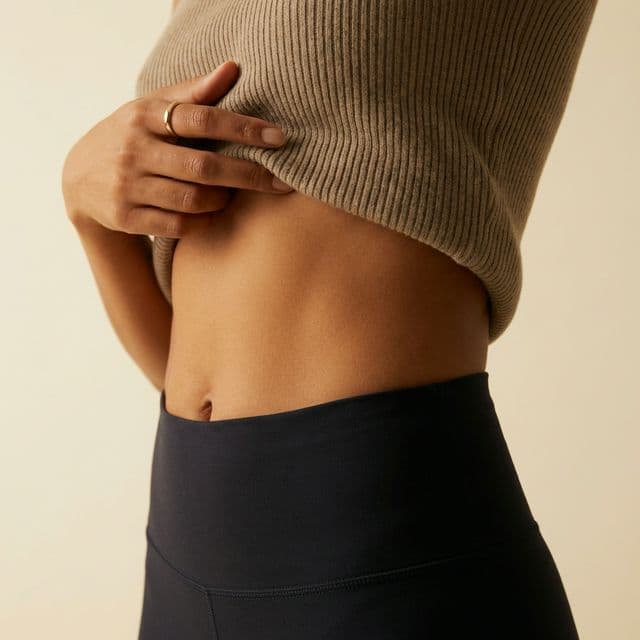
A realistic result is a flatter lower abdomen, less loose skin and a smoother waistline. The abdomen may look firmer in clothing and when standing. A scar will remain, although it is usually placed low and its final appearance changes over many months. The belly button may look different because it may need to be moved during skin removal.
Some patients may see more natural muscle definition after swelling settles. Others may not see visible grooves, even when the surgery has corrected the main problem. A surgeon should explain this difference before consent. Ask to see results in patients with a similar starting problem, skin quality and body shape. Do not use social-media images as a promise for your body.
The result also changes with time. Weight gain can enlarge remaining fat cells and stretch the skin. Ageing continues. Pregnancy may alter the abdominal wall. Maintaining a stable weight, following the recovery plan and returning to exercise safely can help protect the result, but no operation stops normal body changes.
Recovery and return to abdominal exercise
The first weeks are for wound healing, walking and protecting the repair. Swelling, tightness, bruising, numbness and difficulty standing fully upright may occur. The surgeon may advise a compression garment, wound care and gradual walking. Exact instructions vary according to the operation and your health.
Do not restart sit-ups, planks, heavy lifting or intense gym training just to chase definition. Straining too early can increase pain, bleeding, fluid collection or stress on the repair. Your surgeon should decide when each stage of exercise is safe. A return to work may be possible in a few weeks for a desk job, while physical work can take longer.
The abdomen can take months to settle. Early swelling can hide the contour, and a firm or numb area may change gradually. If the wound opens, redness spreads, pain worsens, fever develops, one leg becomes swollen, or you have chest pain or breathlessness, contact the surgical team urgently or seek emergency care as appropriate.
Common questions
Can a tummy tuck give me a six-pack if I do not exercise?
No. Surgery can remove loose skin and repair selected abdominal-wall problems, but it does not build muscle or replace exercise. If body fat remains over the muscle, the lines may not show. Exercise should be restarted only after medical clearance.
Is abdominal etching the same as a tummy tuck?
No. Abdominal etching is a separate contouring technique that uses targeted fat removal to create lines in carefully selected patients with suitable skin and low enough body fat. It is not a routine part of a tummy tuck and it has its own risks, limitations and suitability requirements. It should never be presented as a guaranteed six-pack operation.
Will muscle repair make my abs visible?
Not necessarily. Muscle repair can reduce separation or laxity and make the abdomen flatter. Visibility still depends on the muscle, skin and fat layers, genetics and weight. The purpose is to correct the structural problem, not to draw lines into the abdomen.
Can a mini tummy tuck create a six-pack?
A mini tummy tuck mainly treats limited loose skin below the belly button. It has a smaller area of correction and may not address upper-abdominal skin or muscle laxity. Whether it is suitable depends on the examination. It should not be selected only because the scar or operation sounds smaller.
Can men have a tummy tuck for abdominal definition?
Yes, some men consider it after weight loss, ageing or major skin laxity. The same limits apply: it can improve the abdominal profile, but it cannot promise a six-pack. The plan should consider skin thickness, fat distribution, muscle separation and scar position.
How do I know whether I need a tummy tuck or liposuction?
You cannot reliably decide from a pinch test or a photograph alone. A consultation should assess loose skin, pinchable fat, deeper abdominal fullness, muscle separation, scars, hernias, health conditions and your weight history. The right procedure is the one that addresses the main cause, not the one with the shortest name.
Final takeaway
A tummy tuck can flatten and firm the abdomen by removing selected loose skin, improving the contour and repairing separated abdominal muscles when needed. It may reveal some natural definition, but it does not create a six-pack, build muscle or remove deep visceral fat. The safest decision is based on the problem found during examination, stable weight, future pregnancy plans, health and realistic expectations.
If you are considering surgery in Hyderabad, use a tummy tuck consultation to discuss your skin, fat and muscle layers and ask what change is realistic for your starting anatomy. A clear plan is more useful than a promise of a particular body shape.
References
- [[Mayo Clinic: Tummy tuck overview, indications and recovery::https://www.mayoclinic.org/tests-procedures/tummy-tuck/about/pac-20384892]]
- [[American Society of Plastic Surgeons: What is a tummy tuck?::https://www.plasticsurgery.org/x26992]]
- [[Cleveland Clinic: Abdominoplasty, risks and recovery::https://my.clevelandclinic.org/health/procedures/11017-tummy-tuck]]
- [[ASPS: Diastasis recti repair and the abdominal wall::https://www.plasticsurgery.org/news/articles/diastasis-recti-repair-restoring-core-strength-and-abdominal-integrity]]