Short answer
A hair transplant can often restore a receding hairline, but it cannot bring back every past hairline or stop future loss by itself. The plan depends on the cause of recession, your age and pattern of loss, the strength of the donor area at the back and sides, the amount of hair needed, and whether your expectations are realistic.
If you are thinking about a hair transplant in Hyderabad, an in-person scalp assessment should come before a graft number or a promise about the final hairline.
A good plan usually aims for a natural, age-appropriate frame around the face. It should also leave enough donor hair for future thinning. A very low hairline may look attractive in a young photograph but can create a problem if the hair behind it continues to recede.
What a receding hairline can mean
Hairline recession is commonly linked with androgenetic alopecia, also called pattern hair loss. It may begin at the temples, move backwards in an M shape, or become more diffuse across the front. Family history can raise the chance, but a doctor still needs to examine the scalp because hair loss can also follow illness, nutritional problems, medicines, tight hairstyles, scalp inflammation or other conditions.
A transplant is not a diagnosis. If the recession is sudden, patchy, painful, itchy, associated with redness or scaling, or accompanied by loss of eyebrows or body hair, the first step is medical assessment. Treating an active scalp condition or finding the cause of shedding may be more important than planning surgery.
When a receding hairline may be suitable for transplant
A person may be considered when the pattern is reasonably clear, the donor hair appears healthy, the scalp is suitable for surgery, and the person understands that transplanted hair is only one part of the long-term plan. The exact age is not the deciding factor. A younger person with fast-changing loss may need observation or medical treatment first. An older person may still be suitable if the pattern and donor supply are stable.
Signs that planning may be more reliable
- The recession has been assessed over time rather than judged from one photograph.
- The hair loss pattern is understood and is not being driven by an untreated scalp or medical problem.
- There is enough healthy donor hair at the back and sides, with no obvious miniaturisation in that zone.
- The proposed hairline fits the person’s age, face, hair texture and likely future loss.
- The person accepts that medicines, monitoring or a later session may be part of long-term care.
Why age and future hair loss matter
A transplant moves follicles. It does not make the surrounding native hair immune to the condition that caused the recession. If native hair keeps thinning, a transplanted hairline can become an isolated strip in front of a thinning scalp. This is one reason an aggressive, very low hairline can be a poor long-term choice, especially when loss is still progressing.
The NHS notes that hair may continue to thin around a transplant and that the design should account for this. The International Society of Hair Restoration Surgery also advises that a recreated hairline should suit the person’s age and remain appropriate as the person gets older. These are planning principles, not fixed measurements that can be applied to every face.
For a younger patient, a doctor may recommend watching the pattern, taking scalp photographs, treating active hair loss, or waiting until the direction of change is clearer. This is not a refusal of treatment. It is a way to avoid using a limited donor supply before the long-term need is understood.
How the hairline is planned
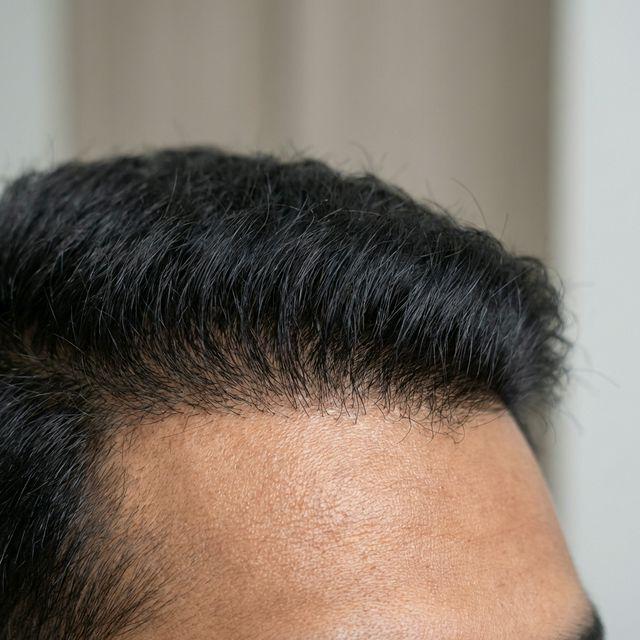
Hairline design is a three-dimensional decision. The surgeon looks at the forehead, temples, facial proportions, existing hair, hair direction, curl, thickness and the likely pattern of future loss. A natural hairline is usually not a sharp straight line. It has a softer transition at the front, with careful placement of smaller grafts at the edge and more density behind.
The plan should be drawn while you are upright and discussed before surgery. Ask to see where the hairline will start, how the temples will be handled, which areas will receive grafts first, and how the plan changes if native hair thins later. The final design should not be based only on a celebrity photo or on the hairline you had as a teenager.
The temples need separate thought
Temple recession affects the shape of the face. Filling the temples can improve balance, but it uses grafts and can be difficult to make natural if the direction or angle is wrong. Some people need only a conservative frontal restoration. Others need temple work as well. The decision should follow examination of the whole scalp, not a close-up of one corner.
How many grafts might be needed?
There is no safe single number for a receding hairline. A small change at the front may need fewer grafts than a wide recession with temple loss, but the estimate also depends on hair calibre, curl, colour contrast, existing density and the amount of donor hair available. A graft may contain one, two or more hairs, so graft count and hair count are not the same.
The most important number is not how many grafts can be harvested in one visit. It is how many grafts can be used while keeping the donor area natural and preserving options for future loss. The ISHRS warns that donor hair removed during FUE does not grow back in that donor spot. Overharvesting can therefore create a lasting thinning problem.
Should hair loss be treated before a transplant?
Sometimes. The answer depends on the diagnosis, health history, medicines and the balance between possible benefit and side effects. Treatments such as minoxidil or finasteride may be discussed for pattern hair loss, but they do not suit everyone and should not be started or stopped without medical advice. NHS guidance states that these medicines do not work for everyone and only work while they are being used.
Medical treatment may help protect native hair around a transplant, but it does not replace a proper donor assessment. It also cannot turn a limited donor supply into an unlimited one. If the hair loss is caused by another condition, the priority may be treating that condition rather than moving forward with surgery.
What the procedure can and cannot do
What it may do
- Add your own growing hair to a receding frontal zone.
- Soften temple recession when the donor supply and hair direction allow it.
- Create a more balanced frame around the face with a carefully planned density pattern.
- Provide a long-term improvement when the grafts are selected from a suitable donor zone and future loss is considered.
What it cannot promise
- A return to the exact hairline of childhood or youth.
- A fixed result if native, non-transplanted hair continues to thin.
- Unlimited density when donor supply, hair thickness or scalp size limits coverage.
- A final result immediately after surgery. Growth takes time, and early shedding can occur.
Recovery and when to judge the result
After surgery, the scalp may feel tight or achy and small scabs may form. The NHS lists swelling, scabbing and small or linear scars among expected effects, while bleeding, infection, an anaesthetic reaction, poor graft growth or a noticeable scar are less common risks that should be discussed before treatment.
Many transplanted hairs shed in the early months while the follicles remain in the scalp. New growth is gradual, so the hairline should not be judged in the first few weeks. Your clinic should give its own washing, exercise, sun and follow-up instructions. Severe pain, spreading redness, pus, fever, heavy bleeding or unexpected symptoms need prompt contact with the surgical team.
Questions to ask at a consultation in Hyderabad
- What is the most likely cause of my recession, and do I need any tests or treatment first?
- Is my donor zone stable, and can you show me how you assessed density and miniaturisation?
- Where would you place my hairline now, and how would it look if my native hair thins later?
- How many grafts are planned for the front and temples, and what donor reserve would remain?
- Who performs the key parts of the procedure, and how are grafts handled and counted?
- What is the expected recovery, what symptoms should worry me, and when will you review growth?
What an in-person assessment checks
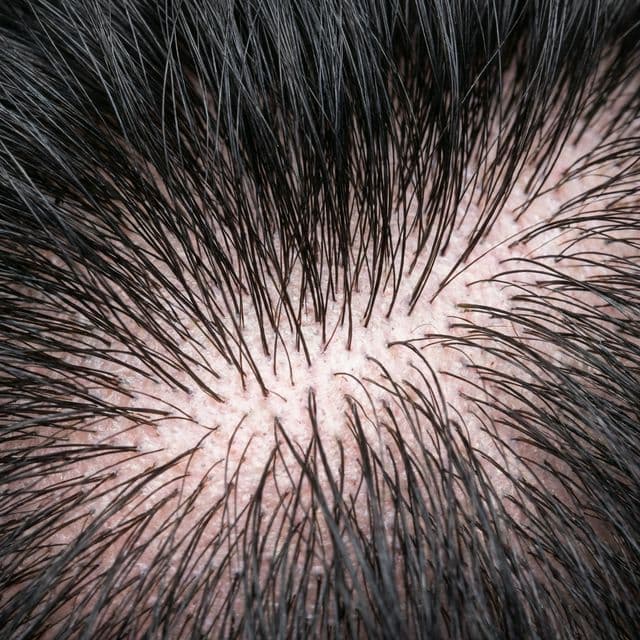
A consultation should look beyond the front hairline. The doctor may review when the recession started, whether it is changing, family history, previous illness, medicines, supplements and any scalp symptoms. The scalp and donor area are examined for density, hair calibre, miniaturisation, scars and signs of inflammation. Photographs or dermoscopy can help compare areas that look similar to the eye but have different follicle strength.
The assessment should also consider the mid-scalp and crown, even when your main concern is the front. If those areas are likely to thin, a plan that uses most donor hair for a low hairline may leave too little for later coverage. The doctor should explain which areas are being prioritised and why.
For patients travelling to Hyderabad, ask how many reviews are expected, how long you should stay near the clinic, and what support is available if you develop a concern after returning home. These practical details do not decide candidacy, but they help you plan safely and understand the follow-up process.
A careful plan may be smaller than you expect
A smaller first session can sometimes protect the donor area and allow the result to be judged before more grafts are considered. This is not a sign that the treatment is weak. It may be the more responsible option when the pattern is still developing, the hairline is wide, or future loss is difficult to predict.
FAQs
Can a hair transplant fix a receding hairline permanently?
Transplanted follicles from a suitable donor area are intended to provide long-term growth, but the overall appearance is not guaranteed to stay the same because native hair around them may continue to thin. A permanent plan still needs future-loss planning.
Is it better to wait if I am in my early 20s?
Not always, but fast-changing loss is a reason for caution. A consultation can confirm whether the pattern is clear, whether medical treatment is appropriate and whether using donor hair now is sensible. Age alone cannot decide candidacy.
Can a transplant lower my forehead as well as fill the temples?
It may be possible in selected patients, but lowering the hairline uses more grafts and may look less suitable as the face ages. The decision should consider facial proportions, donor limits and future loss, not only the desired height today.
Will the hairline look natural after a transplant?
Naturalness depends on design, graft selection, angle, direction, spacing, hair characteristics and future planning. A soft transition zone and an age-appropriate position are more important than simply placing the largest possible number of grafts.
Practical takeaway
A receding hairline can often be improved with hair transplantation, but the safest plan is conservative and long-term. First confirm the cause of hair loss. Then assess the donor area, decide whether the pattern is stable enough, and design a hairline that fits your face now and later. If you want to explore the next step, review the
hair transplant treatment page and arrange an in-person assessment rather than relying on an online graft calculator.